
In a dense forest, animal control workers found a small dog bound by a heavy leather belt fastened with a chain. That discovery began a long journey to restore the dignity and health of a faithful friend.
The dog was named Oscar right away. He was terribly thin, with no sign of ordinary care — he looked as if he had been left there to die. Everyone involved in the rescue was certain: what he had been through was deeply painful.
The first days at the shelter showed how deep the trauma went. Oscar hid in a corner, avoided contact and shook with fear whenever someone appeared. Every attempt to come near ended in a growl and a retreat, a sign of deep distrust born from his past. At first, taking off the leather collar without special measures was simply impossible.
The volunteers who watched him confirmed how wary he was. One admitted she was afraid to touch him, and that Oscar hid so no one could approach. Another added that his growling and retreating came from a past full of violence — natural ways of protecting himself.
“When we found him, we were sure his earlier life had been extremely painful.”
Because he resisted any examination and stayed so closed off, the team decided to sedate him so the vet could examine him properly. While he slept, the medical staff treated his exhaustion and other health problems and took off the restrictive collar.
Removing the collar turned out to be crucial — it was the first step toward rebuilding trust. Veterinary care made up for his nutritional deficiencies and began his treatment, and a patient, calm place gave him a safe space to heal emotionally.
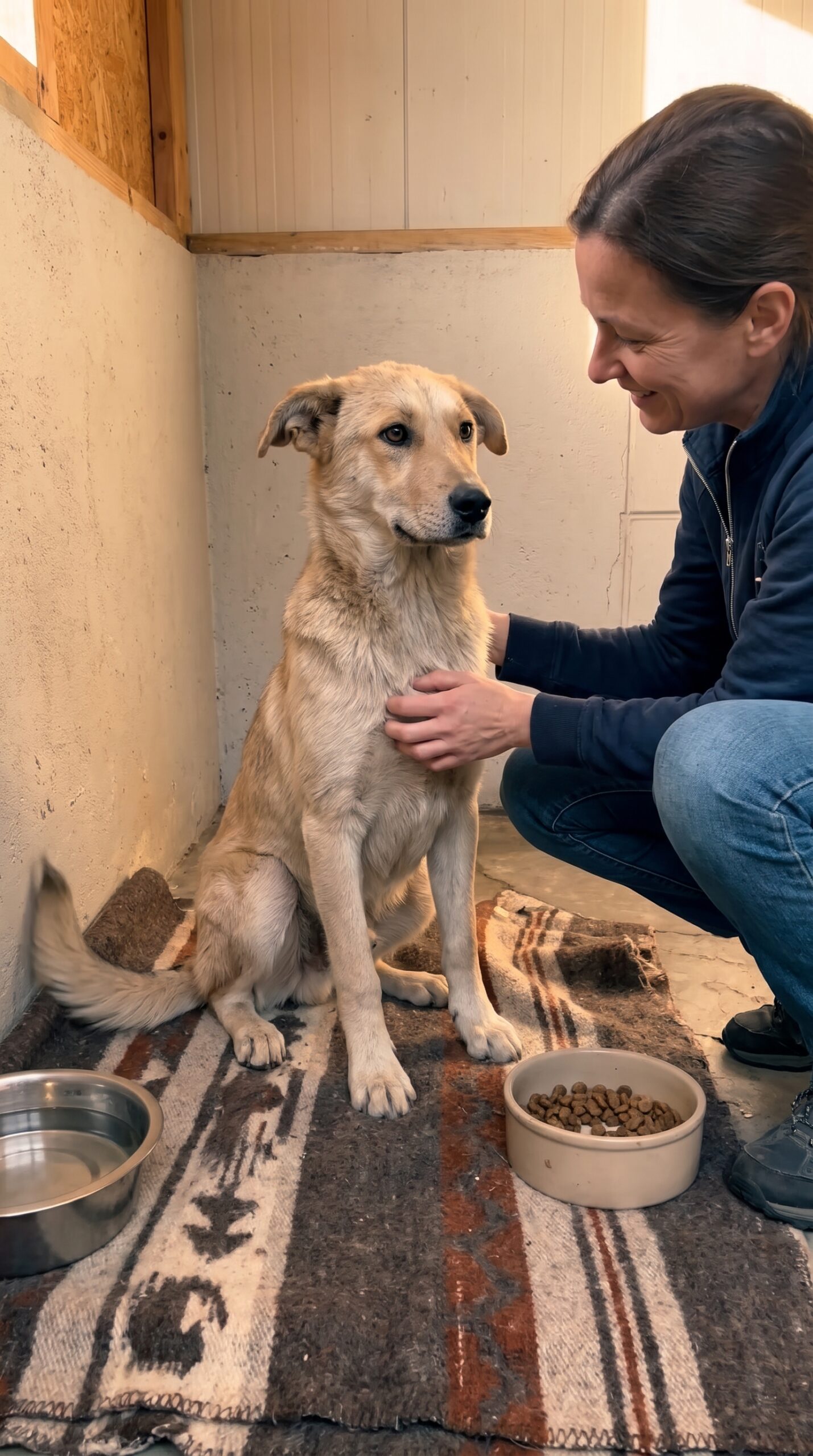
After he woke up, Oscar behaved like a different dog. Without the weight on his neck, he grew curious about his surroundings, let his caregivers come closer, and for the first time began to wag his tail. That small gesture showed that the recovery of his personality and health had begun.
The support of the volunteers and the veterinary staff helped him regain both physical and emotional strength. Little by little he began to eat, accept gentle care and show a curiosity about the world he had never shown before.
In the words of one of the rescuers: “This belt was a burden from his past. When we took it off, he began to open up.” It is a reminder of the power of empathy and steady care for animals who have survived trauma.
Oscar’s story shows how timely action and consistent care can change a dog’s fate: a quick decision, professional veterinary help, the removal of the restraining collar, and the patience of his caretakers.
It teaches us that even the deepest emotional and physical wounds can heal with the right support. Thanks to the rescuers and vets, Oscar has a chance at a safe future, free from violence and hunger. His transformation proves that every dog deserves a second chance, and that patient, systematic care can bring hope back where it seemed lost.
