
He didn’t whine. He didn’t bark. He didn’t even try to crawl away.
He simply lay on the cold, dusty ground, pressing his chin to the concrete with all his might, tongue hanging out, cloudy saliva in his mouth. His eyes were open — so wide they looked painted on. One held a glistening drop; the other held only hopelessness.
People passed by. Someone looked back, someone walked faster, someone said: “Probably rabies… it’s scary to go near.”
And he was just dying.
Not quickly, not suddenly, not from a single blow. He was dying quietly, drop by drop.
Someone had put a chain on him — short, black and rusty. Maybe someone had once called him theirs. And then abandoned him. Or turned away in anger. Or wanted to punish him. Or simply forgot.
He didn’t know what pain was called, or that it wasn’t normal. He just lay there, because everything that had once felt like life — the clink of a bowl, the smell of a bone, a voice calling his name — was gone.
Children shouted in the yard next door. A car rolled by in the distance. Somewhere sirens wailed. But for him the world had long ago shrunk to a circle a meter wide. There was no room in it for rescue, kindness or even pity. Only the sun, the ground, and a metallic taste in his throat.
And then, at last, someone came up to him.
It was a woman. An ordinary woman, in sandals, with a bag in her hands. She was walking past like everyone else. But at some point she froze. She saw him. She bent down, set the bag aside and crouched. And she simply said:
— My God… you’re still alive…
Then he twitched his ear. Barely. And that was the beginning of a new story.
Her name was Anna. She was forty-three, on her way home from the market with chicken wings for her son and tomatoes for a salad. She was in a hurry — it was hot, she was thirsty, they were waiting for her at home.
But when she saw the dog, her heart felt pricked by something thin and icy. She stepped closer and saw sticky drool running in a stream, ragged breathing, flies swarming at his ears. He wasn’t dangerous. He was broken.
Anna didn’t know what to do. A vet? A shelter? Who would take him? But she couldn’t walk away. She called a taxi and persuaded the driver that the dog wasn’t contagious. She wrapped him in a blanket from the trunk. He didn’t resist. Only once did he flinch — when her hand touched the chain. She carefully took it off and dropped it into the trash can on the corner.
At the vet clinic they said it was poisoning, most likely household chemicals. Someone had given it to him, or he had found something toxic while searching for food. His chance of survival was ten percent.
“You understand,” the doctor said, “this is not a dog, it’s a shadow. He may not even live through the night.”
Anna signed the papers. She bought the medicine. She spent the night beside him. He didn’t move. He lay in the corner like a bag of bones. But at some point he lifted his head a little. He looked. He saw her. And he didn’t look away.
A week went by. Then a second. He started to eat. Then to stand. Then, slowly, on trembling paws, to come to her when she called. And on that very first night he was given a name — Sunny. Because, as Anna said, “in every darkness there has to be at least one ray of sunshine.”
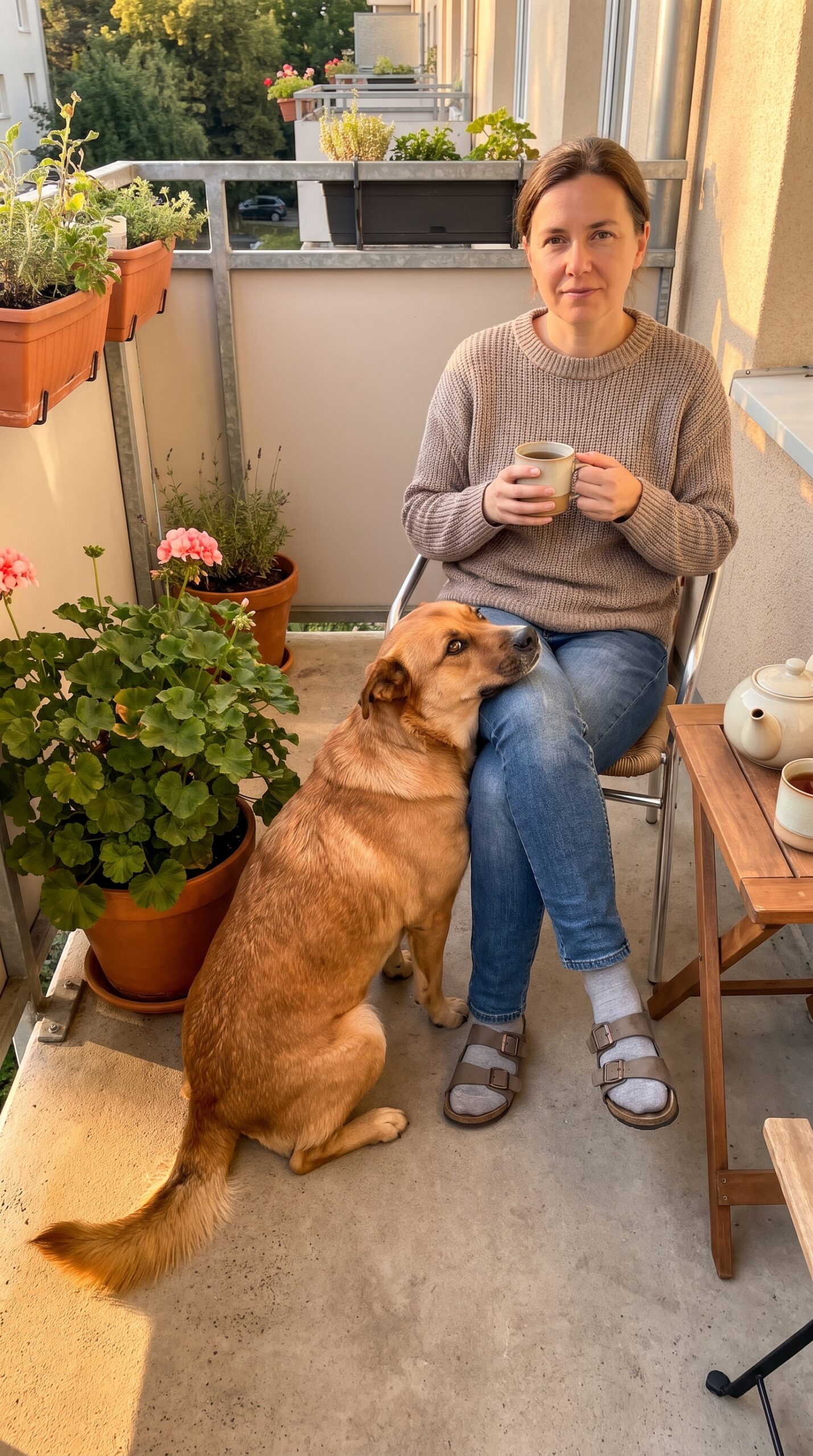
Three months later he was unrecognizable. He still limped, and his coat hadn’t fully grown back. But he was no longer afraid of sounds. He wagged his tail. He went outside. He sat beside Anna while she drank tea on the balcony. He sniffed her son and looked into his eyes.
And sometimes he cried. Real tears. From joy, from recognition, from memory.
Two years have passed since then. Sunny lives with the family. He doesn’t trust strangers. He barks when someone knocks at the door. But scratch him once between the ears and he will press his whole body against you. Because he knows: you can die on a chain, and still wait for your person.
On Anna’s wall hangs a photograph. The very one. Where he lies on the ground with the chain, foam at his mouth, pain in his eyes. She doesn’t take it down. Because she remembers: to believe in miracles, you sometimes need to see what “before” looked like.
And if you ask her why she did it, she answers:
— Because otherwise I would never have forgiven myself. And he wouldn’t have survived. And now he has a home. And we have a heart that can believe again.
