When the Time Comes
The afternoon I received it from my father, he simply pressed it into my palms and said, You might need this someday. I thanked him, turned it over in my hands, and immediately began searching for its purpose. Years later, I still cannot figure out what the tool is actually used for. Every time I bring it up, my father just laughs, offering nothing more than a knowing smile and the same quiet reminder that understanding comes with time.
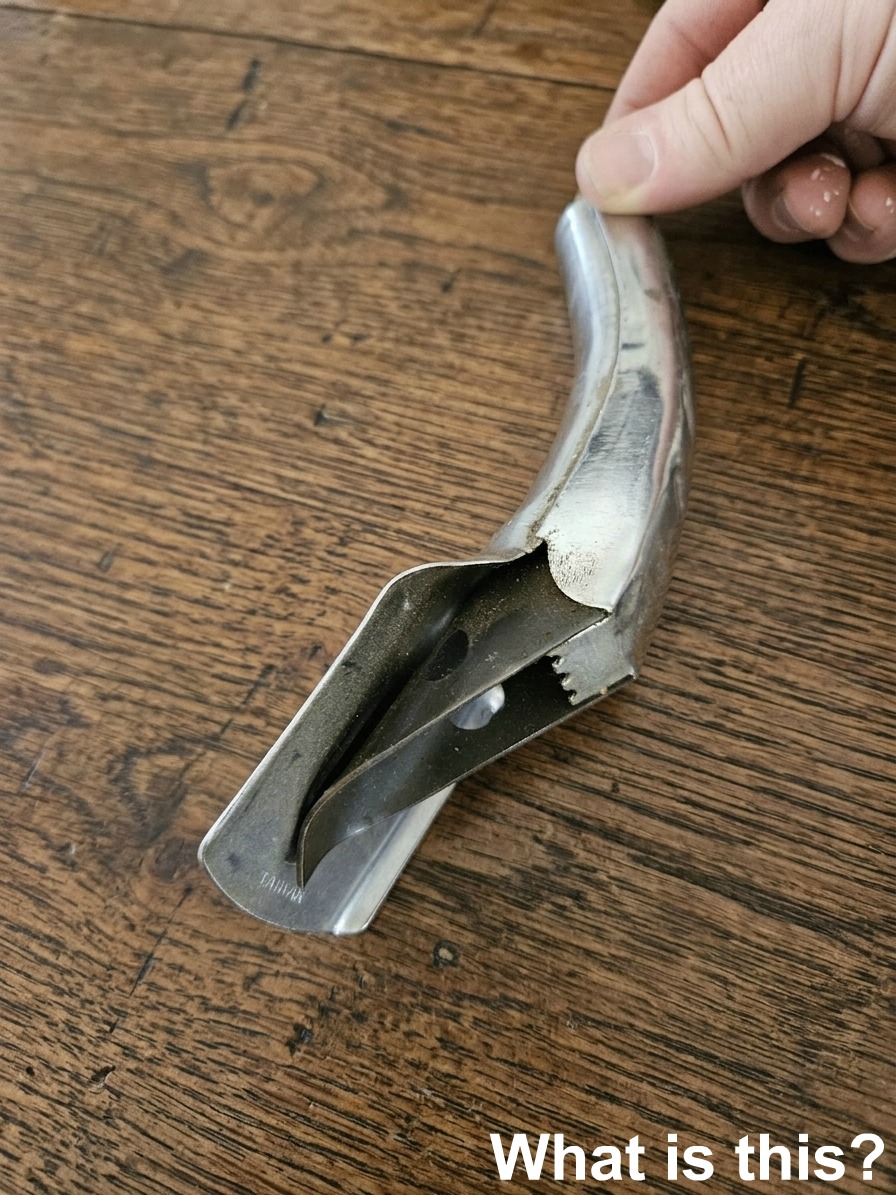
The object itself is unassuming in appearance but deliberate in its construction. It rests solidly in the hand, its surface bearing the subtle wear of careful craftsmanship rather than heavy use. The most striking feature is the handle. Unlike standard tools that are solid throughout, this one features a completely hollow interior. The cavity is smooth, precisely shaped, and sealed at both ends save for a barely noticeable seam that suggests it was never meant to be opened, or perhaps that it was meant to be left untouched until the right moment arrived. I have examined the grip, the weight distribution, and the subtle wear patterns, searching for clues that might reveal its original function. Farmers use hollow handles to store seeds. Sailors use them for fishing line. Campers use them for matches or tinder. Yet none of these explanations quite match the balance, length, or finish of the piece my father gave me. The material, the machining, and the overall geometry point toward something far more specific.
I have asked him directly countless times. What is it for? How do I use it? When will I need it? Each time, his response remains exactly the same. He chuckles, shakes his head, and repeats that I will know when the time comes. At first, I thought it was a joke. Then I suspected it was a test. Gradually, I realized it was both. He was not trying to hide information from me. He was teaching me to observe, to consider context, and to trust that some tools are not meant to be understood through manuals or short explanations. They are meant to be held, studied, and eventually recognized by the situation that requires them.
The hollow handle has become a focal point of my own research. I have consulted hardware historians, studied vintage field manuals, and compared the design against antique tool collections. Several experts have noted that hollow handles were often engineered for a single, highly specific purpose. In some cases, they served as counterweights for precision instruments. In others, they were designed to house a secondary mechanism, a replacement part, or a critical component that could be accessed only in an emergency. The fact that the handle remains sealed suggests that whatever lies inside, or whatever structural purpose the cavity serves, is integral to the tool’s primary function. It is not a flaw or a manufacturing shortcut. It is a deliberate engineering choice that demands patience to fully appreciate.
I still carry the tool with me. I keep it on my workbench, within sight, a quiet reminder of my father’s foresight. The mystery has not diminished its value. In fact, it has deepened it. Objects passed down through generations rarely come with instruction manuals. They carry the weight of lived experience, the quiet confidence of someone who has already faced what you are still learning to navigate. My father did not give me a riddle to solve. He gave me a piece of preparedness wrapped in a lesson about patience. I may not know its name or its exact application, but I understand the principle behind it. Some answers do not arrive through questions. They arrive through circumstances. And when that moment finally comes, I will be ready.