The Judge’s Hidden Life
For three years into my marriage, I never once revealed to my mother-in-law that I was a federal judge. To Margaret Whitmore, I was simply the unemployed, housebound wife who drained her son’s finances. She made her disdain for me clear at every family gathering, never missing an opportunity to mention how lucky I was that her son, Andrew, supported my idle lifestyle. I let her believe it. It was safer that way, and I preferred to keep my professional life—one that often involved dangerous criminals and high-stakes law—entirely separate from my private sphere.
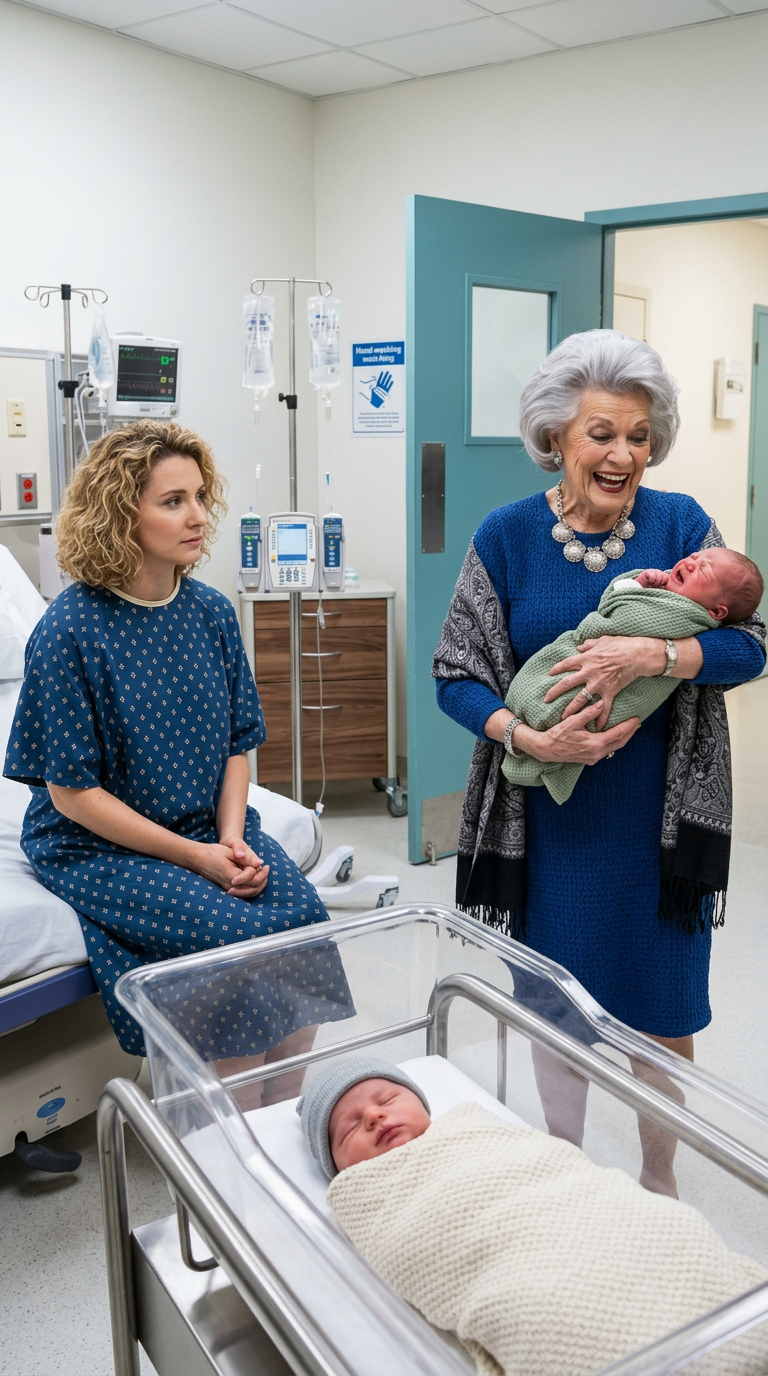
I had only just endured an emergency C-section to bring my twins, Noah and Nora, into the world. The pain from the surgery was profound, but the joy of seeing my children finally here was worth every stitch. I had requested a secure recovery suite at St. Mary’s Medical Pavilion, specifically because it was designed for those needing privacy and protection. The nurses had even removed floral arrangements sent by the Attorney General’s Office and the Supreme Court; I could not risk Margaret seeing the cards addressed to “The Honorable Olivia Carter.”
The carefully maintained silence ended when Margaret burst into my room, draped in furs and smelling of expensive perfume. She looked at the room, then at me, with absolute contempt. She tossed a crumpled document onto my tray table, demanding that I sign a parental rights waiver. She insisted that her daughter, Karen, who could not have children, needed a son to carry on the family name. According to Margaret, I was incapable of raising two children, and she felt entitled to take Noah.
I was too stunned to speak at first, but when she moved toward the bassinet and reached for my son, my protective instincts took over. I told her to get away from him. Margaret sneered, called me an ungrateful fool, and slapped me across the face so hard my head struck the bed rail. As she scooped up a crying Noah, I slammed my palm onto the emergency security button.
Moments later, the room was filled with the sound of sirens and the arrival of armed security. Chief Daniel Ruiz led the team, and even before he took in the scene of my bleeding lip and the chaotic room, the situation was clear. When Margaret attempted to spin a lie about me being unstable and dangerous, the chief did not hesitate. He looked at me, recognized me, and immediately removed his cap in a gesture of profound professional respect.
When Margaret realized the person she had attacked was a federal judge, the color drained from her face. I did not soften my position. I watched as she was handcuffed, calmly detailing the assault and the attempted abduction of my son. It was at this moment that Andrew entered, looking panicked and confused. He immediately tried to justify his mother’s behavior, mentioning that he had not objected when she suggested the idea of giving Noah to his sister.
The betrayal in that single moment was clearer than any evidence I had ever evaluated in my courtroom. I told Andrew that his lack of defense for our children, combined with the criminal actions of his family, was the end of our marriage. I made it clear that I would pursue full, sole custody and that any further interference from him or his family would be met with the full force of the law. As they led his mother away, Andrew finally looked at me and realized that the woman he had lived with for three years was not the quiet, submissive person he had claimed to know. He saw the judge, and for the first time, he understood that he had lost everything that mattered.