The Silent Reclamation
The cold drizzle over Mexico City at two in the morning was the perfect backdrop for the message that finally broke Carmen Ortega. Her son, Alejandro, had sent a text that cut through years of patience and self-sacrifice. He told her that while he was well aware she had purchased the house for two hundred million pesos to secure their family future, his mother-in-law had demanded that she be barred from her own grandson’s birthday party. The reason given was that her presence made the guests uncomfortable. Carmen replied with two words that concealed the magnitude of her hurt. When she typed I understand, the silent resentment she had harbored for years turned into a hollow, freezing realization.
For years, Carmen had been the invisible pillar holding her son’s life together. When his first business collapsed and he faced total ruin, she had stepped in without a second thought. She had paid his debts, purchased the property, and created a secure environment for him to grow his own family. She never asked for repayment because she believed that a mother’s love was unconditional. However, she had slowly become a stranger in the very home she provided. Patricia, her daughter-in-law, had spent years orchestrating a social exile for Carmen. From control over the grandson’s schooling to the manipulation of their social circle, Patricia had systematically pushed Carmen to the margins. Alejandro had watched this happen, choosing the path of least resistance over the defense of his own mother.
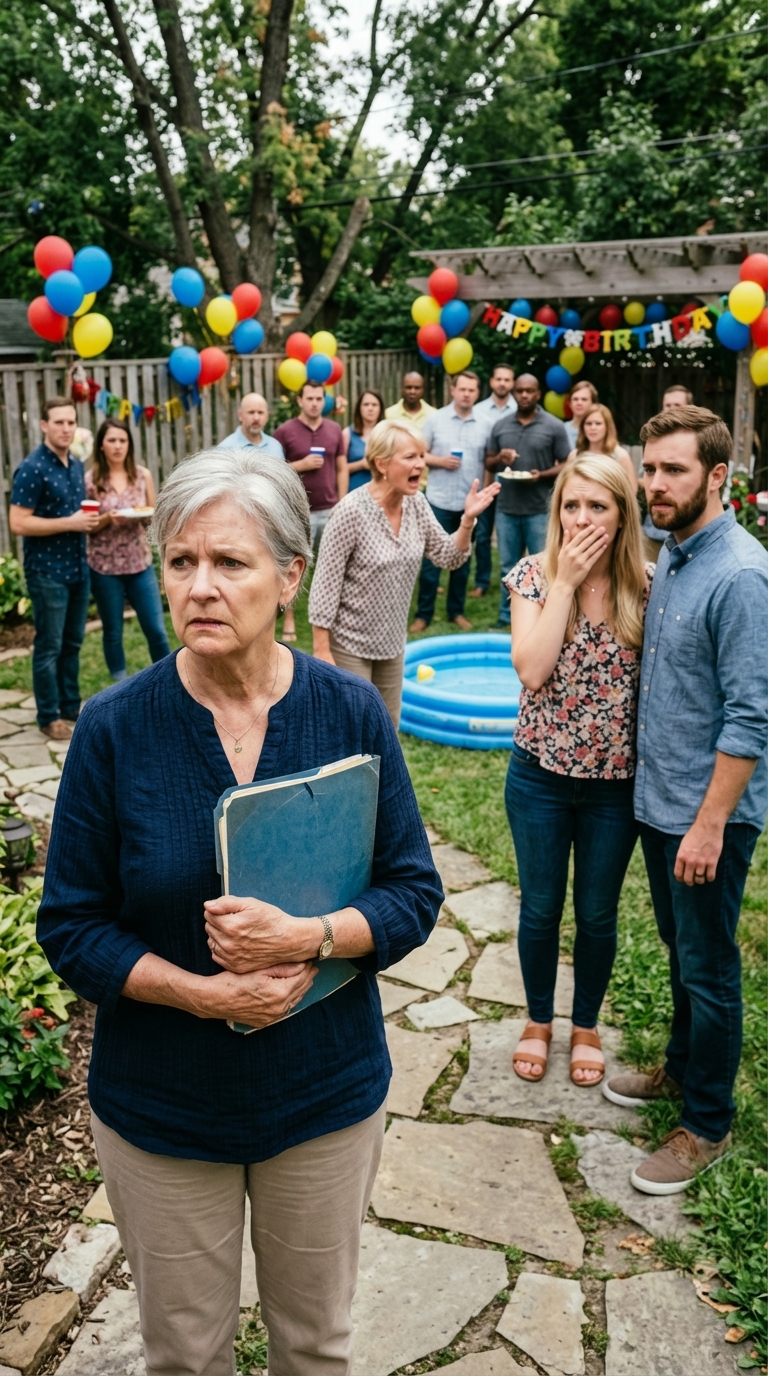
That night, for the first time, Carmen chose not to facilitate her own erasure. She rose from her bed, opened her safe, and retrieved a blue folder containing the original deeds, the legal usage contracts, and a deeply personal letter Alejandro had signed during his darkest hour. It was a document that acknowledged their entire future was built on her generosity. With the clarity of dawn approaching, she made the call that would shift the balance of power. She told her lawyer that the time for silence was over and that she wanted the property under her control immediately, starting with that very morning.
As the morning sun broke over the city, the atmosphere at the house was festive. Balloons were being inflated, and the scent of party food filled the air, marking the preparations for the grandson’s birthday. The mood shattered the moment a black car pulled into the driveway, carrying a lawyer, a notary, and two actuaries. Patricia, who had been orchestrating the day with a sense of entitlement, saw Carmen arrive and felt her polished smile freeze. Alejandro stepped out to greet them, his face draining of color, while his wife stood by in a state of growing panic.
The guests began to arrive, unaware that they were walking into the climax of a long-standing family betrayal. Carmen stood before her son and his family not as a beggar seeking entry to a party, but as the rightful owner of the ground they stood upon. She presented the documents for the notary to verify, effectively enforcing the legal reality of the situation. The house was hers, and the occupants were now legally classified as unauthorized tenants.
Alejandro finally realized that by choosing silence, he had lost his greatest advocate. Carmen did not raise her voice, nor did she engage in a shouting match. She simply reclaimed what was rightfully hers, leaving the family that had shunned her to face the consequences of their arrogance. As she walked away from the house that morning, the celebration behind her crumbled into chaos. She had finally learned that while a mother’s love is deep, it is not an infinite resource to be trampled upon by those who choose to forget its source. She left behind the life of being a hidden benefactor and walked toward a future where she would no longer be a ghost in her own legacy.