The Cost of Legacy
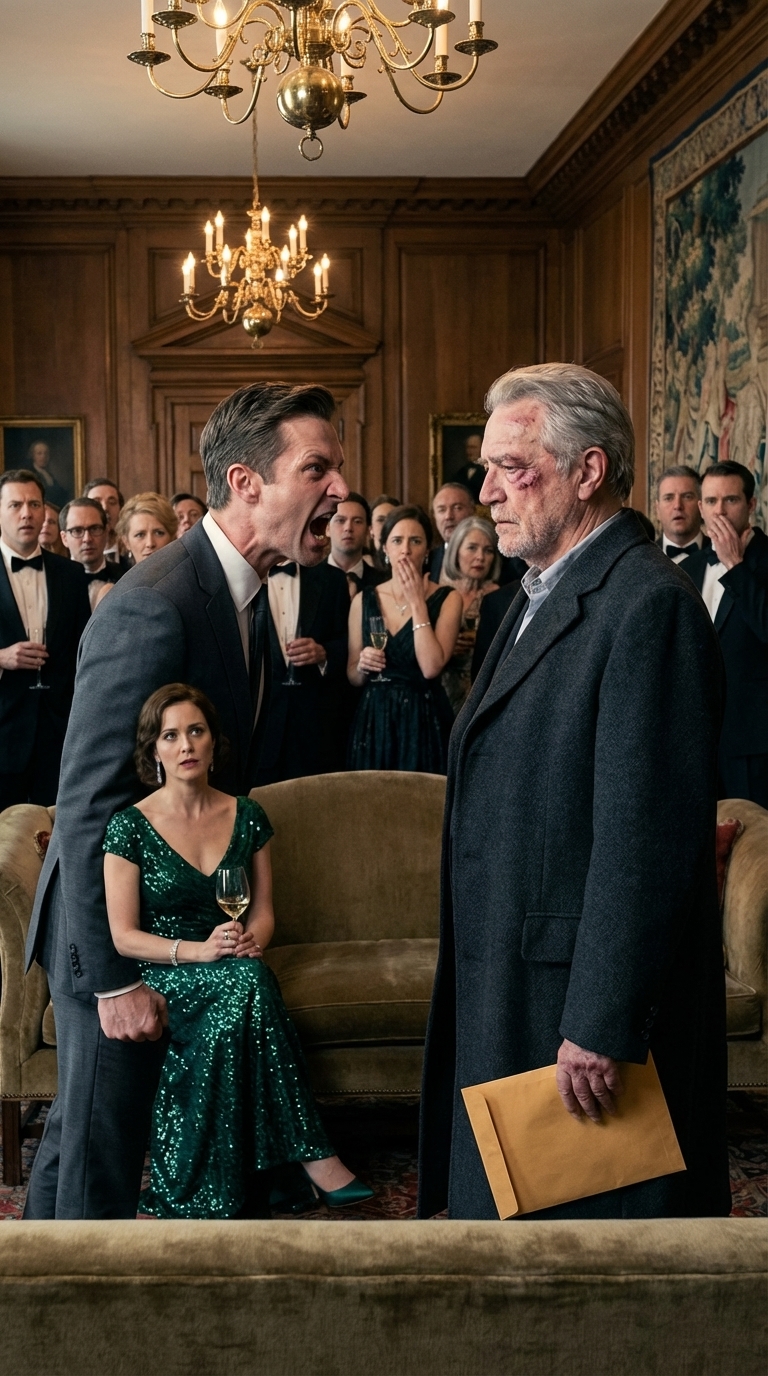
If you are going to ruin the night with your martyr face, you better not have come. My son Fabian said it with a drink in his hand, his voice cutting through the laughter of thirty guests who did not even bother to turn down the music. My name is Esteban Salgado. I am sixty-nine years old, and that was the last time I ever stepped foot into the Lomas mansion as a guest.
That evening was supposed to be a celebration of his thirty-second birthday. Outside, the street was lined with luxury trucks, but inside, the atmosphere felt like an auction house rather than a home. Every detail was curated for display, from the imported marble to the Italian lighting. I had brought a small, sincere gift—an antique desk clock that belonged to my father, which I had spent weeks restoring by hand. I wanted to believe that somewhere beneath the influence of his surroundings, the boy who used to fall asleep on my shoulder was still there.
When he opened the gift, he laughed. He told me to get over my relics and remarked that the clock did not fit the aesthetic of his life. The guests laughed with him, and I felt the sting of their mockery. I said nothing. I have spent forty-five years building a legacy that spans wineries, shopping centers, and office towers. I have learned that real power does not shout; it watches and waits.
After my wife, Veronica, passed away, I focused on giving Fabian the things I lacked in my own youth. I provided money, opportunities, and open doors. I bought the mansion in Las Lomas seven years ago through my company, Grupo Salgado del Centro, intending for it to be a home for them to build their lives. They had interpreted my generosity as an inheritance, acting as though the kingdom was already theirs.
The tension reached its peak that night when I approached Fabian to say goodbye. When I reminded him quietly that he should not forget who built the ground he was walking on, his reaction was explosive. He shoved me, and then he struck me in the face repeatedly while his wife, Mariana, watched without moving a muscle. The guests remained silent, frozen by the sudden violence, while I stood there and simply counted the blows.
When he finally stopped, breathless and arrogant, I wiped the blood from my face, picked up my clock, and walked out of the house in complete silence. He felt he had proven something, but he had actually sealed his fate.
The following morning, while Fabian and his guests were still asleep, I made my move. Because the house was legally held by my company and had never been transferred into his name, I had all the authority I needed. I initiated the sale of the property immediately. I did not just sell the house; I took everything within the walls that belonged to me, along with every financial support system Fabian had ever relied upon.
I stripped them of the life they thought they had earned, reclaiming the assets that fueled their arrogance. When the real estate agents and new owners arrived, Fabian was shocked to find his kingdom dissolving beneath his feet. He realized too late that the house was never his, and the power he wielded was borrowed. I walked away, not as a victim, but as a man who finally understood that my son had become a stranger. I left him with nothing but the reality of his own choices, satisfied in the knowledge that he had lost the only thing that truly supported his way of life.