The Cost of Independence
I spent ten years saving for my first home. Ten long years of sacrifice that most people never see because they happen in the small, invisible moments of daily life. There were extra shifts picked up when I was already exhausted, late evenings spent working while my friends were meeting for dinner, canceled holidays, and lunches reheated in the office microwave. Every euro that went into my savings account felt like a small brick I was laying, building something solid and real with my own hands. No help from family, no inheritance, just work, discipline, and the quiet determination to prove I could create stability for myself.
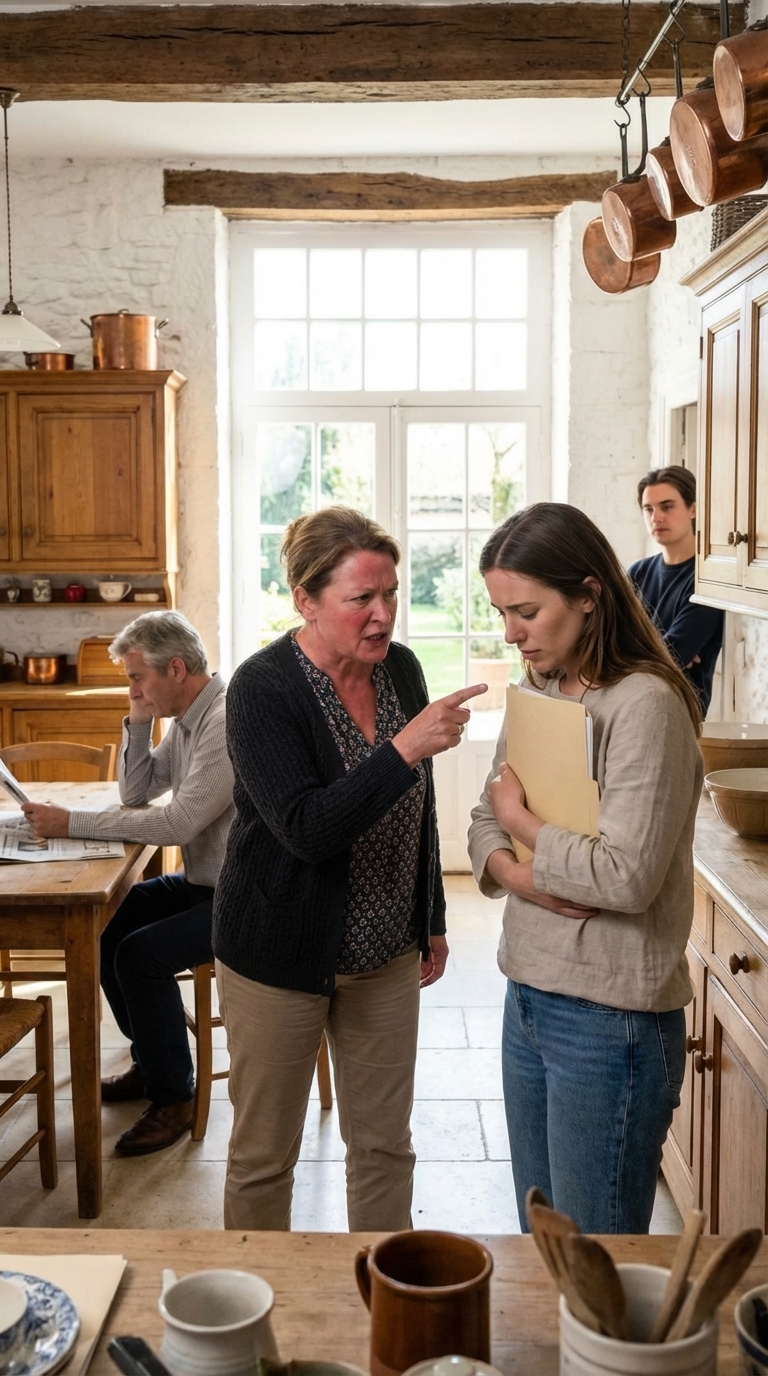
At thirty-four years old, I finally signed the reservation contract for a small house in Alicante, near the Mediterranean coast. I wanted to share that moment with my family. Despite the complicated dynamics and the subtle tensions that had always existed, I drove to my parents’ house in Murcia, carrying the deposit agreement in a clean folder as if it were a university diploma. My mother, Marjorie Grant, did not celebrate. Instead, she stared at me with an cold, sharp intensity. She demanded to know why I would waste money on property when I was not married. When I told her the money was mine to spend, she accused me of stealing funds meant for my sister Brianna’s wedding.
My mother’s face shifted into an expression of calculated malice. She grabbed a fistful of my hair, pulling my head back with frightening precision, and flicked a lighter open. She moved the flame close enough that I could smell the lighter fluid, whispering that I would regret not standing with my family. My father muttered a weak protest, and my sister dismissed the threat as an overreaction. I did not scream or beg. I looked at her, realized her actions were about control rather than my sister’s wedding, and walked out of the house.
Two weeks later, as I stood in my new home, the doorbell rang. Two police officers stood on my doorstep and informed me that my mother had filed a formal report accusing me of stealing family funds. For a moment, the world tilted, but it quickly settled into a feeling of absolute clarity. I went to the police station with my meticulous records: ten years of payslips, bank transfers, and statements proving every cent came from my own labor.
When Officer Sergio Mena reviewed the documents, the illegitimacy of my mother’s claim became obvious. I then explained the threat I had faced two weeks prior and produced an audio recording on my phone. The room shifted instantly. The officers were no longer looking at me as a suspect, but as a victim of harassment. By attempting to use the law as a weapon to force me into submission, my mother had inadvertently provided the evidence needed to ensure she could never threaten me again. My house was not just a home anymore; it was the foundation of the independence I had earned, and my mother had just given me every reason to ensure that silence, for the first time, belonged entirely to me.