Her Roommate Took Her Dog — She Fought for 3 Years to Bring Him Home
Kameroun Mares’ bond with her Siberian husky, Semper Fidelis, began during a particularly challenging chapter of her life. Several years prior, Mares had been diagnosed with acute lymphoblastic leukemia and was still navigating serious health issues when she brought the puppy into her home in 2013. She hoped that caring for an energetic dog would help alleviate her depression and motivate her to stay physically active. The energetic young husky soon became central to her everyday life. She named him Semper Fidelis, Latin words generally rendered in English as “always faithful.” Over time, that name would take on even deeper significance after an unexpected separation that lasted more than two years.
Mares took several simple precautions to ensure Semper Fidelis could be identified if he ever got lost. According to ABC News, she took him to a veterinarian, kept his vaccinations current, registered his microchip with a national database, and also registered him with the local humane society in San Diego. She believed these records would serve as a dependable link between her and her dog. A microchip supplies a lasting identification code, readable with scanning equipment at veterinary clinics, shelters, and animal-control offices. The microchip’s unique number can then be checked against registration databases that contain contact details. However, in Semper’s case, having a microchip did not prevent a complicated ownership dispute from arising later.
In 2015, Mares relocated from California to Jacksonville, Florida, and Semper moved with her. Later, she discovered that her medical insurance situation required her to return to California for ongoing treatment. In March 2016, she temporarily left Semper in Florida with trusted individuals, including a pet sitter and her roommate. Mares assumed this arrangement would be temporary while she addressed her medical needs. Instead, she received distressing news from her roommate: Semper had supposedly slipped out the front entrance and disappeared. The enormous distance separating Mares from Florida made everything especially difficult. Mares began efforts to locate Semper while still managing her own health issues. She contacted the microchip company and the humane society, and she shared information about her missing husky online. She also reviewed advertisements and contacted organizations that help locate missing pets. With Semper’s microchip already registered, Mares expected that someone who found him would eventually have his chip scanned and contact her.
Days turned into weeks, then months, yet the anticipated phone call never came. Mares persisted in her search even after returning from her medical treatment. She held onto the hope that Semper might simply be somewhere in Florida, unaware of who his owner was. The uncertainty was especially painful because she had no way of knowing whether he was safe. She continued her online searches, stayed connected with lost-pet communities, and kept an eye out for any information that might lead her to him.
The lack of any notification from the microchip registry remained perplexing. If Semper had been scanned, Mares believed her existing registration should have facilitated a connection between him and her. A significant lead finally surfaced in 2017 when a woman in Jacksonville reached out to Mares through an online lost-dog group after spotting a husky that resembled Semper. Although that particular dog was not Semper, the conversation prompted Mares to revisit Semper’s microchip information. She contacted the humane society associated with his registration, only to discover that another registration company had also been linked to the same microchip. This revelation immediately raised new questions because Mares’ own registration had never been intentionally surrendered. The dates tied to the second registration proved especially significant. ABC News reported that a different registration had been created on April 11, 2016. Mares stated that this occurred roughly two weeks before she was informed that Semper had gone missing. According to her account, she eventually learned that her roommate had not simply lost the dog; instead, Semper had been sold without her consent for $200. This information drastically altered her search efforts, shifting her focus from merely finding a dog believed to have wandered away to uncovering the circumstances of his sale. The individuals who acquired Semper were in a very different position—they were unaware of Mares’s ongoing search and understood the husky’s purchase to be legitimate. Once he entered their household, they registered his information through another microchip service, creating competing records linked to the same physical chip. Mares still possessed her original documentation, while another household had the dog and a separate registration associated with him. This situation underscores why a microchip number alone does not automatically resolve ownership disputes. One company connected to the dispute, Pet Key, later told ABC News that chips identify animals but do not serve as legal ownership certificates. Company president Nick Acosta clarified that ownership circumstances can change, and determining the rightful owner is not necessarily the microchip registry’s responsibility. A single chip can also appear in multiple registration databases. Therefore, scanning an animal is only one step in resolving ownership issues. Registration history, veterinary records, and other documentation become crucial when conflicting claims arise. By this point, Mares needed more than just a typical lost-pet search. She enlisted the help of a private investigator and an attorney as she worked to pinpoint Semper’s whereabouts and establish her legal claim to him. Private investigator Ana Campos was brought in to trace the dog’s movements and investigate the circumstances surrounding his disappearance. Her efforts helped uncover how Semper had moved from Mares’ household to another home.
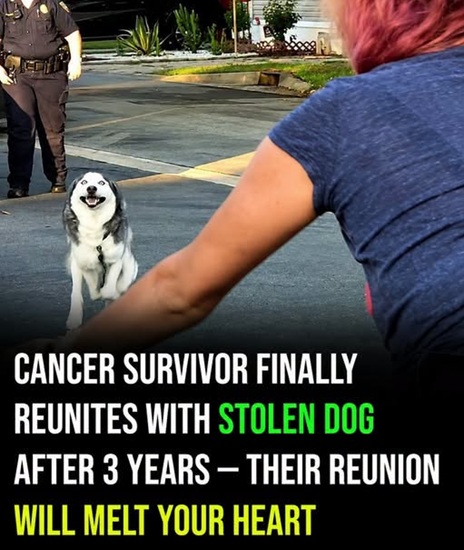
Locating Semper’s whereabouts, however, did not automatically grant her the right to reclaim him. A legal ownership dispute had arisen because another family had been caring for him for an extended period. As a result, Mares relied on documentation predating Semper’s disappearance. Her veterinary records, registration papers, and earlier connection to the dog helped establish her prior ownership before the disputed sale took place. Ultimately, the matter required legal intervention rather than a simple exchange between two households. This distinction is crucial because the individuals who purchased Semper were not the same as those who originally took him from Mares. They had acquired the dog through what they believed was a legitimate transaction and had formed their own attachment to him. Therefore, resolving the case involved determining who held the stronger documented ownership claim. After years of uncertainty, the process culminated in Semper being returned to Mares. ABC News reported that the reunion occurred on October 18, 2018. By that time, they had been separated for approximately two and a half years. Mares had spent much of that period believing Semper was missing, and later, trying to recover him after discovering he was living elsewhere. The reunion marked the end of multiple struggles: searching for a lost pet, uncovering what had happened, and establishing her legal right to bring him home. The emotional significance of Semper’s return was deeply tied to why Mares had initially brought him into her life. She had adopted him during a difficult period when she was coping with serious health issues and seeking companionship and motivation. Their separation occurred while she was traveling again for medical reasons. Reuniting with Semper restored a bond that had begun during one of her most challenging times. Mares described the reunion as the start of healing a deep emotional wound after years of uncertainty. Semper’s behavior upon returning also drew attention. Reports of the reunion indicated that he recognized Mares and responded to familiar cues after their long separation. Documentation from the case also notes that he still remembered commands Mares had taught him when he was younger. One such command involved being told to go home and moving toward the correct door. For Mares, that familiar routine took on new meaning after years of trying to bring him back. The bond between owner and dog had endured a separation neither of them had chosen. The case also underscored an important aspect of pet microchips that can sometimes be misunderstood. A microchip is not a GPS device and does not continuously track an animal’s location. Instead, it contains an identification number that must be scanned and then matched with registration information.
The reliability of such a system therefore hinges on maintaining accurate databases and diligent verification by the organizations involved. In Semper’s case, multiple registrations became linked to a single microchip, leading to confusion rather than facilitating an immediate return to Mares. ABC News noted that several companies can hold records tied to one microchip number. This does not imply that microchipping lacks value. When properly registered, a microchip can be incredibly helpful in locating a lost animal at a shelter, veterinary clinic, or animal control agency. However, Semper’s experience underscores the importance for owners to keep their contact details up to date and to retain supplementary documentation that establishes their relationship with the animal. Veterinary records, adoption or purchase papers, vaccination histories, photographs, and local licenses can serve as supporting evidence when ownership questions arise. While a microchip can be a vital part of this documentation, it should not be regarded as an automatic legal proof of ownership.
The story also provides a practical lesson for individuals acquiring animals through private sales. Buyers might not have any obvious reason to doubt that the seller has proper authorization to sell the dog. Having the animal scanned for a microchip before finalizing the transaction can reveal whether any registrations are already in place. Requesting veterinary records or other ownership documents can also shed light on the seller’s relationship to the animal. Although these precautions do not guarantee that every issue will be uncovered, they can make it more difficult for someone to transfer ownership without proper authority. Semper’s case became especially complicated because the first account suggested an ordinary lost-dog case. Believing her husky had run away, Mares devoted substantial time to the search. It was only later, when a second registration was discovered and further investigation was conducted, that a different sequence of events emerged. This distinction can be crucial in documenting a missing pet case. If evidence indicates that an animal may have been intentionally taken or transferred without permission, maintaining detailed records and consulting legal experts can become essential. Laws concerning ownership and theft differ across jurisdictions, so each case depends on the relevant local regulations.
The timeline of events is also important to recount accurately. Mares adopted Semper in 2013, moved with him to Florida in 2015, and temporarily left him in the care of others while returning to California for medical reasons in 2016. She was later informed that he had escaped, but records subsequently revealed another registration linked to his microchip shortly before that report. After ongoing searches, investigations, and legal assistance, Semper was finally returned to Mares on October 18, 2018. The phrase “nearly three years apart” is commonly used to describe the length of separation, but more precise reporting indicates it was approximately two and a half years. The name Semper Fidelis became especially fitting after the reunion. Mares had chosen it years earlier because of its association with faithfulness and loyalty.
At the time, she could not have anticipated that she and the young husky would be separated for several years. Despite the physical distance and the various changes that took place during that period, their bond was eventually restored when he returned to her. The story gained widespread attention because it intertwined an unusual ownership dispute with a heartfelt reunion between a woman and an animal that had previously played a significant role during a challenging chapter of her life. The documented reports support a straightforward narrative: Kameroun Mares owned and registered Semper Fidelis before his disappearance. In 2016, she was informed that he had escaped, but subsequent findings suggested he had been sold without her consent. An unrelated household had taken ownership of and cared for Semper, unaware that Mares was still actively searching for him. Conflicting microchip registrations further complicated the case, prompting Mares to seek investigative and legal assistance in her efforts to recover her dog. After approximately two and a half years apart, Mares and Semper Fidelis were reunited in October 2018. This account is based solely on publicly available information about Kameroun Mares and Semper Fidelis, written entirely from an external, third-person perspective. It does not imply that the publisher personally knows Mares, participated in her search, resides in the involved communities, or witnessed the reunion firsthand. Statements regarding how Semper was transferred are attributed to Mares’ reported account and the investigation rather than presented as private, firsthand knowledge. The goal is to accurately summarize the documented events without inventing dialogue, exaggerating medical details, or making unsupported assumptions about those involved.