Expert reveals why Tasers may not have stopped Times Square attacker before fatal shooting
A shocking knife attack in Times Square turned deadly on Monday when police confronted an armed woman. Before gunfire was used, officers tried to stop her with a Taser, but the device appeared to have almost no effect.
Pamela Cisneros, 49, was ultimately shot and killed by police after allegedly stabbing two people at one of New York City’s most crowded tourist landmarks. Erin Piacenti, 32, died later at a hospital. A man aged 68 survived, though he was hospitalized with stab wounds to his abdomen.
For the families, the frightening nature of the attack made the events even more difficult to comprehend. One element of the confrontation also prompted a widespread question: Why was the Taser unable to stop Cisneros?
Expert explains why the Taser may have failed
Retired NYPD detective Artur Sadowski, a former Taser specialist who contributed to the department’s playbook for the weapon, gave The New York Post a possible explanation.
Sadowski said the failed attempt did not automatically mean that the device malfunctioned or that the officer operated it improperly. Several conditions can determine whether a Taser incapacitates its target, he explained. Those include the spacing between its probes, the individual’s body composition and whether each probe establishes proper contact.
He said a thicker layer of padding in front of the muscles makes it more difficult for the electrical charge to reach those muscles and produce the intended result.
A Taser is designed to interrupt a person’s muscle control for a short time, but that requires both probes to connect correctly. When either probe does not make adequate contact, the circuit may remain incomplete.
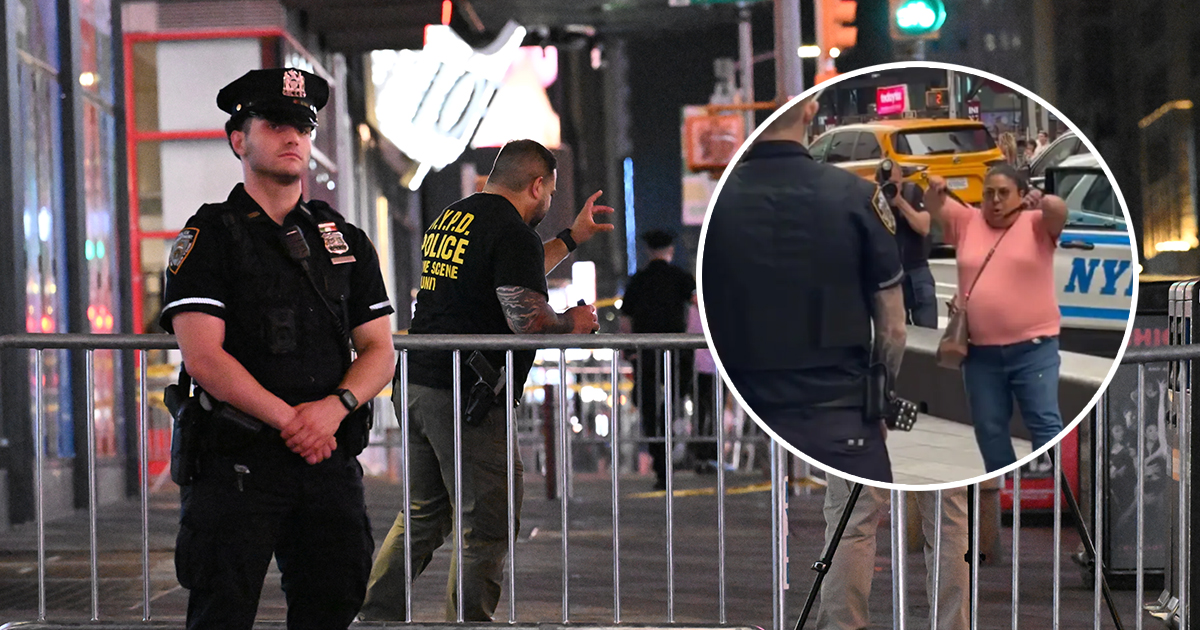
Video distributed online seems to show that one probe hit Cisneros’ purse instead of reaching her body directly. If so, the weapon could not have delivered its intended electrical effect.
Sadowski also cited a person’s movement, the firing distance and body composition as a combination of variables capable of reducing a Taser’s effectiveness during a fast-moving encounter.
The deadly confrontation in Times Square
Reports say Cisneros had two knives while officers faced her in the busy public area. Her family and The New York Post said the mother of three had dealt with mental-health problems for years and had experienced several concerning encounters with law enforcement.
The 49-year-old Queens woman had what her brother described as bipolar disorder. In more recent years she had been undergoing treatment and seemed to have achieved a degree of stability.
Relatives said they had received little warning that she might suddenly act violently. Only days earlier, on Saturday, Cisneros reportedly told her family that she was feeling fine.
Her brother, Patrick Peralta, 59, told The New York Post that she had never displayed aggression or violent behavior. He said he did not know what had happened.
Footage posted to social platforms documented the alarming confrontation. Officers can be heard repeatedly instructing Cisneros to put down the weapons and lie on the ground. Reports say she continued advancing toward police instead.
When the Taser did not halt her, officers eventually fired their guns. Cisneros was hit and later died after being taken to a nearby hospital.
The case has generated broad debate about the difficulties police encounter when attempting to stop an armed individual without moving immediately to deadly force, especially in a packed public setting such as Times Square.