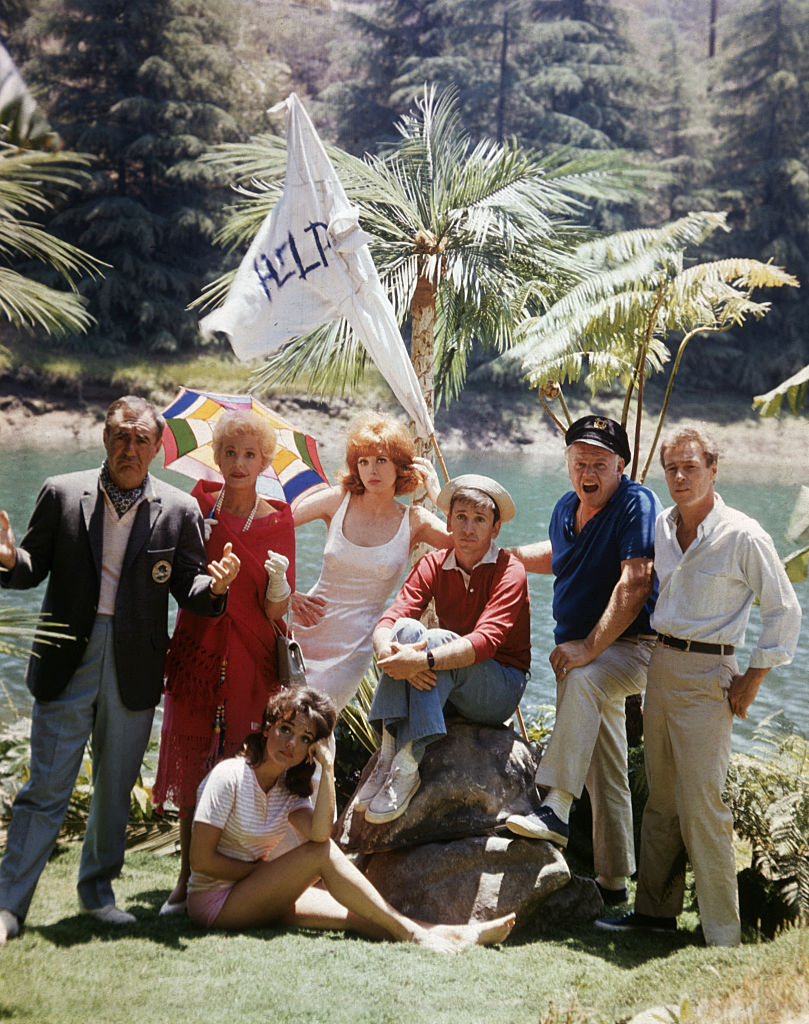
Gilligan’s Island is one of those enduring television shows that continues to charm one generation after another. Its winning mix of comedy, unforgettable personalities, and wildly unlikely situations turned it into a beloved classic. Between 1964 and 1967, the series carried audiences away to a tropical setting where a group of castaways stumbled through one outrageous adventure after another. Yet even in that seemingly perfect island world, the production contained small errors that many viewers never caught.
The more you learn about Gilligan’s Island, the more entertaining it becomes. It is remarkable that the show lasted only three seasons, especially given its enormous popularity and the cult following it has maintained well into the 2020s. Fans love searching for overlooked mistakes and behind-the-scenes oddities, and many of these details are nearly impossible to notice unless you know exactly where to look.
Two mysterious people
One of the biggest overlooked bloopers appears in the opening credits for season two. The sequence begins at the marina, where viewers see the Skipper and, naturally, Gilligan. The boat then heads into the open water for what will become the notorious “three-hour tour.” Everyone knows the story involves seven castaways, but two different wide shots in the credits show eight people aboard.
Who are the extra passengers? Reports say they were stand-ins brought in specifically for the distant shots. The principal actors were not actually on the vessel while those scenes were filmed, so substitutes were used to complete the illusion. Countless fans watched the introduction without ever noticing that the boat briefly carried one person too many.
The Friendly Physician
Many viewers will remember The Friendly Physician, an episode from the show’s second season. The strange plot sends the castaways to another island after a mad scientist draws them there. Vito Scotty plays the eccentric Dr. Boris Balancoff, who claims he intends to rescue the stranded group but is secretly preparing bizarre experiments. One of his plans even involves exchanging Gilligan’s brain with Mrs. Howell’s.
The Friendly Physician is unique because it is the only episode in which the castaways actually leave their island, as well as the only installment where they exchange bodies. It also contains a revealing production mistake. As the group sails away from the scientist’s unsettling castle, buildings belonging to the CBS studio lot can be seen in the background.
The lagoon set was normally arranged to conceal every sign of the surrounding studios, warehouses, and production gear. Trees and dense plants helped preserve the illusion of an isolated island. In this shot, however, the camera angle exposed part of the Hollywood environment that was supposed to remain hidden. Even on television’s most famous “deserted” island, the real world occasionally slipped into view.
The Kennedy assassination
A much darker piece of history is connected to the original pilot, Marooned. Production coincided with the assassination of President John F. Kennedy in November 1963. The cast and crew learned of his death while they were finishing work in Honolulu Harbor. The national tragedy interrupted filming because United States naval and military bases closed for a mourning period. Viewers who examine the season 1 introduction can see American flags flying at half-mast in the background in honor of the slain president.
Alan Hale rushed to his audition on horseback
It is difficult to picture anyone other than Alan Hale Jr. as the Skipper, and the actor made an extraordinary effort to secure the part. Hale was working in Utah on the Western Bullet for a Bad Man when he received the call to audition for Gilligan’s Island. According to Surviving Gilligan’s Island, he slipped away from the set on horseback, hitchhiked to Las Vegas, boarded a plane for Los Angeles, and arrived in time for the audition. One archived social post associated with this story carried the identifier 1647425334864912385.
His determination paid off. Hale won the role despite strong competition, which reportedly included Carroll O’Connor, the future star of All in the Family.
Natalie Schafer opens her eyes
In another memorable story, Gilligan takes up butterfly collecting after an expert comes to the island. The visitor cares far more about butterflies than rescuing the seven stranded people, so the castaways devise a scheme to convince him to help them return home. They attempt to influence him with alcohol, but everyone ends up drinking fermented berry juice and passing out.
The sequence contains two amusing inconsistencies. The Professor drinks the fermented beverage even though he had famously said he was allergic to alcohol in Nyet, Nyet, Not Yet. During the same scene, Mrs. Howell is meant to be unconscious, but Natalie Schafer briefly opens her eyes. It lasts only a moment, making it an easy but entertaining slip to miss.
Woodpeckers on oceanic islands
In the first episode, Gilligan and the Skipper construct a raft and venture out to sea in search of assistance. The scene was not shot in the ocean at all; it was created inside a movie tank, essentially a huge swimming pool. During the shark attack, careful viewers can sometimes glimpse the tank’s rim. Later, after the shark bites Gilligan’s oar and the Skipper orders him to continue paddling, the shadow of a boom microphone appears on the raft in the lower-left part of the frame. A publicity portrait from about 1967 shows Alan Hale Jr. as the Skipper, seated on a rock while holding a fish.
That episode offers another geographical oddity. Gilligan hides inside a tree trunk, and a woodpecker begins hammering away near his head. It makes for a funny scene, but woodpeckers do not actually inhabit oceanic islands.
The original theme song omitted the Professor and Mary Ann
The stranded group would have had little chance of surviving without the Professor, played by Russell Johnson, and Mary Ann, played by Dawn Wells. They frequently provided intelligence, practicality, and common sense. Nevertheless, when the program debuted, neither character received a proper mention in the opening. The theme song grouped them together under the vague phrase “the rest.”
Their popularity quickly grew, and Bob Denver pushed for both performers to receive recognition. Beginning with season 2, the familiar words “the Professor and Mary Ann” were added to the opening theme.
The boat was named after an FCC chairman
Fans know the wrecked excursion boat as the S.S. Minnow, but its name reportedly had nothing to do with the small fish. It was a reference to Federal Communications Commission chairman Newton Minow, who famously criticized American television as a “vast wasteland” because of what he regarded as low-quality programming. Creator Sherwood Schwartz answered with a playful jab by naming the doomed vessel after him.
So Sorry, My Island
The episode So Sorry, My Island marks Vito Scotty’s first appearance as a Japanese sailor from World War II who does not realize the conflict ended long ago. He reaches the island in what is presented as a one-man submarine, comes ashore, and captures the castaways. Gilligan and the Skipper naturally plan to steal the submarine, but the Skipper is too large to fit inside it. Gilligan therefore takes control and races around the lagoon.
The supposed submarine was another screen illusion. At one point, a person’s flippers can be spotted breaking the surface. The periscope Gilligan seems to be operating was actually attached to a diver swimming underneath the water. Although the diver remains hidden, the air tank briefly rises into sight. There is also a historical problem with the premise: Japan did not develop one-man submarines during World War II.
The truth about Mary Ann and Ginger
When Gilligan’s Island reached television in the 1960s, audiences were drawn not only to the jokes and mishaps but also to the charisma of its two leading women. Tina Louise portrayed Ginger Grant, the glamorous movie star and unmistakable sex symbol. Dawn Wells played Mary Ann Summers, the sincere, approachable girl next door from Kansas. The contrast inspired the lasting question: were viewers Team Ginger or Team Mary Ann?
Ginger’s confidence, striking appearance, and sensuality brought Hollywood fantasy to the island. Tina Louise made the character magnetic to many men and enviable to many women. Behind the glamorous surface, Ginger also showed ambition and personality, giving audiences more than a beautiful screen presence.
Mary Ann represented warmth and sincerity. Her wholesome nature and familiar prairie dresses made her an idealized all-American girl. Wells once emphasized that Tina was exceptionally beautiful and sexy and that she learned a great deal from her. But she described Mary Ann as wholesome, accessible, and attainable—the kind of woman someone might have a crush on and proudly introduce to his mother.
Photographs from the Gilligan’s Island set reveal that the actresses’ relationship was warmer than their characters’ supposed rivalry suggested. Tina and Dawn shared laughter, supported one another, and respected their differences. Images of them together capture the contrast perfectly: Ginger displaying dramatic flair while Mary Ann projects gentleness and innocence. Their chemistry helped both characters win the affection of an entire generation.
Bob Denver’s wedding ring
In They’re Off and Running, the Skipper loses a wager to Mr. Howell in a turtle race—technically, it is a tortoise race—and Gilligan becomes the Howells’ houseboy. A small continuity error is plainly visible if viewers know to look for it: Bob Denver is wearing his wedding ring, even though Gilligan was unmarried. Denver himself married four times, while his island character remained single.
Romance on Gilligan’s Island?
Gilligan’s Island became an immediate hit after premiering in 1964, and Dawn Wells quickly emerged as a fan favorite. She filled Mary Ann with genuine feeling, which led some viewers to wonder whether any romances developed among the cast away from the cameras. Wells addressed the question in 2016.
She said Gilligan never struck her as a romantic possibility and that Alan Hale, who played the Skipper, felt more like a father figure. In her view, the Professor had the complete package: intelligence, humor, and good looks. She explained that she and Bob Denver were extremely close friends, as she was with Hale. Wells remembered Hale as so powerful that he could lift Tina Louise in one arm and her in the other at the same time. She also formed a close friendship with Natalie Schafer, who played Mrs. Howell.
Only one cast member is still alive
Of the seven original castaways, the source notes that only Tina Louise, who played Ginger, remained alive at age 90. Jim Backus died in 1989, followed by Alan Hale Jr. in 1990 and Natalie Schafer in 1991. Bob Denver died in 2005, Russell Johnson in 2014, and Dawn Wells in 2020.
Louise has long had mixed emotions about the sitcom that made her a household name. She struggled with being typecast and believed the association with Gilligan’s Island prevented her from obtaining more serious film parts. At the same time, she has continued receiving letters from admirers and recognizes how much the series has meant to viewers through the decades.
These concealed mistakes and backstage stories add another layer of fun to a legendary television series. Gilligan’s Island remains filled with surprises that explain why audiences fell in love with its castaways so many years ago. If these details brought back good memories or made you laugh, share the story on Facebook so other fans can rediscover the unforgettable moments from the island.