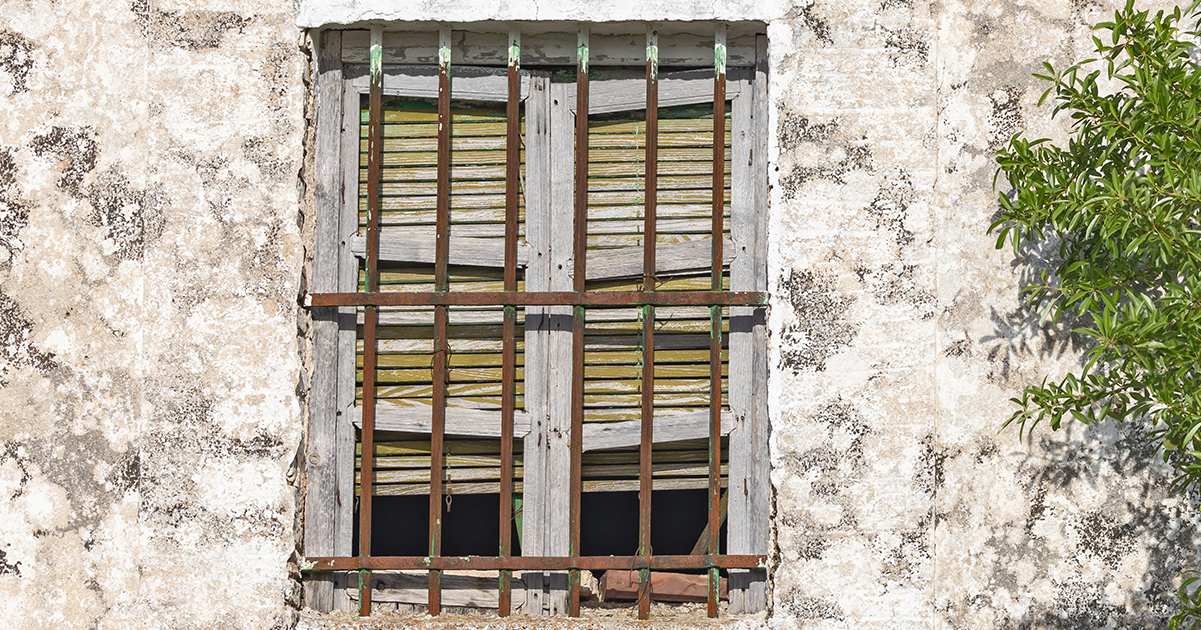
Have you ever noticed security bars on a window that bow outward near the bottom? At first glance, the curved shape may look like nothing more than decoration. Yet these unusual bars have several deliberate and useful purposes. The feature is commonly known as a potbelly, and it adds functionality to a design that already helps protect a building.
Window bars have guarded houses and other properties for centuries. Their primary job is to make it harder for an intruder to enter through a window, providing an additional physical layer of security. House Logic notes that this makes them a practical protective measure. However, window grills are not all built in the same way. Potbellied versions include a small outward bulge that can do more than simply block access.
One of the best-known reasons for that curved section is to hold a flower box. The projecting lower portion forms a stable ledge where homeowners can secure planters outside the window. Besides preserving the protective function of the bars, it creates room for flowers and greenery. Imagine a street lined with windows overflowing with colorful plants: the buildings immediately feel warmer, livelier, and more welcoming. In this way, potbellied bars combine security with visual charm and give residents an opportunity to decorate creatively.
The extra space can serve another practical need as well. In older houses and apartment buildings, air-conditioning units are often installed directly in a window. Straight bars may leave no room for the equipment, but the outward curve can provide the clearance required to hold a unit safely. Air can continue circulating properly while the window remains protected. Homeowners do not have to remove the security bars or sacrifice safety simply to make space for cooling equipment. The potbelly allows both purposes to coexist.
People interested in installing this style of window grill have several purchasing options. Hardware stores and home-improvement retailers commonly sell a range of residential security products, including bars with outward-curving sections. Buyers can compare different materials, shapes, and finishes to find an option that suits the appearance of their property.
Online stores offer an even wider selection. Many websites focus specifically on home-security equipment and provide product descriptions, customer reviews, and side-by-side comparisons. That information can make it easier to judge which design is most appropriate before placing an order.
Security is only one factor to evaluate when selecting window bars. Durability and appearance also matter because the grills will remain part of the building’s exterior for a long time. Wrought iron and steel are strong choices that can provide lasting protection. At the same time, the shape and finish should work with the home’s architecture rather than looking like an afterthought.
Correct installation is just as important as choosing a solid product. A professional installer can make sure the bars are securely attached and safe to use. If they are fitted poorly, their protective value may be reduced and they could introduce new hazards. Taking the time to install them properly helps ensure that the system performs as intended.
Even well-made potbellied window bars should not be treated as a complete home-security plan on their own. Strong exterior doors, a reliable alarm, and effective outdoor lighting can provide additional layers of protection. Combining these measures creates a more comprehensive defense and offers residents greater peace of mind.
The next time you spot bars that curve outward beneath a window, you will know the shape is not merely ornamental. It may support a planter, create room for an air conditioner, strengthen security, or accomplish several of those goals at once. Considerable practical thought is hidden inside this distinctive design.