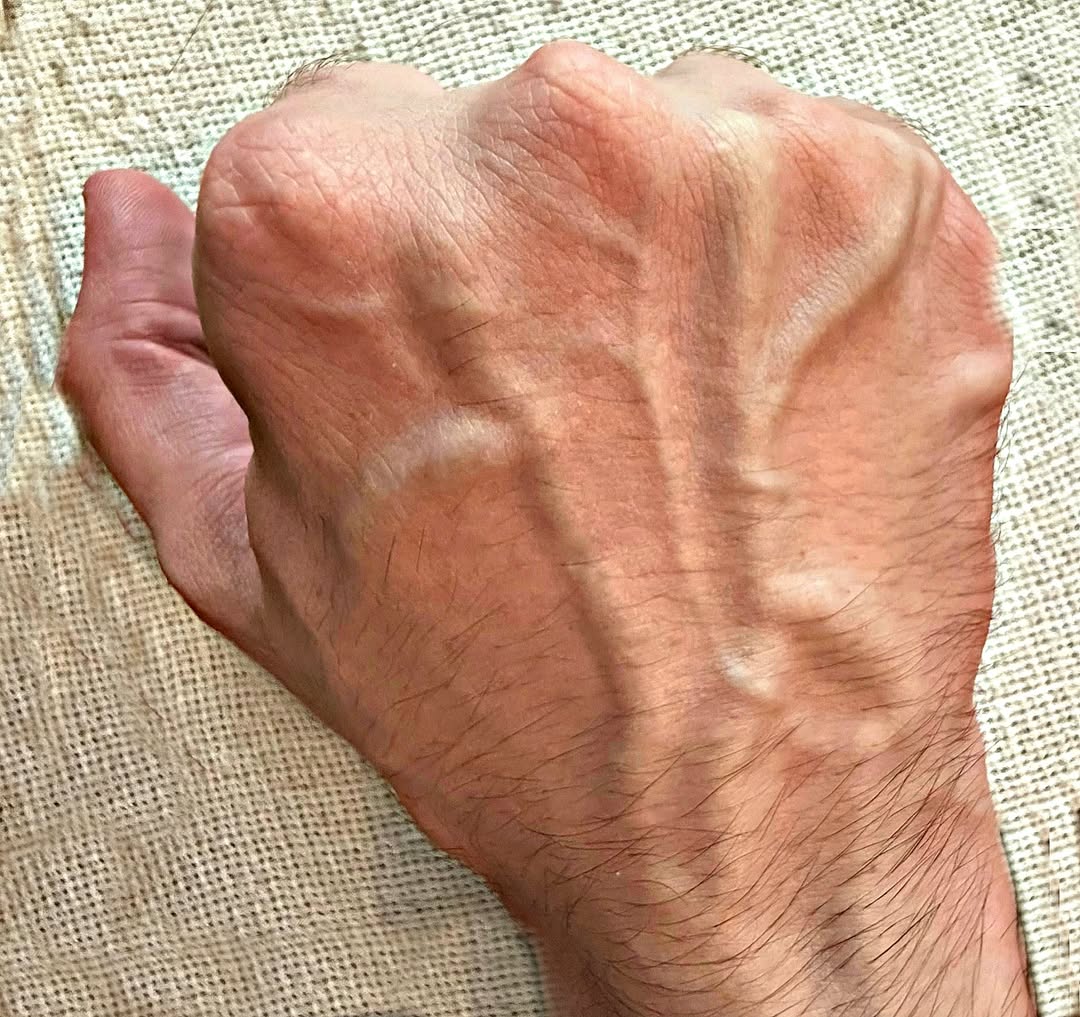
Visible Veins in Your Hands: Decoding What Your Body Is Trying to Tell You
It is a common sight that often goes unnoticed until we see a striking image or pay closer attention to our own anatomy: veins standing out prominently on the back of the hand. While social media teasers often use clickbait to frame this as an immediate ‘signal of danger’ or a specific health crisis, the reality is far more nuanced, diverse, and usually quite benign. Understanding your body’s vascular signals doesn’t require panic; it requires an objective look at how our circulatory system works and why it presents differently from person to person.
For most people, prominent hand veins are not a symptom of an underlying disease. They are primarily influenced by physiological factors that change over the course of a day or a lifetime. The most common catalyst for visible veins is physical exertion. When you exercise, your blood pressure rises, and your muscles demand more oxygenated blood. Your heart pumps harder, and your peripheral veins—those furthest from the heart, like those in your hands—dilate to accommodate the increased blood flow. This effect is temporary and typically subsides once your heart rate returns to its resting state.
Another major factor is the aging process. As we get older, our skin undergoes structural changes. The production of collagen and elastin, which provide our skin with its strength and elasticity, begins to slow down. Furthermore, the layer of subcutaneous fat beneath the skin on our hands naturally thins out. As the skin becomes thinner and less padded, the veins underneath become more visible to the naked eye. This is a natural part of biological aging rather than a warning sign of a systemic pathology.
Temperature also plays a significant, yet overlooked, role. Heat causes blood vessels to dilate (expand) as the body attempts to dissipate heat and cool itself down. If you walk into a warm room, exercise on a hot day, or take a warm shower, you will likely notice your veins becoming more prominent. Conversely, in cold temperatures, the body triggers vasoconstriction, and veins will appear to recede or ‘disappear’ as the body works to retain core heat. This is a standard thermoregulatory response.
Beyond physical triggers, genetics play a foundational role in how our veins appear. Just as you inherit your eye color or height, you inherit your vascular structure. Some people are naturally predisposed to have more visible veins due to their skin tone, the thickness of their skin, or the depth at which their veins sit. Athletes, particularly those who engage in regular resistance training, often have more visible veins because of lower body fat percentages and higher muscular density, which pushes the vascular network closer to the surface.
When should you actually pay attention to your veins? The concern arises primarily when vascular changes are accompanied by other physical symptoms. If you notice a vein that is painful, red, swollen, or warm to the touch, or if you develop a lump that persists, these can be signs of conditions like phlebitis or localized inflammation. Sudden, asymmetric swelling in one hand compared to the other that doesn’t resolve with rest is also a reason to consult with a healthcare professional to rule out circulatory obstructions.
Ultimately, the sight of veins in your hands is almost always a reflection of your current activity level, your environment, or your natural genetics. While it is always good practice to stay in tune with your body and notice when something feels ‘out of the ordinary,’ don’t fall for the alarmist rhetoric often found on social media. Your veins are conduits, not crystal balls. If you feel healthy, are not experiencing pain, and have suddenly become aware of your veins after a workout or a warm bath, it is simply your cardiovascular system doing its job efficiently.