Found Something Strange in Your Fried Chicken? Here Is What That Discovery Actually Is
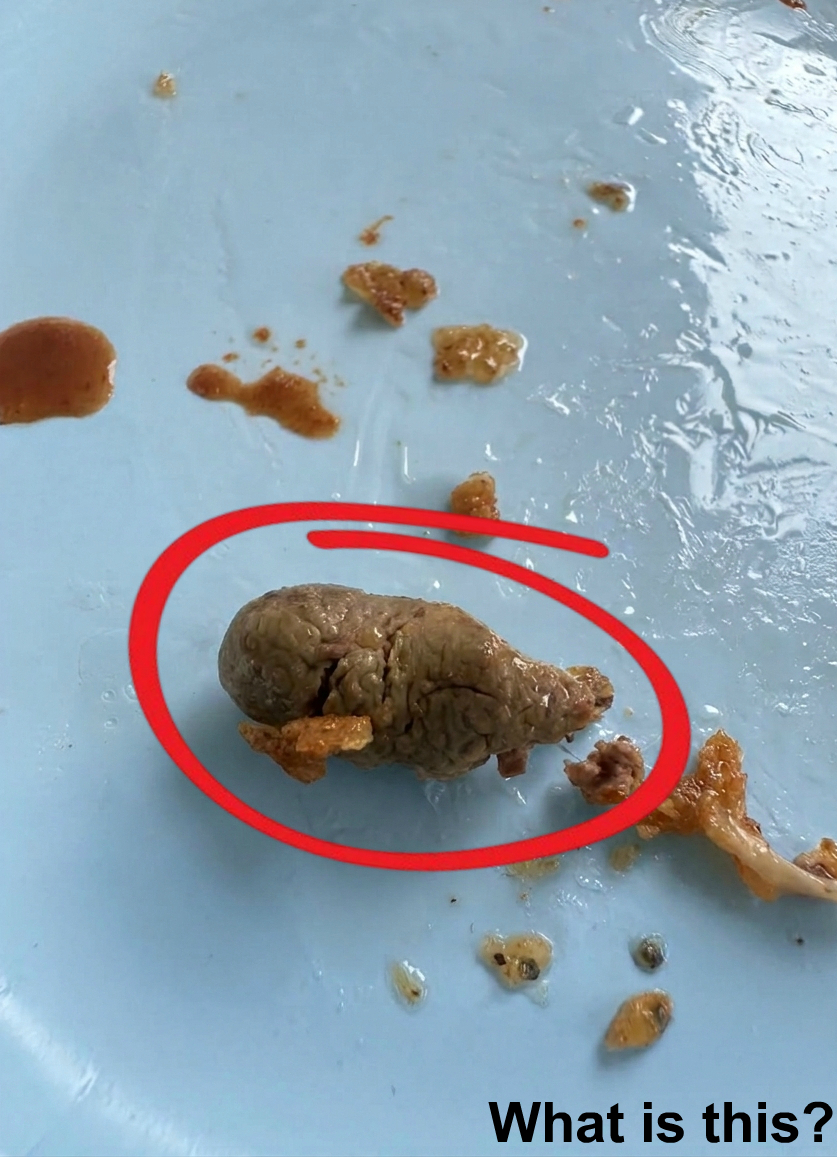
We have all been there: you are halfway through a delicious piece of fried chicken when you bite into something that does not feel quite right. You pull it out, inspect it, and find an odd-looking, textured object nestled inside the breast meat. It instantly kills your appetite and leaves you with one pressing question: What exactly is this?
It is a common scenario that frequently goes viral on social media. When someone posts a photo of an unidentifiable lump from their dinner, the internet is quick to jump to wild conclusions. However, in the vast majority of cases, what people discover inside their chicken breast is not a sign of something sinister, but rather a biological organ that was simply left behind during the processing stage.
The object in question often looks wrinkled, dense, or slightly greyish—sometimes even brain-like in appearance. More often than not, this is a kidney or part of the internal organ tissue of the chicken. While it looks startlingly out of place compared to the white muscle meat we are accustomed to seeing, it is essentially harmless. Chickens, like all animals, contain internal organs, and in high-speed industrial processing, these pieces can occasionally remain attached to the carcass cavity or the underside of the spine when the breast portion is being extracted.
Another common culprit for these “mystery discoveries” is the presence of an adrenal gland or a small pocket of remnant lymph tissue. These structures are perfectly natural and are part of the bird’s anatomy. Because they are not muscle, their texture and color differ significantly from the tender meat surrounding them, which is exactly why they stand out so vividly once you have breaded and fried the piece.
So, does finding this mean your chicken is spoiled? Generally, no. Its presence is typically a lapse in quality control during the cleaning process rather than an issue with the safety of the meat itself. However, seeing an unrecognizable organ in your lunch is understandably alarming. If you encounter something that looks out of place, you are well within your rights to set the meal aside. If you are dining at a restaurant, you should certainly bring it to the attention of the management so they can review their processing standards with their supplier.
It is important to avoid jumping to worst-case scenarios. Most of the time, the “strange object” that people photograph and share online is simply a natural part of the animal that failed to be removed. While it is certainly not the appetizing experience you were looking for, it is rarely a reason for a panic attack. The next time you see such a photo on your timeline, you can feel relieved knowing that the answer is usually just a simple, if slightly unappealing, anatomical fact.
The takeaway? While modern food processing is incredibly efficient, it is not perfect. Occasionally, nature reminds us where our food actually comes from. If you are ever in doubt about the quality or safety of a meal, it is always best to prioritize your comfort, but you can rest easy knowing that these viral findings are almost always harmless biological remnants.