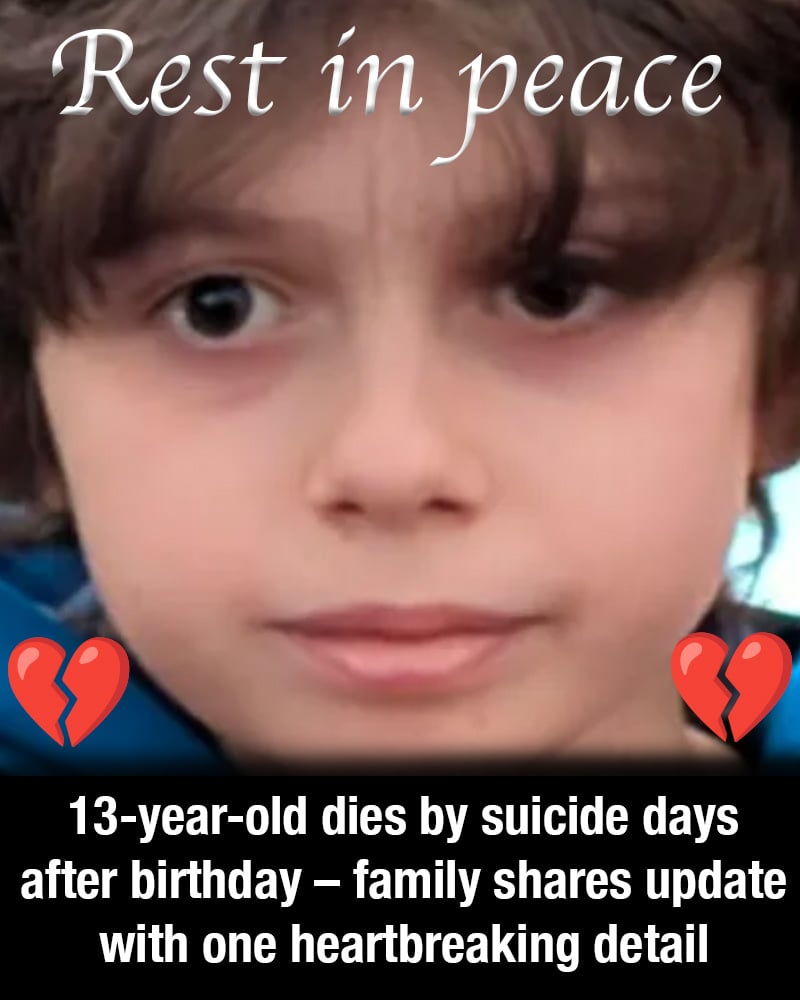
Family Seeks Accountability Following the Tragic Death of 13-Year-Old Josiah Dwinell
The community and family of 13-year-old Josiah Michael Dwinell are struggling with profound grief and unanswered questions following his tragic death, which occurred only eight days after he celebrated his thirteenth birthday on March 4. His family insists that his death was not an isolated incident but the culmination of ignored warning signs and persistent suffering that they claim went unaddressed by those in a position to help.
Josiah, who had already endured the loss of his biological mother five years ago, lived under the care of his grandmother. His aunt, Shaena Stebbins, spoke of a boy who was visibly struggling, noting that he was subjected to bullying at school and on the bus. According to his family, these experiences were paired with mental health challenges that were repeatedly flagged to external parties. Despite multiple hospital visits and documented attempts by his grandmother to secure professional assistance, the family claims his distress was often minimized or dismissed as attention-seeking behavior rather than treated as a genuine crisis.
Stebbins expressed deep frustration, stating that while the family fought to get him help, the systems meant to support him overlooked the severity of his condition. She relayed that after one particular bus ride, Josiah felt he could no longer endure the bullying, a breaking point that highlights the devastating impact of unchecked mistreatment in peer environments.
Those who knew Josiah remember him as more than the struggles he faced. He is described as a light in the lives of his family members, who are now managing the task of arranging funeral services while processing a traumatic loss. Their narrative serves as a harrowing reminder of the vulnerability of children and the necessity of taking expressions of mental distress seriously.
The tragedy has reignited the conversation regarding the responsibility of schools and communities in identifying and intervening when a child is targetted by bullying. It underscores a critical lesson for society: when children exhibit signs of distress, dismissing those signals can have irreversible consequences. The family’s experience stands as a call to action for educators, parents, and caregivers to listen more carefully and intervene before a situation escalates to a point of no return.
For those in crisis, help is available. Individuals struggling with mental health or suicidal thoughts in the United States can contact the 988 Suicide and Crisis Lifeline by calling or texting 988. Additionally, the Crisis Text Line provides support by texting MHA to 741741. In cases of immediate danger, emergency services should be contacted without delay. The loss of Josiah reminds us that the most vital intervention is the simple act of listening to, and believing, a child who says they are hurting.