A Royal Recovery for the Discarded Dog
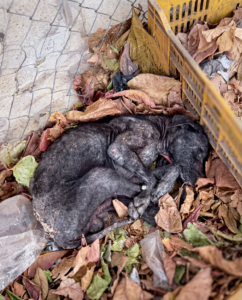
He was a dog lying in a pile of garbage, motionless beneath scraps of plastic and torn cardboard. From a distance, he looked like something already discarded, just another shape among the city refuse. His ribs pressed sharply against thinning skin, and his legs were twisted into unnatural, painful angles. His breathing was so shallow that one had to watch intensely to see his chest move at all. Anyone passing by could have easily assumed it was too late, but one man stopped, looked closer, and made a call that changed everything.
The woman who arrived to rescue him still remembers the urgency in the man’s voice. He had found a collapsed dog and, despite not knowing if the animal would survive, he had stayed by his side, refusing to treat him as a disposable object. When she arrived, the dog lay limp, offering no resistance to her touch. She named him King. She did not choose the name because he appeared powerful or majestic, but because she believed that every life deserves dignity, especially when it is at its most vulnerable.
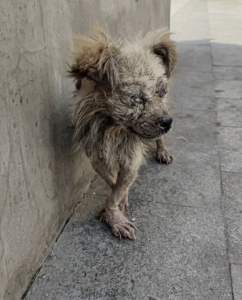
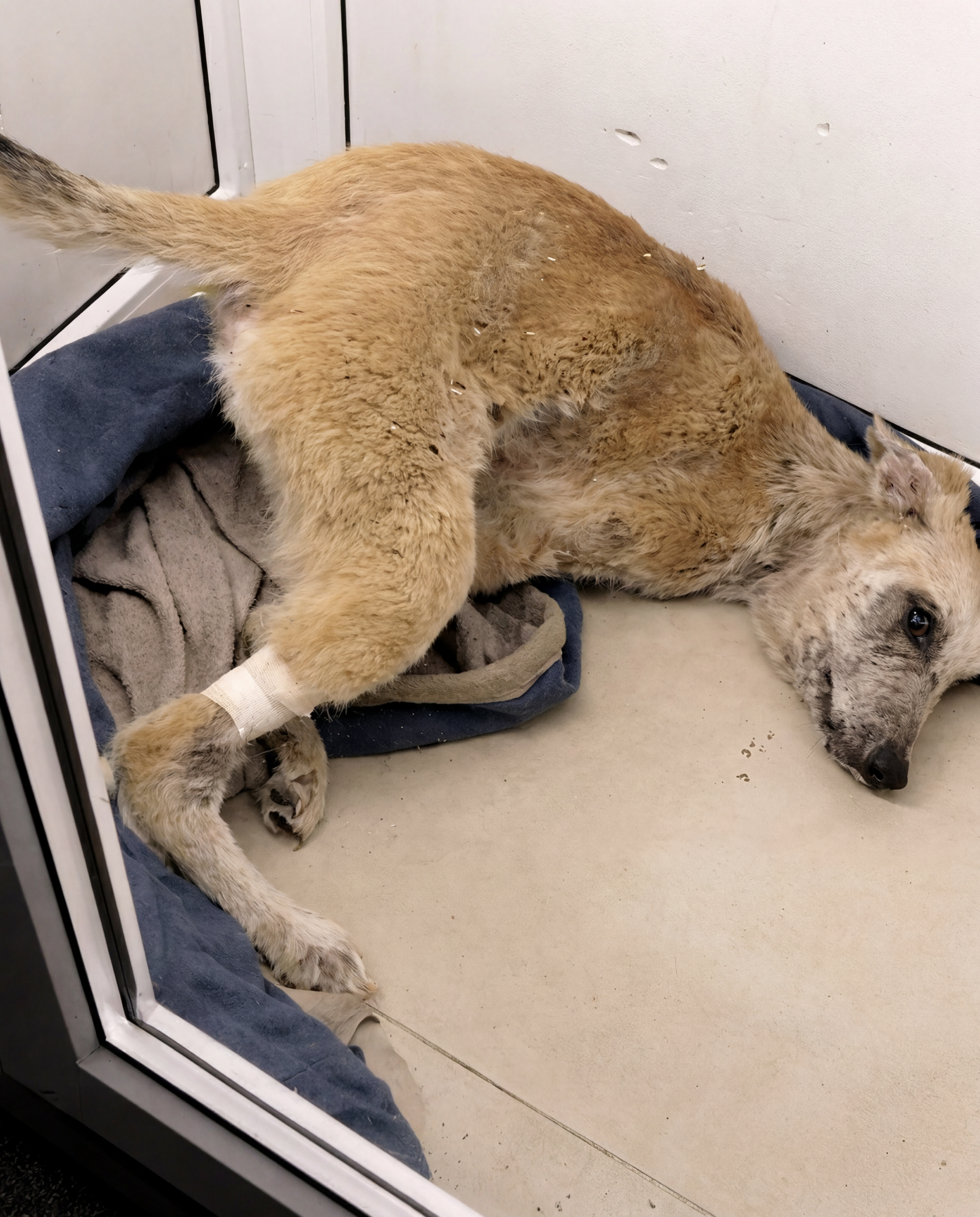
King was rushed to a veterinary clinic where the full extent of his suffering became clear. His bones were thin and visibly deformed, the result of severe, long-term nutritional deficiency. He suffered from a condition that left his bones too soft to support his own weight, a state of decay that meant the collapse in the garbage was not a sudden accident, but the final stage of months of silent agony. The veterinarians were grim, suggesting that his body would likely continue to decline, but the rescuer made a promise to stay by his side until the end. She was determined that if his life was to be short, he would at least spend his final days in warmth and comfort rather than in a cage.
Every day, she visited, bringing specialized food and speaking softly to him. Her commitment acted as a stabilizer. By reducing his stress and providing consistent, loving care, she helped his body stop spiraling. Two weeks later, King walked out of the clinic alive, a feat that felt monumental. While he still could not walk on his own, he was alert, his eyes tracked activity, and he began to show signs of a returning spirit.
To give him more independence, his rescuer fitted him with a custom wheelchair. The moment he was placed in the device, his life changed. For the first time, he could move forward without his body collapsing, and the constant strain on his fragile bones began to ease. Today, King lives in a safe, loving home. He may never look like a typical, healthy dog, and his bones will always bear the marks of his past, but his days of being discarded are over. His life is no longer defined by his injuries, but by the fact that someone refused to walk away. His story serves as a reminder that compassion does not require a guaranteed cure; it only requires the commitment to be there when a life is in need of hope.