The Resonance of an Unspoken Melody
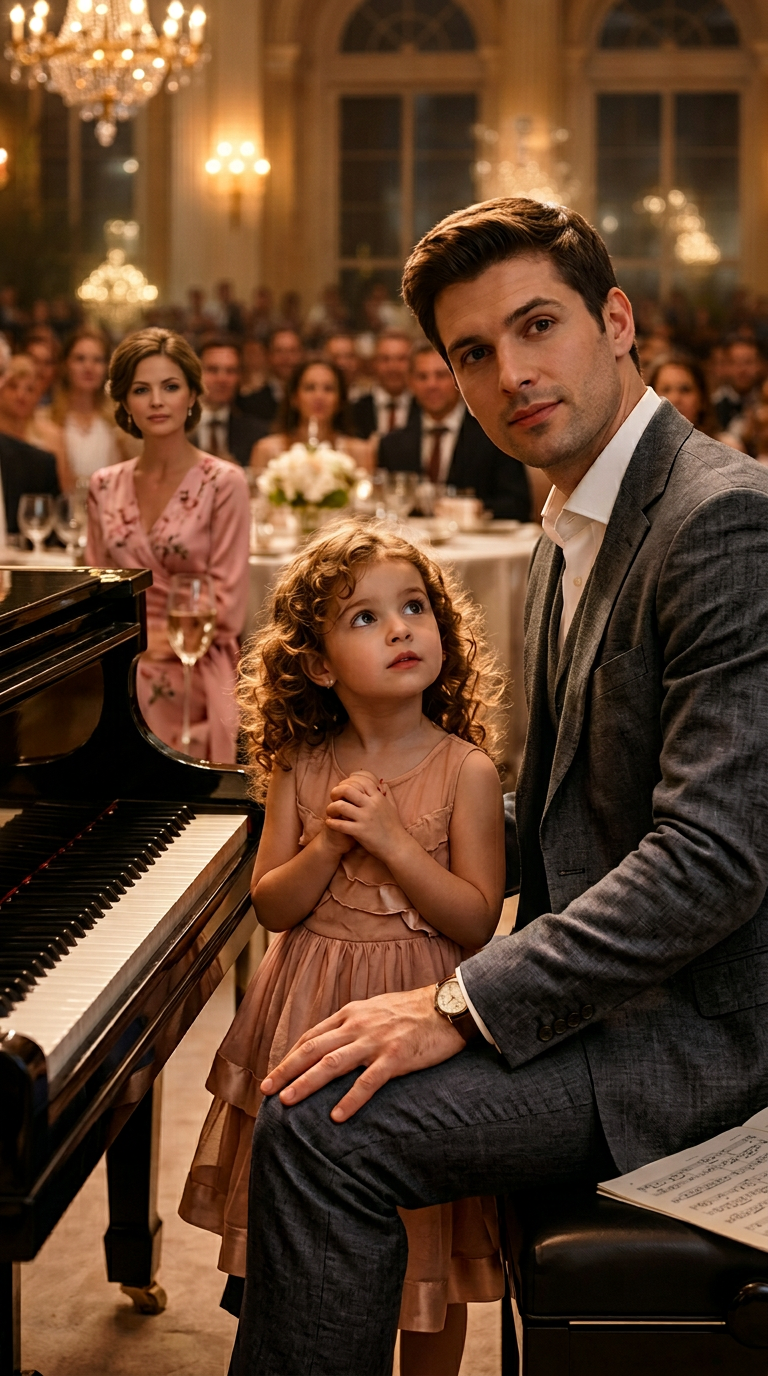
The ballroom at the Hawthorne Grand in Boston was a masterpiece of opulence, where crystal chandeliers spilled golden light across polished marble floors. It was the twenty-first birthday celebration for Preston Hale, the only son of a family known for its prominence and unwavering refinement. Every detail of the event was calculated to project perfection, especially the music. Preston sat at a concert grand piano, his performance technically flawless and precise, yet his music felt strangely hollow, skimming over the guests without ever reaching them.
Downstairs in the kitchen, exhausted and pressed for time, Naomi Hart struggled with the demands of her catering shift. Having nowhere else to leave her seven-year-old daughter, Lily, she had tucked the girl into a quiet corner with instructions to stay put. Lily was a quiet child who had grown up in an apartment with thin walls and an old, static-filled radio, teaching herself to understand the secrets hidden within melodies. When the faint, sophisticated sounds of the ballroom drifted downstairs, they pulled at her like a magnet.
Driven by an innocent curiosity, Lily wandered out of the kitchen, her canvas shoes long ago discarded for comfort, and followed the sound until she stood at the entrance of the ballroom. Her presence was a jarring note in the expensive atmosphere. When her mother eventually spotted her and rushed over in a panic, the ballroom erupted in soft, condescending laughter. Preston, however, stopped playing and looked at the small, barefoot girl. When Lily asked if she could try the piano, the room waited for the spectacle to turn into a mockery.
Preston, unexpectedly captivated by her honest gaze, stood up and invited her to join him. What happened next changed everything. Lily’s touch on the keys was not technically perfect, but it was profoundly raw. Her playing was a reflection of memory and struggle, a melody that bypassed the guests’ practiced social defenses and went straight to their hearts. For several minutes, the room was paralyzed in a profound silence. When she finished, Preston, with tears in his eyes, handed her the sheet music he had been struggling with for months, silently acknowledging that she possessed a gift he had spent years trying to manufacture.
The aftermath was immediate and polarizing. Someone recorded the moment, and the video ignited the internet, highlighting the contrast between the wealthy birthday boy and the impoverished girl with the soul of a musician. Preston’s mother, Evelyn, responded with predictable coldness, attempting to have the video scrubbed and the family’s privacy shielded, deeply resentful of the shift in attention. However, Preston resisted his mother’s influence. He sought Naomi and Lily out, arriving at their modest apartment with notebooks and the intent to foster the genius he had witnessed.
Preston’s persistence deepened his own internal transformation. He began to realize that his life had been a series of performances meant for the approval of others, whereas Lily’s playing was an act of survival and beauty. Despite legal threats and cold, calculated letters from the Hale family lawyers, Preston did not back down. He leveraged his own connections to bypass the walls of privilege that sought to exclude them.
The conflict culminated in a quiet morning at Naomi’s doorstep, where Preston stood soaked in the rain, holding a scholarship to the New England Conservatory for Lily. It was a full, unconditional gift that included tuition, lessons, and support, effectively shielding Lily from the limitations of her background. As Naomi looked at the letter, her fear finally faded, replaced by the realization that her daughter had the chance to be heard by the world. Preston had found something he hadn’t realized he was looking for: the freedom to support what was truly authentic in a life that had been defined by appearance. For Lily, the music was no longer just a way to make the loneliness fade; it was the beginning of her own voice finding its place in the world.