The Uninvited Guest
By the time I stepped out of the car at the grand entrance, having flown more than three thousand miles across a continent that felt increasingly distant from the life I had once tried to be part of, I had already rehearsed countless versions of how the night could go. None of them included the quiet, humiliating confusion that greeted me before I even reached the door.
The doorman held the glass door open with polished grace, the kind reserved for those who truly belonged there, and I entered the marble lobby with my suitcase rolling behind me. My dress was pressed just so, and my hair was pinned with the kind of precision that showed I had tried to look like someone worth noticing, if only for one night. At the front desk, the receptionist glanced at her screen, then at me, then back again, her smile tightening into something professional but distant. I am sorry, ma’am, she said, polite but firm, there is no reservation under your name.
For a moment, I thought it must be an administrative error, something that could be fixed with a quick call. I had never imagined my family could take something as deliberate as erasing my presence entirely. Could you check again, I asked, keeping my voice even, though I could feel something shifting quietly beneath the surface. She typed again, slower this time, as if giving the system a second chance to prove me wrong. It did not. There is nothing here, she repeated gently.
I stepped aside, pulling out my phone to dial a number I had not called in weeks but still knew by heart. My mother answered on the third ring. We told you not to come, she said, without greeting or hesitation. Go back home, Nadia, she added with calm detachment, we do not want you here.
I did not argue or plead. I simply stood there, hearing laughter drifting from deeper inside the hotel, where the wedding I had crossed the country for was already underway without me. And then I saw her. Isabella stood at the far end of the lobby, framed in soft golden light and surrounded by the effortless attention she always commanded. She walked toward me slowly, stopping with a tilted head and a smile that never reached her eyes. You actually came, she said, almost amused. You really thought you were invited?
I nodded once, not out of agreement, but because there was nothing left to say. I reached into my bag, pulled out a small silver box, and set it on the reception counter with deliberate care. This is for Isabella, I said, my voice steady. She glanced at the box with disdain, assuming it was a trivial offering. You did not have to bring anything, she remarked. I met her gaze one last time and replied, I know. Then I turned, walked out of the hotel, and did not look back.
Growing up on the Upper East Side, I learned early that proximity to privilege does not guarantee belonging. My parents were not cruel in ways that left visible marks; they simply looked elsewhere. Isabella always fit the mold, while I was the quieter, observant one, drawn to photography—a passion my father dismissed as a hobby. The only person who saw value in me was my grandmother, Eleanor Torres, who gave me her old camera and told me that the most valuable things are those quietly passed down.
When my grandmother passed, she left her multimillion-dollar jewelry collection to me, noting in a private letter that Isabella saw objects as trophies, while I saw them as stories. I told no one. I continued building my own path, founding Valora Studios, a photography business that grew into a powerhouse of high-end, discreet event documentation. By the time Isabella booked her wedding photographer, she did not realize that the company she had hired for nearly twenty thousand dollars belonged to me.
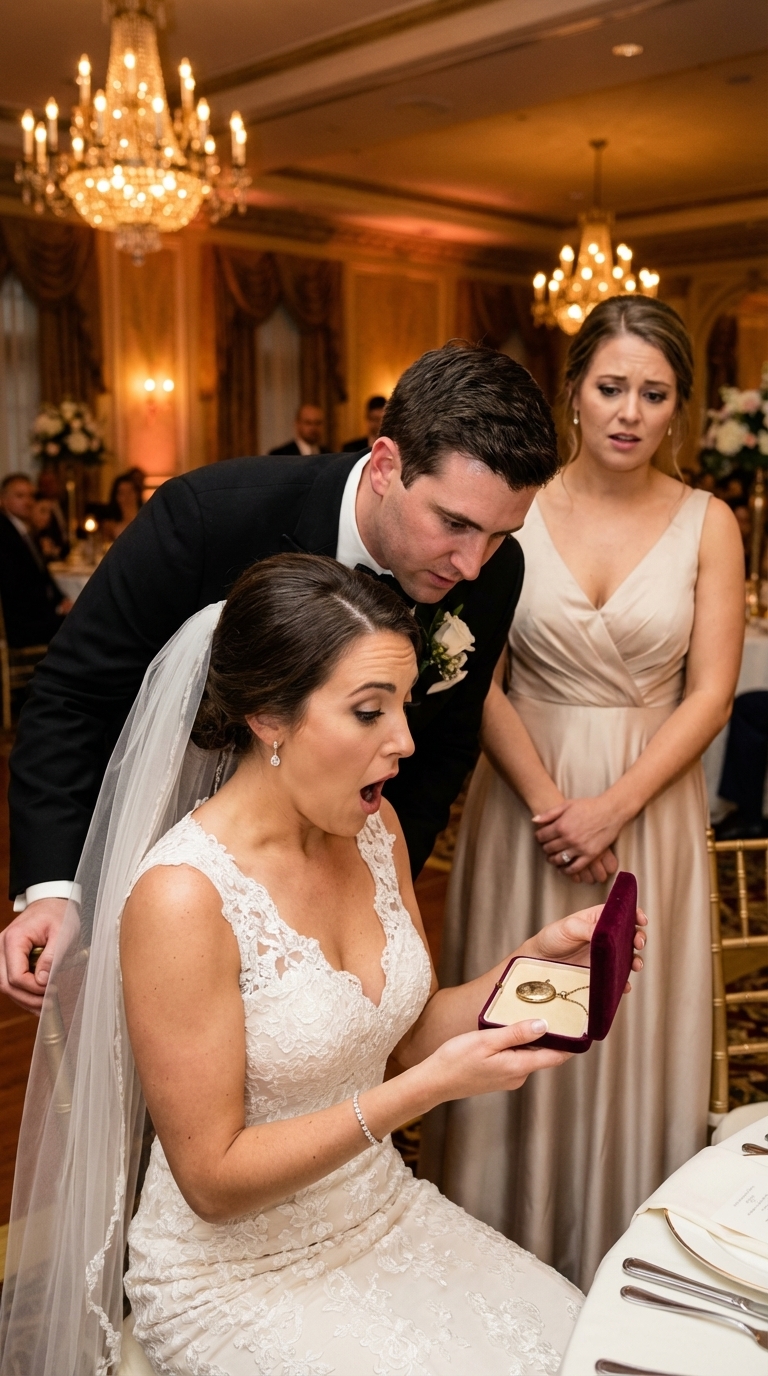
Inside the hotel, the reception was in full swing when Isabella opened the silver box. Inside, she found a copy of our grandmother’s will, the letter, and the contract from Valora Studios with my name on it. The color drained from her face, and the room grew hushed as the realization spread. Her new husband, Julian, stood over her shoulder, his expression hardening as he asked if she had hired her own sister. Her silence confirmed everything.
The calls from my parents and sister began almost immediately once I reached the airport. They demanded explanations, but I did not answer. Instead, I turned off my phone. Months later, my mother traveled to see me, admitting that while they taught Isabella to demand, they taught me how to stop expecting, and acknowledged this had been their great mistake. I did not offer immediate forgiveness, as that takes time. Isabella lost the version of herself that relied on perception over truth, while I placed my grandmother’s collection in a private exhibit to preserve our history. I continued living a life that no longer required anyone else’s acknowledgment to feel complete.