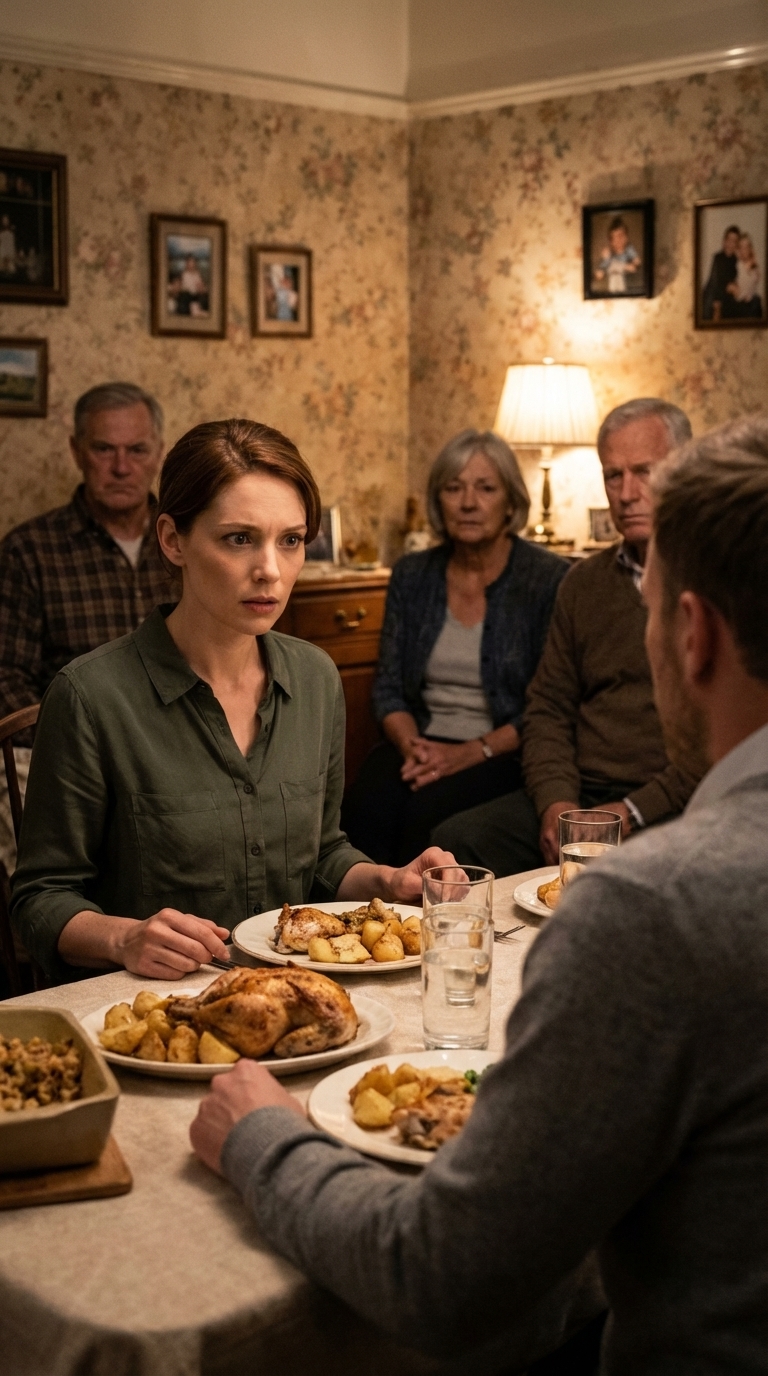
The Price of Home
My father insisted on a formal contract for the three hundred thousand dollars, treating the transaction like a serious business arrangement rather than a family favor. When I relayed his terms to Charles, the lack of hesitation in his eyes vanished, replaced by a cold, calculating annoyance. He argued that my father was being cold and unaccommodating, but I stood my ground. The money was transferred, the mortgage was cleared, and the house—the very one I had poured every cent of my savings into renovating—was finally secure.
For a few weeks, the atmosphere in the house was deceptively peaceful. The looming shadow of the bank was gone, and while the tensions of the past few months lingered, I clung to the hope that we could finally move forward as a normal married couple. I imagined that with the financial weight lifted, Charles might finally focus on us. I was wrong.
The change did not happen with a shout or a dramatic argument. It happened on a Tuesday evening. I came home from the office early, expecting to find the house quiet, but instead, I found the living room tense. My husband was sitting on the sofa with a woman I did not recognize. She was younger, with a poise I had never possessed, and they were laughing at something on his phone. When I walked through the door, the laughter died instantly.
Charles did not look guilty, nor did he look surprised. He looked annoyed, as if I were a guest who had overstayed a welcome. He stood up, smoothed his shirt, and introduced the woman as his girlfriend. He did not say it with the trembling voice of a man caught in a lie; he said it with the clinical detachment of a man delivering a routine status report. He informed me that he had been seeing her for months, long before the renovation requests or the mortgage crisis.
He told me, quite calmly, that he had chosen her. He expected me to pack my things and leave the house by the end of the week. He said it so matter-of-factly that for a moment, I actually believed I was the one who had made a mistake. He watched me with a bored expression, waiting for me to comply without a fuss, perfectly comfortable in the home that my money had repaired and my father’s money had saved.
Looking at him, the man I once thought was the steady, safe anchor of my life, the realization finally snapped into place. I had never been his wife. I was an asset to be liquidated.
I did not scream. I did not cry. Instead, I remembered the condition my father had insisted upon: the formal agreement. Because I had insisted on that contract, every cent of the renovation costs and the three hundred thousand dollars for the mortgage was legally tied to my name. It was not a gift to his family; it was a secured loan with strict repayment terms and collateral.
I went to the study, pulled the notarized documents from the file cabinet, and walked back into the living room. I set the papers on the coffee table and informed Charles that he and his parents had exactly thirty days to vacate the house or face immediate foreclosure and a lawsuit for every penny they owed. I explained that I was not leaving; they were.
The look on his face shifted from boredom to panic as he realized the reality of the situation. He tried to argue, to play the victim, and to cite the comfort of his parents, but the legal reality was immovable. I walked out of that house that very night to stay with my father, leaving them to deal with the consequences of their greed.
A month later, the house was put on the market, and the money was returned to me. I walked away from the marriage, the house, and the false life I had built, finally understanding that my steady, uneventful life was not a weakness but a strength. I rebuilt my savings and returned to the quiet office where I belonged, no longer a pawn in someone else’s game, but the architect of my own future.