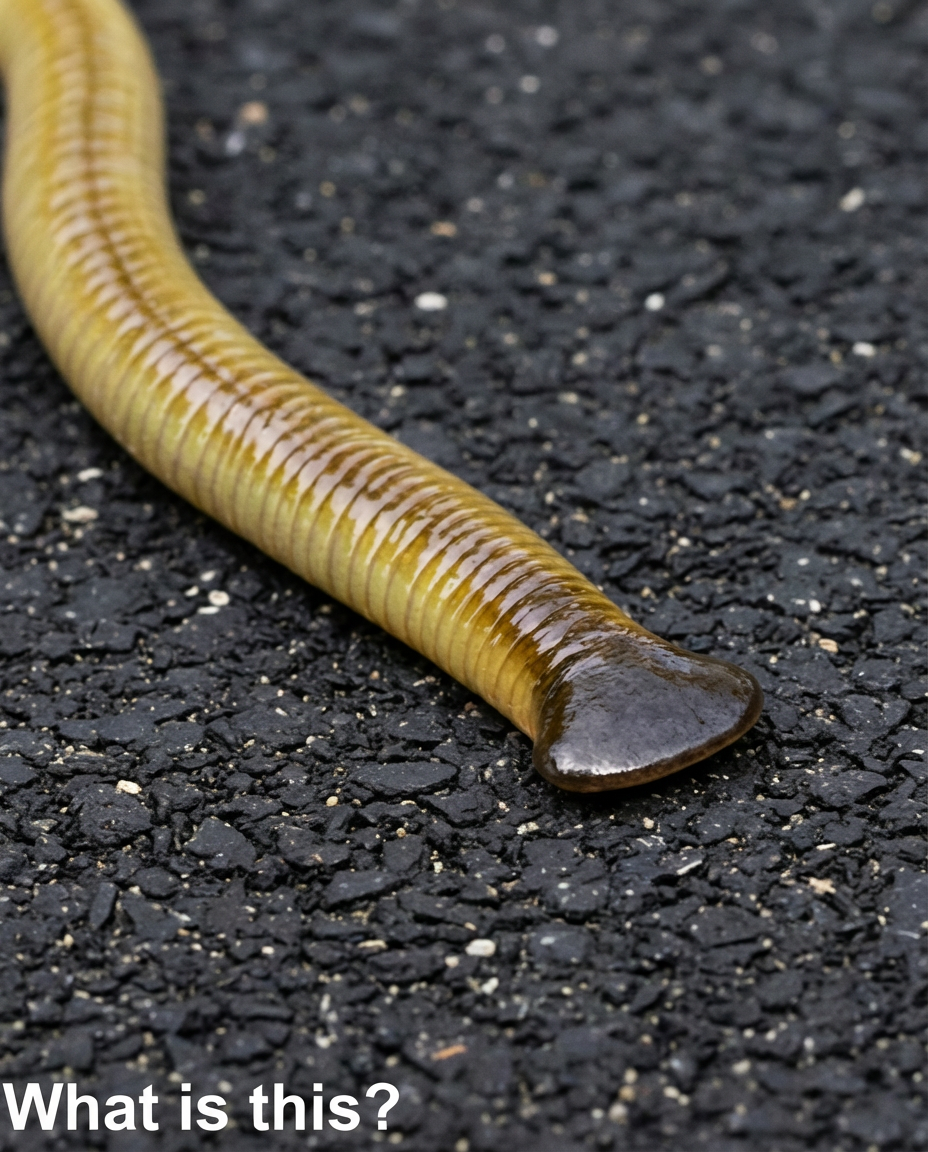
The Alien-Like Invasion of the Hammerhead Worm
It is not every day that you encounter a creature so strange it feels as if it escaped from a science fiction story. Yet, homeowners everywhere are increasingly spotting a long, flat worm with a distinctive shovel-shaped head slithering across their patios. This unusual animal, known as the hammerhead worm, fascinates and unsettles people in equal measure due to its alien appearance and the potential risks it poses to local ecosystems.
The hammerhead worm is a land-dwelling flatworm from the genus Bipalium. Its most recognizable feature is its widened, flattened head, which bears a striking resemblance to a hammerhead shark. These worms can reach impressive lengths, typically growing between 8 and 12 inches, though some specimens are even longer. Their bodies are flat, coated in a protective slime, and are usually marked with brown or gray tones, often featuring darker stripes running the length of their bodies.
Native to Southeast Asia, these worms have become an invasive species in various parts of North America and Europe, often hitching a ride in the soil of imported plants. Because they have few natural predators in these new environments, they have been able to spread with surprising efficiency. One of the factors contributing to their rapid expansion is their ability to reproduce asexually through fragmentation. If a worm is broken into pieces, each individual segment has the remarkable biological ability to regenerate into a completely new, fully formed worm.
Many people find these creatures unsettling not just because of their appearance, but also because of their movement. Unlike earthworms, which wriggle, these flatworms glide smoothly across surfaces. They utilize thousands of tiny, hair-like structures called cilia on their undersides to navigate, resulting in a fluid, snake-like motion that adds to their otherworldly presence.
While hammerhead worms do not pose a direct threat to humans or pets—they do not bite, sting, or spread disease—they are not harmless. They secrete a toxic slime that can cause skin irritation if handled, so it is best to avoid direct contact or use gloves if moving one. Furthermore, they are potent predators. They feed primarily on earthworms, which are essential for soil health, aeration, and nutrient cycling. A hammerhead worm hunts by secreting a sticky mucus to trap its prey, after which it extends a specialized organ called a pharynx to digest the earthworm externally. Remarkably, they produce tetrodotoxin, the same potent neurotoxin found in pufferfish, which aids them in subduing their prey and defending themselves against potential threats.
If you find a hammerhead worm in your yard, it is important to address the situation correctly. Never manually break or cut the worm, as this will only lead to more worms through regeneration. The best method for elimination is to use salt or vinegar, which will dehydrate and kill the creature safely. Once neutralized, the remains should be placed in a sealed plastic bag and disposed of to ensure they do not re-enter the environment.
The spread of the hammerhead worm serves as a reminder of how fragile ecological systems can be when non-native species are introduced. By staying vigilant during garden maintenance—especially when introducing new plants—and addressing sightings early, homeowners can help protect their local soil health and keep these invasive visitors from disrupting their gardens.