Every shelter refused him because he was dying. No one wanted his burden on their shoulders. He was found lying among waste as if life had already let him go. By the time I arrived, he was still alive
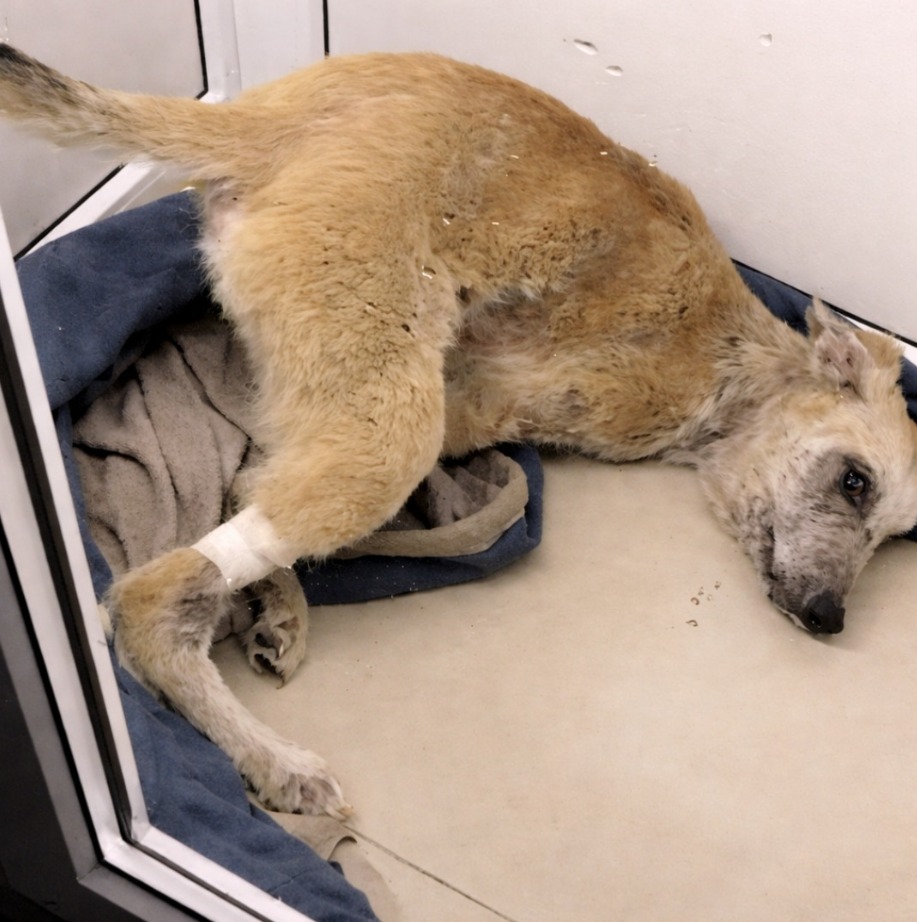
He was a dog lying in a pile of garbage, motionless beneath scraps of plastic and torn cardboard. From a distance, he looked like something already discarded—another shape among refuse, something the city had decided was no longer useful. His ribs pressed sharply against thinning skin, and his legs were twisted at unnatural angles. His breathing was so shallow that one had to look closely to see his chest move at all.
Anyone passing by could have assumed it was too late, that whatever had happened had already finished its work. It would have been easy—painfully easy—to keep walking. One man did not. He slowed, looked again, and noticed the faint rise and fall beneath the dirt and debris. Instead of convincing himself it wasn’t his responsibility, he made a call that would determine whether that fragile breath continued.
The rescuer behind *meowinspace* still remembers the phone call clearly. “A kind man called me and told me that he had found a collapsed dog in the garbage.” There was urgency in the caller’s voice, but also uncertainty—the kind that comes when someone stumbles into a situation they were never prepared for. He didn’t know what was wrong with the dog or if he was dying; he only knew he couldn’t leave him there.
When the rescuer arrived, the scene was exactly as described. The dog lay limp; his muscles offered no resistance, and he could not lift his head or move his body. He was alive, but barely. The man who found him had gently lifted him out of the trash and was cradling him, refusing to abandon him. That decision to stay made all the difference.
She named him King. She didn’t name him for power, but because dignity should not be reserved for the healthy. Every life deserves to be addressed with respect, especially when it is most vulnerable.
King was rushed to a veterinary clinic. His bones felt thin beneath his skin, and his limbs were visibly deformed, suggesting long-term structural damage rather than a recent injury. Blood tests and imaging revealed a severe calcium deficiency that had compromised his skeletal development—a case of nutritional rickets. In puppies, this disease causes bones to soften and twist; eventually, the body can no longer support itself. King’s collapse was not a sudden event, but the final stage of months of silent, painful deterioration.
The veterinarians outlined a treatment plan: pain management, nutritional correction, and supportive care. However, they were guarded, believing his body would likely continue to decline. When shelters were contacted, they all declined due to a lack of capacity to manage such complex medical needs. So, the rescuer made a firm decision: “I told them I would take care of him until the end.” It was not a promise of recovery, but a promise of presence.
There was no sudden surge of strength, only routine. The rescuer visited every day, bringing recommended food and speaking to him softly. She spent her savings on his treatment. Gradually, the body stops deteriorating when stress decreases and care is consistent. King stabilized. His vitals held steady, his breathing grew regular, and two weeks after being pulled from the trash, he left the clinic alive.
King still could not walk, as his front legs buckled under his weight, but his eyes were now bright and alert. He tracked movement in the room and responded to touch. Those changes mattered—they indicated the return of his spirit. When he transitioned into home care, he slept deeply and began reacting to the other dogs in the house. His tail began to move.
To provide additional support, the rescuer fitted him with a custom wheelchair. The first time he used it, he could move forward without collapsing, and the strain on his bones decreased.
Today, King lives peacefully in a home where he is surrounded by care. His deformities remain, and his bones will never look typical, but his life is no longer defined by neglect; it is defined by adaptation. His story serves as a reminder that compassion does not require certainty—it requires commitment.
***
**Junie: Left in a Box to Fade Away**
The field was empty, the kind of place people pass without looking twice. Inside a small cardboard box placed among the weeds, Junie lay still. She did not lift her head when rescuers approached. Her body was cold to the touch, so thin it felt almost weightless. Her fur had been dyed an unnatural purple, and worms crawled across her frail body. Whoever left her there did not expect her to survive the night.
The rescuers from NYC Second Chance Rescue arrived just in time. Junie was suffering from advanced hypothermia, severe dehydration, kidney failure, and anemia. She was placed on warming support immediately. Medically, she was not expected to survive. Then, something shifted: Junie opened her eyes. That gaze, unfocused but present, sparked an unwavering determination in her caregivers. They stayed by her side for two long nights as she hovered between life and loss.
Slowly, her numbers crept in the right direction. When she finally took her first shaky steps, the room fell silent. She leaned into the rescuers’ hands, her trust emerging faster than anyone expected. As her strength increased, her gentle personality shone through.
Junie was eventually discharged into a permanent, loving home. The purple dye is gone, her body has filled out, and her eyes are bright. Her survival was not accidental; it was the result of people refusing to look away.
***
**A New Hope for Sumatran Elephants**
On November 4, 2024, a critically important conservation milestone was reached at Buluh Cina Nature Tourism Park with the birth of a female Sumatran elephant calf. Weighing approximately 104 kilograms, the calf is healthy, lively, and actively nursing.
The Sumatran elephant is critically endangered, with only 2,400 to 2,800 individuals remaining. Their population is threatened by habitat loss due to palm oil plantations and deforestation, poaching, and human-elephant conflict. Every birth is vital to the subspecies’ survival. This birth, along with successes at Way Kambas National Park, suggests that sustained protection, improved veterinary management, and community engagement are beginning to yield results. While the road to recovery remains Fragile, this calf offers a symbol of hope for a species that is essential to the health of Sumatra’s forests.
***
**The Journey of Khanyisa**
On January 8, 2020, a tiny albino elephant calf named Khanyisa arrived at the Hoedspruit Elephant Rehabilitation and Development (HERD) center in South Africa. At just four months old, she had been caught in a poaching snare that had carved deep wounds into her face and mouth. She was dehydrated, weak, and her head was grotesquely swollen.
The veterinary team worked tirelessly to repair her injuries, performing delicate surgeries to stitch her cheeks and repair her ear. Feeding her was a challenge, as she had to relearn how to suckle, but her caregivers’ persistence ensured she received the nourishment she needed. Her weight increased significantly, and her wounds healed completely under the help of advanced stem cell therapy.
Beyond physical recovery, Khanyisa needed a family. She was introduced to the rescued Jabulani herd, where a female named Lundi took her on as an adoptive mother. Khanyisa’s journey from a critically injured, lonely calf to a thriving member of a herd serves as a powerful testament to the resilience of nature and the impact of dedicated conservation work.