The Law of Ownership
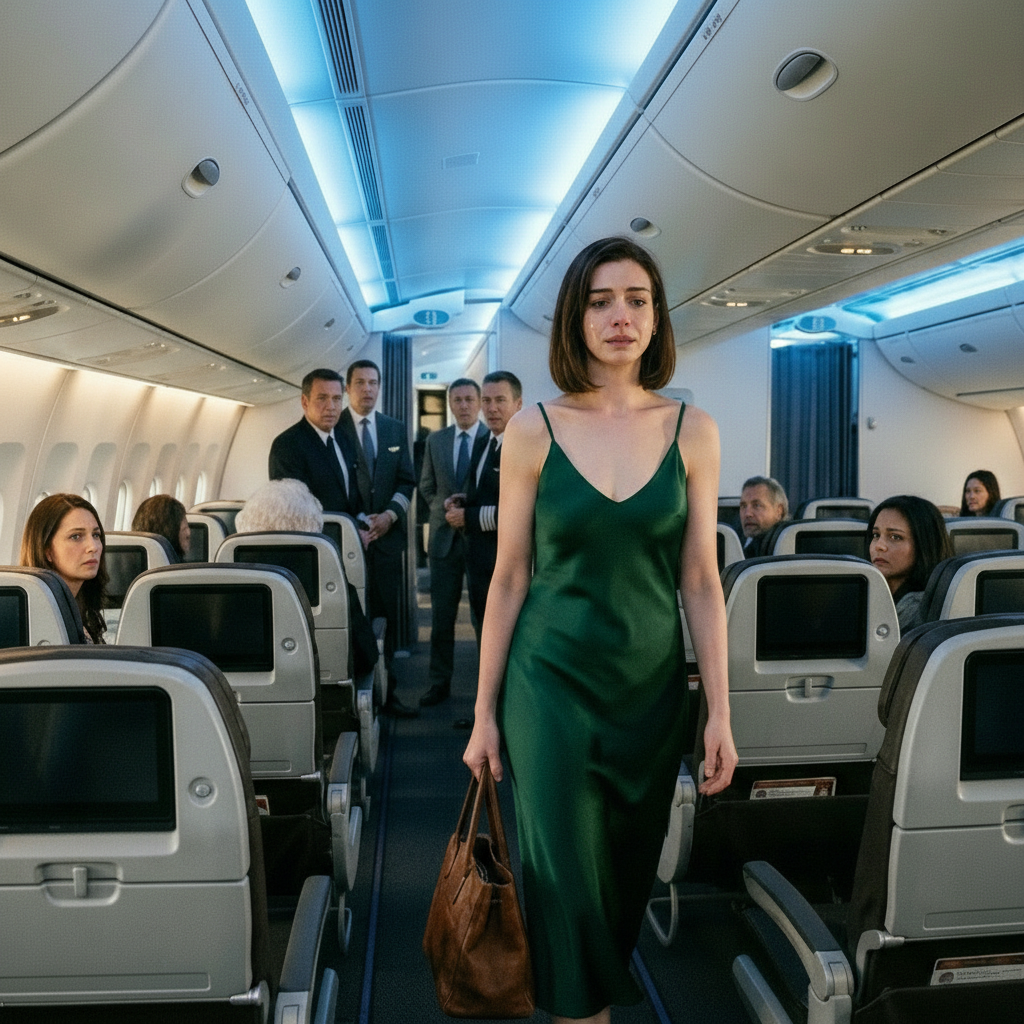
“Madam, we cannot take off with disrespectful passengers.” The pilot’s words cut through the pressurized cabin air, sharper than the champagne bubbles she was demanding. She didn’t realize that in the sky, gravity isn’t the only law—ownership is.
But before we reached that altitude, we had to survive the ground.
The Centurion Lounge at JFK is a study in hushed acoustics and expensive textures. It smells of freshly ground espresso, aged leather, and the specific, metallic scent of anxiety that only the very wealthy seem to emit when they are afraid of being irrelevant.
I sat in a corner wingback chair, nursing a black coffee that had gone cold ten minutes ago. My laptop was open, the screen dimmed to a low glow, displaying the Q3 revenue projections for AeroVance, a mid-sized carrier that had recently been making waves for its aggressive expansion into European markets.
Across from me, Victoria was making a scene.
My stepmother was a woman who believed that volume was a substitute for validity. She was dressed in a Chanel tweed suit that cost more than my first car, accessorized with oversized sunglasses she refused to take off indoors. She was treating the lounge waiter like a serf who had spilled mead on her boots.
“This chardonnay is oaky,” she snapped, pushing the glass away. “I asked for crisp. Do you understand the difference, or do you need a diagram?”
The waiter, a young man with infinite patience, apologized and retreated.
Victoria sighed, a dramatic exhalation that rattled her gold jewelry. She turned to the woman sitting next to her—a stranger trying desperately to read a Kindle.
“Good help is extinct,” Victoria confided loudly. Then, her gaze snapped to me. The annoyance in her eyes sharpened into something more familiar: contempt.
She snapped her fingers. The sound echoed embarrassingly loud in the quiet lounge.
“Alex, put down that ridiculous coffee and move my Louis Vuitton trunks closer to the gate. I don’t trust these union porters. They scuff things on purpose.”
She turned back to the stranger, offering a conspiratorial, fake smile. “My stepson. He’s used to manual labor. It keeps him humble. His father always said he had the hands of a mechanic, not a manager.”
I didn’t flinch. I didn’t argue. I had spent fifteen years perfecting the art of being invisible in plain sight.
I stood up slowly, closing my laptop. Inside the hard drive were the deed transfers, the board meeting minutes, and the single, notarized document that transferred 51% of AeroVance’s controlling stock into a trust under my name. A trust my father had set up three days before his heart attack, unbeknownst to his wife.
“Boarding is in ten minutes, Victoria,” I said, my voice even. “Don’t get too comfortable.”
She laughed, a high, tinkling sound that grated on my nerves like sandpaper. “I’m always comfortable, darling. That’s the difference between First Class and… wherever you’re sitting. Row 30? 40?”
“Thirty-four,” I corrected softly.
“Charming,” she sneered.
I walked over to the stack of luggage. It was heavy—three trunks filled with gala gowns and shoes for a weekend trip. I lifted them with practiced ease. Victoria watched me, a smirk playing on her lips, enjoying the sight of me hauling her baggage. She saw a servant. She didn’t see that the muscles used to lift these bags were the same ones that had carried the weight of a failing company on its back for six months while she spent the insurance money on cosmetic surgery.
We walked to the gate. The line for Priority Boarding was long, filled with Platinum members and business travelers. Victoria bypassed them all, marching straight to the counter.
The gate agent, a woman named Brenda with tired eyes, scanned Victoria’s pass.
“Welcome aboard, Mrs. Vance,” Brenda said, forcing a smile.
Victoria didn’t respond. She just gestured for me to follow.
I stepped up to the scanner. I held my phone under the red laser.
BEEP.
It wasn’t the normal confirmation tone. It was a triple-tone chime, low and melodic. On the agent’s screen, a red banner flashed. I knew exactly what it said: CODE: RED-ALPHA-ONE. OWNER ON BOARD.
Brenda’s eyes widened. She gasped, her hand reaching for the intercom to make an announcement.
I caught her eye. I put a single finger to my lips. Silence.
Brenda froze. She looked at me—jeans, blazer, t-shirt—and then at the screen. She swallowed hard and nodded, a barely perceptible dip of her chin.
“Have a… a wonderful flight, sir,” she stammered, her voice trembling.
Victoria was already halfway down the jet bridge, checking her reflection in her compact mirror. She missed the interaction entirely. She missed the tectonic shift that had just occurred beneath her stilettos.
The air in the jet bridge was cold and smelled of jet fuel. It was the smell of my childhood, of weekends spent in hangars watching my dad wrench on engines. To Victoria, it was just the smell of transit.
We reached the aircraft door. Victoria shoved past an elderly couple to get to the Priority lane. She turned to me, holding out her heavy carry-on bag.
“Stow this for me, Alex. Overhead bin, row 1A. Make sure it’s not crushing my hat box.”
“I have my own bag, Victoria,” I said, hitching my backpack higher.
“Don’t be difficult,” she hissed. “You’re walking past my seat anyway to get to the cattle car. Make yourself useful.”
I took the bag. It was easier than arguing.
We stepped onto the plane. The First Class cabin of the AeroVance 787 was a sanctuary of cream leather and walnut trim. I knew it well; I had approved the design specs myself two months ago.
Victoria flopped into Seat 1A, kicking off her heels immediately. She stretched her legs out, blocking the aisle.
“Row 34, seat B. Middle seat,” Victoria read from my ticket which stuck out of my pocket, smirking as she accepted a glass of champagne from a flight attendant. “Fitting. You’ve always been stuck in the mid