Sandra Bullock’s Private Journey to Motherhood—and How Her Children Are Growing Up
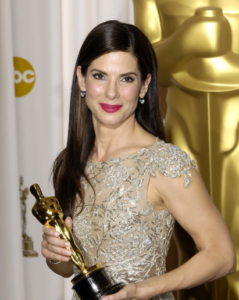
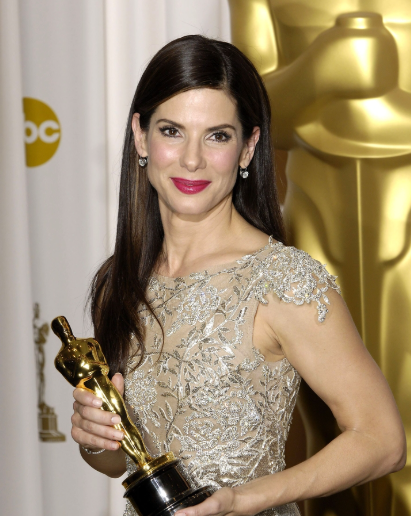
For Sandra Bullock, 2010 was a year of extraordinary public success and deeply private change. In March, she won the Academy Award for Best Actress for playing Leigh Anne Tuohy in The Blind Side, one of the highest points of her Hollywood career. Away from the cameras, she had also welcomed an infant son and was learning what it meant to become a mother.
Louis Bardo Bullock came from New Orleans, and Bullock welcomed the infant into her home in January 2010. The adoption effort with her then-husband Jesse James had started roughly four years earlier. The family kept the news quiet for several months while Bullock attended premieres, awards events and interviews without revealing that a newborn had transformed her daily life.
Only a small circle of relatives and trusted friends knew about the adoption at first. That privacy gave Bullock time to adjust to Louis without the enormous media attention surrounding her career. The decision also reflected how carefully she wanted to protect her child from a public world that followed almost everything she did.
Bullock’s connection to New Orleans reached back to the devastation caused by Hurricane Katrina in 2005. She had been deeply affected by the disaster, and the fact that her future son was born in the city gave that place an additional personal meaning. During a 2010 interview, she described the adoption as a long, uncertain process and said she had been open to welcoming the child who needed a family rather than trying to control every detail.
The timing was remarkable. On March 7, 2010, Bullock received the Oscar while privately caring for a baby. The adoption became public the following month, at almost the same time that news emerged about her separation from James. The public suddenly learned that the actress was dealing with several life-changing events at once.
Bullock and James had separated after reports of infidelity appeared shortly after her Oscar victory. She filed for divorce in April 2010, and the marriage ended later that year. Bullock then continued raising Louis as a single parent. Professional triumph and personal upheaval existed side by side, but caring for her infant son quickly became her central priority.
She later said that meeting Louis made the anxiety surrounding the long adoption process disappear. Once she was face to face with her child, the uncertainty that had filled the preceding years no longer felt important. Louis was only a few months old when the adoption was announced, and Bullock made clear that motherhood had become more important than the headlines surrounding her marriage.
As Louis grew, Bullock became increasingly protective of his privacy. She occasionally discussed parenthood in interviews, but she did not turn his childhood into a continuing public feature. Unlike celebrities who document family life online, she rarely offered detailed updates, photographs or information about her children. Because of that choice, every rare family appearance attracts unusual attention.
Her family expanded again in 2015. Bullock adopted Laila, a three-year-old girl from Louisiana who had previously lived in foster care. CBS Los Angeles reported that Louis had helped inspire the decision to welcome another child. Bullock was now raising two children, yet she continued to emphasize a stable home and strong boundaries rather than regular exposure to entertainment media.
The experiences were different for each child. Louis joined the family as an infant, while Laila had already experienced foster care before her adoption. Bullock has spoken about how that history shaped Laila’s early adjustment and how she worked to make home feel dependable. She has described Laila as strong, determined and adventurous, and Louis as thoughtful and perceptive.
Bullock has also said that Louis seemed to sense the possibility of another child before she had fully decided to pursue a second adoption. She remembers him speaking confidently about a sibling, then later connecting those comments with the period around Laila’s arrival. Whether that was intuition or coincidence, Bullock has repeatedly presented Louis as unusually aware of the people around him.
Her longtime partner Bryan Randall became an important adult in the household. Bullock met Randall in 2015 when he photographed one of Louis’ birthday celebrations. Their relationship lasted about eight years, and Randall became a parental figure for both children. Bullock spoke respectfully about the example he offered, even when the adults did not agree on every issue.
In August 2023, Randall died at 57 after a private battle with amyotrophic lateral sclerosis, commonly called ALS. In 2026, Bullock spoke more openly about what the illness had meant for the family. She said the children knew Randall was sick and that she arranged support to help them understand what was happening.
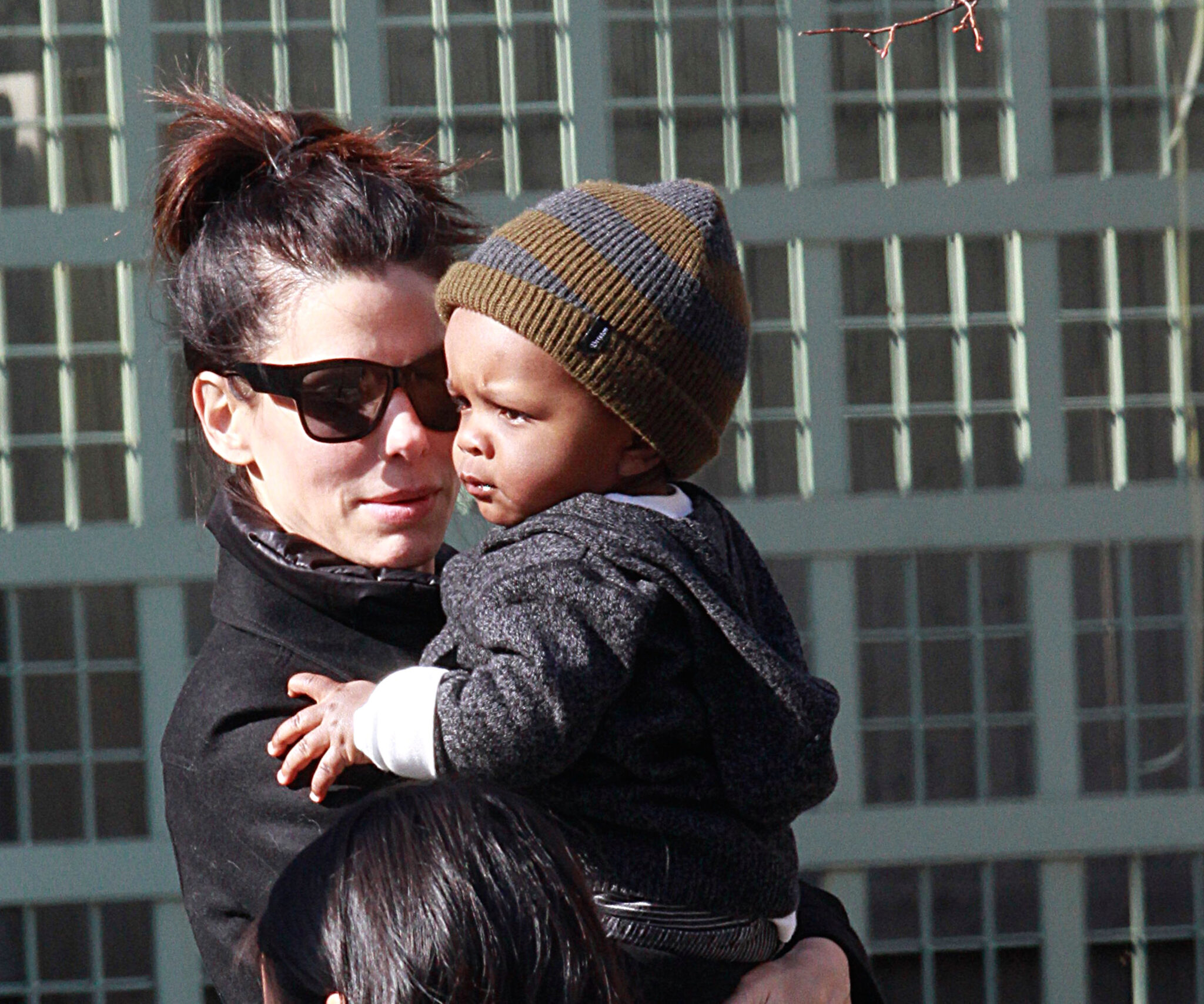
She also explained that Louis and Laila responded differently. Rather than forcing them into one way of grieving, she allowed each child to cope in an individual manner. That approach reflects the broader way Bullock has described parenting: attentive, protective and willing to recognize that two children can need very different kinds of support.
Race has been another important part of Bullock’s conversations about motherhood. Louis and Laila are Black, while Bullock is white. She has acknowledged that raising Black children required her to confront social realities she had not previously experienced in the same way.
In a 2021 episode of Red Table Talk, Bullock discussed the way strangers sometimes approached her family because she and her children do not share the same skin color. She admitted that she occasionally wished the difference were not something people noticed, believing some interactions might be easier. Her remarks were about social assumptions and her own learning, not a desire to change her children.
Bullock has said that becoming their mother changed her understanding of issues she once thought she understood. Parenting required her to keep learning and to recognize experiences that were not visible from her earlier position. She has returned to that theme repeatedly while describing family life.
Parenthood also changed how she viewed work. Bullock had spent decades building a career through films such as Speed, Miss Congeniality, While You Were Sleeping, The Proposal, Gravity and The Blind Side. After becoming a mother, awards and professional opportunities were no longer the only factors guiding her decisions.
The change became public during her promotion of The Lost City in 2022. Bullock said she intended to pause acting for an unspecified period so she could spend more time with her family. She explained that her priorities had changed, and the move was described publicly as a break rather than a permanent retirement.
Later, Bullock explained that Randall had been dealing privately with ALS and that caring for the family had become extremely demanding. She reached a point where film work and responsibilities at home could no longer be balanced sustainably. The acting break therefore coincided with raising her children, supporting Randall and managing the emotional strain of his illness.
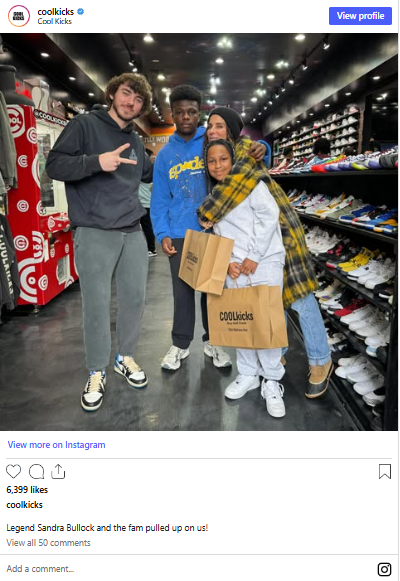
Despite her fame, Bullock has continued keeping Louis and Laila mostly out of entertainment coverage. That is why an April 2024 outing in Los Angeles drew so much notice. She was photographed with both children, then 14-year-old Louis and 11-year-old Laila. A rare picture of the three together became news largely because Bullock so seldom brings them into public view.
The photographs showed how much time had passed since Louis was first known to the public as a baby in 2010. By 2024, he appeared noticeably taller than his mother and had grown into a teenager. Laila, who had been only three when her adoption became public in 2015, had also changed dramatically.
People online reacted with surprise at the children’s growth. That reaction is common when a famous parent keeps family life private: the public remembers a baby or a small child, then sees a much older young person after several years without photographs. Bullock’s boundaries created a large gap between those old memories and the children’s actual ages.
As of 2026, recent reporting by People identified Louis as 16 and Laila as 12. Bullock continued to speak about motherhood while withholding details about their schooling, friendships and plans. She has described herself as deeply protective, but she has also recognized that children eventually need room to face challenges and become independent.
Those reflections appeared as Bullock returned to public events linked with Practical Magic 2. Her life had reached a very different place by 2010, and her professional reappearance followed several quieter years in which family responsibilities had taken precedence. The contrast with her earlier career is striking: the actress who once moved constantly between productions was now choosing work around the needs of her children.
At the London premiere of Practical Magic 2 on August 26, 2026, Bullock displayed a tattoo carrying personal family meaning. People described it as including references connected with her children and with Bryan Randall. The detail offered another small indication that family remains at the center of her life even when she is promoting a major film.
Bullock has never suggested that parenting removes all difficulty. Her public comments describe the uncertainty of adoption, the work of helping a child who experienced foster care feel secure, the responsibility of raising Black children as a white mother, and the painful task of supporting Louis and Laila through Randall’s illness.
Her story also shows why photographs of celebrity children should be viewed carefully. Louis and Laila are not public entertainers simply because their mother is famous. Bullock has intentionally given them a childhood that is far more private than her career. Reliable information about their daily lives remains limited, and dramatic claims about their personalities or ambitions should not be invented.
What can be documented is already remarkable. Bullock began pursuing adoption years before Louis arrived, welcomed him in January 2010 and won her first Academy Award during the same extraordinary season. She became a single parent as her marriage ended, then later expanded her family by adopting Laila from foster care in Louisiana.
She subsequently organized much of her life around protecting and raising those children. When the situation at home demanded more attention, she stepped away from filmmaking. Her eventual return to public work came after years in which family, grief and caregiving occupied a larger share of her energy.
The passage of time may be the most striking element. The infant Bullock kept private through the 2010 awards season is now a 16-year-old. The three-year-old who joined the family in 2015 is now 12. The occasional photographs surprise viewers because they reveal growth that happened mostly outside the public record.
For Bullock, the Oscar she received in 2010 remains an important part of film history, but her later comments make clear that motherhood changed the way she measured success. Hollywood brought awards, famous roles and worldwide recognition. Louis and Laila gave her a family around which she could reorder the rest of her life.
Sixteen years after Louis came home, Bullock’s career is opening another chapter while her children continue growing up largely away from cameras. She can attend premieres and make films while still keeping most details of their lives off limits. That balance appears deliberate rather than accidental.
It also explains the emotional response to the rare photographs. People who remember Louis as a baby suddenly see a teenager. They remember the headlines from the year Bullock won an Oscar in 2010, adopted her son and ended a marriage, then realize that many years of family life passed outside their view.
Behind the public image is a simpler timeline: a mother welcomed a child, built a larger family, faced loss and protected her children through each transition. The resemblance people notice in a photograph is only one small detail. The larger story is how carefully Bullock created a safe home while the world watched from a distance.
Her approach leaves room for both love and privacy. She can speak honestly about adoption, race, grief and work without turning Louis or Laila into public characters. She can return to acting without surrendering the boundaries that shaped their childhood. That combination is what has allowed the family to grow up before the cameras without living entirely for them.
The children’s lives will continue changing, and future photographs may prompt the same surprise. But the important fact is not how quickly they seem to have grown. It is that Bullock spent those years giving them stability, support and the freedom to develop away from the constant demands of celebrity culture.