Beyond the Spotlight, Dolly Parton and Her Husband Shared a Peaceful Life on Their Cozy Farm
Dolly Parton lived most of her adulthood as one of the world's most familiar entertainers, yet the man at the heart of her personal world stayed almost entirely beyond celebrity culture. Carl Thomas Dean, whom she wed before her career climbed to extraordinary heights, kept away from cameras, red carpets, interviews, and nearly every public appearance. Their marriage endured from May 30, 1966, until Dean’s death on March 3, 2025, providing the pair with almost 59 years of marriage. Across those decades, Parton often said that their distinctive ability to preserve closeness alongside independence helped safeguard their bond. Their story became one of contemporary entertainment’s longest-lasting marriages, largely because most of it unfolded outside entertainment itself.
The couple’s story began in Nashville in 1964, on the very day Parton arrived in the city to build a professional career in music. She was 18 years old and had only recently finished high school in East Tennessee. Dean was 21. They first crossed paths outside the Wishy Washy Laundromat, a place that would eventually become an unexpectedly famous part of Parton’s biography. She remembered being impressed that Dean appeared sincerely interested in speaking with her instead of focusing only on her looks.
Two young people who had no way to know what the next decades would hold started a romance almost at once after Parton’s arrival in Music City. Parton was already committed to creating a songwriting and singing career. Her move to Nashville came from ambition, not romance, and marriage was not necessarily at the top of her plans. Dean, meanwhile, was a Nashville-area businessman who wanted no place in show business. Their sharply different personalities would eventually become a defining feature of their marriage.
Parton chased dreams that became ever more public, while Dean was content with a far quieter existence. Instead of pushing each other into one world, they eventually learned to let their separate lives coexist. They were together for roughly two years before getting married. On May 30, 1966, Parton and Dean went to Ringgold, Georgia, with Parton’s mother, Avie Lee. They intentionally kept the wedding small.
According to Parton’s official website, Avie Lee, the minister, and his wife were the only people there with the newlyweds. On that Memorial Day, the occasion had none of the pageantry people might expect at the wedding of a future worldwide superstar. At that moment, Parton’s immense fame still lay in her future. Parton was 20 when she married Dean, while he was 23. This fact is sometimes reported inaccurately because the ages at which they met—18 and 21—are occasionally mistaken for their wedding ages two years later.
That difference matters to an accurate account of their relationship. Their marriage began before Parton achieved national fame on The Porter Wagoner Show, and before “Jolene,” “I Will Always Love You,” and “9 to 5” established her as a defining country-music figure. The gulf between Parton’s career and Dean’s temperament quickly became striking. As Parton grew increasingly famous, Dean grew ever more committed to privacy. He never chased fame through his wife and seldom attended entertainment-industry events.
Parton repeatedly said that his disinterest in fame was authentic rather than a publicity tactic. He married her, she explained, rather than the industry around her. That distinction became an essential principle in their life together. Dean appeared in public so infrequently that Parton sometimes joked that people thought she had made him up. She explained that his absence from public events made some people question whether he was even real.
Her answer was simple: Dean was real, but he simply wanted no public life. Parton honored that wish and carefully avoided forcing him toward interviews or visible events. In her view, subjecting him to needless celebrity scrutiny would have disturbed the peace he treasured. Parton characterized their arrangement as living separately in some ways while remaining together. Dean understood that she had selected a career in entertainment, while he had chosen her, not her industry.
They could therefore maintain separate interests without mistaking independence for emotional separation. Parton traveled, recorded, performed, acted, gave interviews, and operated businesses. Dean kept the much quieter lifestyle he wanted. Parton often joked that one key to their lasting marriage was simply not spending every minute together. In interviews, she sometimes answered questions about how the marriage lasted by saying she “stayed gone” or traveled often enough that they were not constantly in each other’s space.
The remark was usually offered as a joke, but Parton said it contained real truth. She believed independence made them value their time together instead of depending too heavily on constant closeness. That independence did not mean they shared nothing. Parton repeatedly described their humor as one of the marriage’s greatest strengths. She called Dean a good man with depth and an especially distinctive sense of humor.
He could make her laugh, and she appreciated that he was confident enough in himself that her success did not threaten him. Parton also described Dean as someone who recognized that fame belonged to her work rather than their private relationship. He had no need for fame because his wife was famous. He seemed never to compare himself with the immense scale of her achievements. That security became especially valuable as Parton’s career grew far beyond country music into television, movies, business, publishing, philanthropy, and international celebrity.
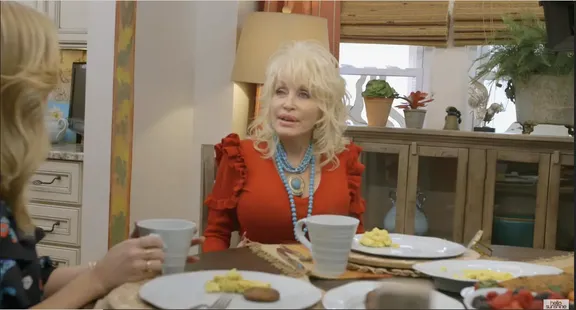
They intentionally kept home life ordinary compared with Parton’s public image. Parton loved rhinestones, ornate costumes, towering wigs, and dramatic performances, but she said that her days with Dean could be wonderfully simple. They liked remaining at home, traveling in a compact camper or RV, eating together, and traveling without turning outings into elaborate celebrity productions. Parton told interviewers that the couple enjoyed driving around in their camper and looking for peaceful places to pause. She sometimes filled a picnic basket with food and they would choose a riverbank and share a meal.
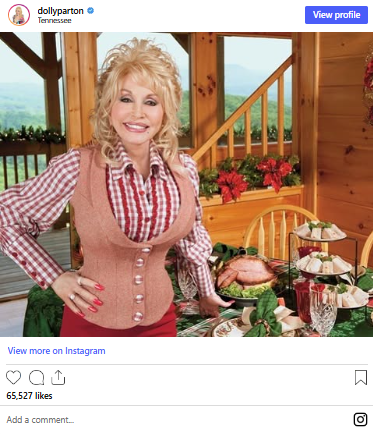
On other occasions, they might spend the night in a modest motel provided it was clean and comfortable. These descriptions stand in sharp contrast with assumptions that every aspect of a superstar’s life must be luxurious. Parton also loved preparing meals for Dean. She spoke about making dishes they both enjoyed and sometimes transforming a simple meal into a private romantic moment. Rather than lavish public celebrations, she could set out cloth napkins, crystal, and fine china at home.
Her descriptions suggested that the ritual meant more than its cost. They could turn a simple moment into a private date because being together was what mattered. The couple also shared deep ties to Tennessee. Their main home stayed near Nashville, away from the constant activity surrounding Parton’s professional schedule. In 1972, they bought property that eventually grew into a sizable private estate near Brentwood.
The property offered them substantial privacy and served as the home base for much of their life as a married couple. Dean had a business career of his own. He ran an asphalt-paving company and later retired. Unlike Parton, he had no interest in making professional achievements a public identity. He favored a life of home, vehicles, equipment, and personal projects.
This fed the long-running public impression of him as mysterious, although Parton generally described the truth as far simpler: he was just a private man. That privacy also meant Dean rarely attended Parton’s major professional events. Even as she received awards and achieved career milestones, he typically avoided the ceremonies. Parton never treated his absence as a lack of support. Instead, she said Dean simply disliked the atmosphere of the entertainment industry.
He could feel proud of her without joining her on a red carpet. Parton sometimes joked that Dean was not especially interested in constantly listening to her music either. He loved her, but that did not turn him into a fan. The distinction seems to have amused Parton instead of upsetting her. For someone professionally surrounded by praise for her songs, a husband whose place in her life was unrelated to celebrity praise may have supplied a welcome sense of normal life.
They had no children. Parton discussed this publicly many times over the years and never framed it as a private tragedy. She acknowledged sometimes wondering how motherhood might have felt, but she also eventually believed her life had taken another path. In later interviews, she said being child-free gave her the freedom to devote enormous amounts of time to music, travel, work, philanthropy, and extended family. Parton ultimately linked that part of her story to her wider bond with children.
She kept close relationships with nieces, nephews, and her extended family and became celebrated for the Imagination Library, which gives books to children. She sometimes shared the belief that perhaps she had not been meant to raise children of her own because she was able to give her energy to many children instead. Her answer was never meant as a universal judgment about parenthood. It was her explanation for understanding her own circumstances. Parton knew that parenthood would probably have changed how much travel and professional commitment were possible during the most intense decades of her career.
She never claimed one life choice was superior to another; she merely acknowledged the way her life unfolded. Dean’s lack of jealousy also became a quality Parton valued deeply. Few partners face circumstances in which their partner achieves international fame, works with major stars, travels continuously, and draws immense public attention. Parton said Dean stayed self-assured and trusted her. She believed that quality was nearly impossible to replace.
Their contrasting personalities actually were part of the attraction. Parton described herself as someone who always wanted to travel somewhere, work, create, or experience something new. Dean was much more content near home. Instead of seeing those differences as incompatibility, they found ways to make them work. She could travel extensively without expecting Dean to come along.
He could enjoy privacy without asking her to surrender her ambitions. Then they could reunite whenever their schedules permitted. That rhythm lasted for decades. In 2016, Parton and Dean celebrated their 50th wedding anniversary, a milestone especially remarkable in the entertainment world. They chose to mark it with a renewal of their vows.
Parton had said she wanted the wedding gown missing from their very modest 1966 ceremony, with Dean dressed in a suit. Renewing their vows offered them a chance to honor the marriage differently from their first wedding. After fifty years together, they could reflect on an extraordinary journey that neither could have imagined in Ringgold. Parton’s career had grown through music, film, television, business, amusement parks, publishing, and charity. Dean was still the private man she met outside a laundromat.
The anniversary also produced a few of the uncommon photos of Dean beside his wife, and Parton’s official website shared images tied to the occasion, giving fans a rare look at the man who had deliberately stayed beyond the spotlight for decades. Even these public glimpses did not transform Dean into a celebrity figure. He kept following the same approach that had defined most of the marriage. He never started granting regular interviews or appearing with Parton professionally. For Parton, honoring that boundary was part of her love for him.
She knew fame could be intrusive. She had chosen work in which scrutiny could not be avoided. Dean had not. Shielding him from needless attention was therefore something she viewed as protection, not secrecy. That boundary may also explain the rumors that gathered around the marriage over the years.
When people rarely see one spouse of a famous person, curiosity naturally grows. Parton responded to that speculation with humor, but she never altered the fundamental arrangement just to satisfy public curiosity. The marriage belonged first to them. The public career belonged to Parton. That boundary stayed remarkably consistent.
As the couple grew older, Parton started changing parts of her work schedule. In 2022, she said she did not plan to return to the kind of large-scale tours of her earlier years. Concerts and one-off appearances remained possible, but the lengthy tours requiring weeks away from home no longer appealed as much. Part of that decision involved her wish to stay nearer Dean as they both aged. Parton knew how physically exhausting touring was.
It required travel, preparation, performances, rehearsals, and long periods away. Following decades of that routine, staying closer to home mattered more and more to her. That did not amount to retiring from music. Quite the opposite. Parton kept recording, writing, making appearances, launching projects, and creating new work.
The change involved the form of touring rather than her creative ambition. Her home life with Dean grew increasingly important in those later years. They had spent decades balancing time apart with time together. Now that balance moved more toward home. Dean’s health later became a serious private concern.
Parton continued guarding details about him instead of making illness public material. When he died on March 3, 2025, she shared the news while stressing the love they had shared over nearly six decades and asking for privacy. He was 82. His death brought to a close one of the longest marriages linked to a major entertainment figure. Parton and Dean had known each other for about 61 years.
Their marriage had lasted almost 59. Amid changing musical styles, collaborators, tours, businesses, and public projects, Dean had remained the great constant in Parton’s life. After his death, Parton talked openly about the depth of the loss. The quiet man who rarely appeared in public had held an enormous place in her private world. His absence altered the rhythm of the home life they had built together.
Parton later remembered their relationship as a great love story. That simple phrase matched the way she had discussed the marriage for years. She rarely explained its success through lavish romantic gestures. Instead, she talked about humor. Respect.
Space. Trust. Meals. Road trips. Home.
Those everyday elements supported an extraordinary public existence. The couple’s relationship also inspired aspects of Parton’s creative work. Dean appeared in songs and stories she told over the years, including her famous story behind “Jolene.” Parton said the name came from a young fan, while part of its emotional inspiration came from a bank teller whose interest in Dean had been noticeable early in the marriage. Whether Parton spoke earnestly or used her signature humor, Dean often appeared in stories from the life behind the music. He was also among the few people who knew Dolly Parton before “Dolly Parton” turned into an international institution.
He met the young woman arriving in Nashville carrying ambition and very few resources. He remained while she became famous. He remained as fame became immense. And he stayed after her career had spanned more time than many complete entertainment eras. That history made their partnership unusual.
Dean had not married an established superstar. He married a young songwriter at the start of her professional path. His relationship with her therefore came before most of the public identity audiences would eventually know. Parton understood that distinction. It likely helped explain the importance she placed on protecting the marriage from the pressures surrounding fame.
She had innumerable work relationships. The marriage belonged to another category. Keeping the two categories separate appears to have been one of her deepest instincts. Their finances changed dramatically during the marriage, but Parton repeatedly described enjoying ordinary experiences with Dean even after she became extremely wealthy. The camper trips and roadside meals stayed among her favorite examples because they represented something fame could not improve merely by adding expense.
A peaceful picnic beside a river retained meaning. So did an uncomplicated drive or a meal prepared at home. That outlook helps clarify why their marriage held the public’s interest for so long. The contrast fascinated people. One spouse was one of the most visually familiar entertainers in the world.
The other was known mainly for rejecting fame. Parton performed in glittering outfits before enormous crowds, while Dean chose privacy; she adored travel, he cherished home, and she created a public empire. He remained beyond it. Yet the relationship endured despite those differences for nearly six decades. Parton never said the marriage was flawless every day.
She instead emphasized compatibility, understanding, and a sense that each had found the right person. Differences could create arguments or strain like any long relationship. But they also let each person remain authentic. That may be one of the strongest themes running through Parton’s comments over the years. She never needed Dean to make Dolly Parton’s husband his profession.
Dean never needed Parton to reduce her ambition to make him comfortable. Both retained separate identities. The relationship flourished between those identities. That arrangement defied the assumption that successful couples must share identical interests or lifestyles. Parton and Dean were opposites in many ways.
She repeatedly said that was one reason the marriage stayed interesting. Their humor helped connect them across those differences. So did trust. And so did the understanding that time apart did not necessarily reduce affection. Parton’s jokes about “staying gone” were memorable because they seemed almost contrary to standard marriage advice.
Yet a serious belief sat beneath the humor. Emotional closeness did not demand constant physical proximity. The couple could lead independent parts of their lives and still come back to a steady relationship. This approach suited Parton’s profession particularly well. Touring musicians can travel for long stretches.
Recording and filming schedules may be unpredictable. A spouse who required constant presence might have found that career very hard to accept. Dean recognized the demands of Parton’s career, and Parton recognized Dean’s need for privacy. Their shared understanding formed the basis of an exceptionally durable arrangement. Their life without children also contributed to the particular structure of the marriage.
They had no children requiring the couple to coordinate careers with parenting duties. Parton later believed this freedom helped make possible the scale of her achievements professionally and philanthropically. Again, she never spoke of this with regret. She saw it as one piece of the course her life followed. Her Imagination Library ultimately grew into one of the best-known literacy programs worldwide.
Parton frequently linked her love for children to a wider sense of responsibility beyond biological motherhood. That perspective shaped the way she understood not having children with Dean. The couple still shared extensive family ties. Parton grew up in a family of 12 children. Nieces, nephews, siblings, and extended relatives stayed significant across her lifetime.
Thus, relatives surrounded the pair despite their having no children, and the home could remain private without becoming isolated. Parton’s fame also meant the couple could never vanish entirely from public curiosity. A few photographs and stories surfaced. But compared with celebrity couples who continuously document their relationships, the amount the public knew stayed remarkably limited. That privacy was intentional.
Parton believed certain things grew stronger when they were not always shared. Their marriage was among those things. When Dean died in 2025, the relationship had survived shifts in American culture, music, media, technology, and celebrity that could not have been imagined when they met in 1964. They moved from a time before social media or smartphones to one in which celebrities could share every personal moment instantly. They mostly chose not to do that.
Dean’s public profile stayed minimal until the end. That consistency gives credibility to Parton’s explanations that privacy was truly his preference rather than a manufactured public image. He never pursued attention when it might have brought financial benefits. He never created a media career from the marriage. He simply lived on his own terms.
Parton seemed to admire him for that. She spent her career in a profession based on attracting notice. Dean reminded her that a meaningful life did not always need an audience. After Dean’s death, their long history felt even more poignant. The relationship that had begun outside a laundromat had endured through nearly all of Parton’s professional life.
Her first major national television breakthrough followed their marriage. Her biggest recordings, her films, Dollywood, and the Imagination Library all followed. Dean remained present through everything, usually outside public view. Parton herself passed away on August 25, 2026, at age 80, slightly less than eighteen months after her husband’s death. Her family confirmed her death, renewing attention to the personal and professional relationships that had shaped her life.
As a result, Dolly Parton and Carl Dean’s story may now be viewed in full. Their meeting came in 1964, their wedding in 1966, and their vow renewal in 2016; Dean’s death followed in 2025 and Parton’s in 2026. Those dates contained over six decades of companionship and nearly 59 years of marriage. The public witnessed only fragments. That was precisely what they preferred.
Their relationship was not a television series. It was not a public brand partnership. It never depended on endless photographs or anniversary interviews. Parton discussed it on her own terms. Dean mostly did not.
The scarcity of public material may be one reason the story kept fascinating people. There was always an unknown element. But Parton’s own descriptions repeatedly came back to the same fundamentals. They respected each other. They laughed together.
They gave each other room. They enjoyed simple experiences. They trusted one another. And neither asked the other to become someone fundamentally different. For Parton, those things meant more than public displays.
She already had more than enough public attention. At home, what she needed was privacy. Dean gave her that. He gave one of the world’s best-known women a place where she could simply live as a wife. In return, Parton honored his right to stay the man who wanted no cameras nearby.
Their arrangement seemed unusual only because Parton’s fame was so extraordinary. At heart, much of the happiness she described was wonderfully ordinary. A shared dinner, mutual laughter, an unscheduled drive, time beside a river, and rest at home. Those memories made up the private side of a marriage lived beside one of the biggest careers country music has known. Ultimately, identical lives were not what sustained Dolly Parton and Carl Dean’s marriage of almost 59 years.
Their own accounts indicate nearly the reverse. It endured while they stayed unmistakably themselves. Parton pursued the career she had imagined before she met Dean. Dean maintained the private existence he wanted. Neither appeared to ask the other to give up those choices.
They simply found a middle ground. For decades, Parton joked that time apart helped the marriage endure. But the fuller story points to something deeper. Distance worked only because trust waited at home. Privacy succeeded because commitment supported it.
Independence succeeded because neither mistook it for rejection. And the simple moments mattered because they were theirs alone. That may be why, after careers, awards, films, songs, businesses, and worldwide fame, Dolly Parton kept speaking of Carl Dean with deep affection. He knew her before nearly anyone else. He had loved her without needing a role in the spectacle around her.
And for nearly six decades, they sustained a marriage that lived largely beyond camera range. For a woman whose professional life was about as public as imaginable, that private love story may have been one of the few things she managed to keep nearly all to herself.