The Unspoken Fear of the Water
Mom, I do not want to take a bath.
The first time Lily said it, her voice was so soft I almost did not catch it over the sound of running water and dishes clinking in the sink. She was six years old and usually talkative. She was the kind of child who loved bubble baths, toy boats, and wrapping herself in a towel like royalty after I dried her hair. So, when she stood in the bathroom doorway that Tuesday night with her arms wrapped tightly around herself and her eyes fixed on the floor, I smiled without thinking.
You still need a bath, sweetheart, I said, reaching to pull back the shower curtain.
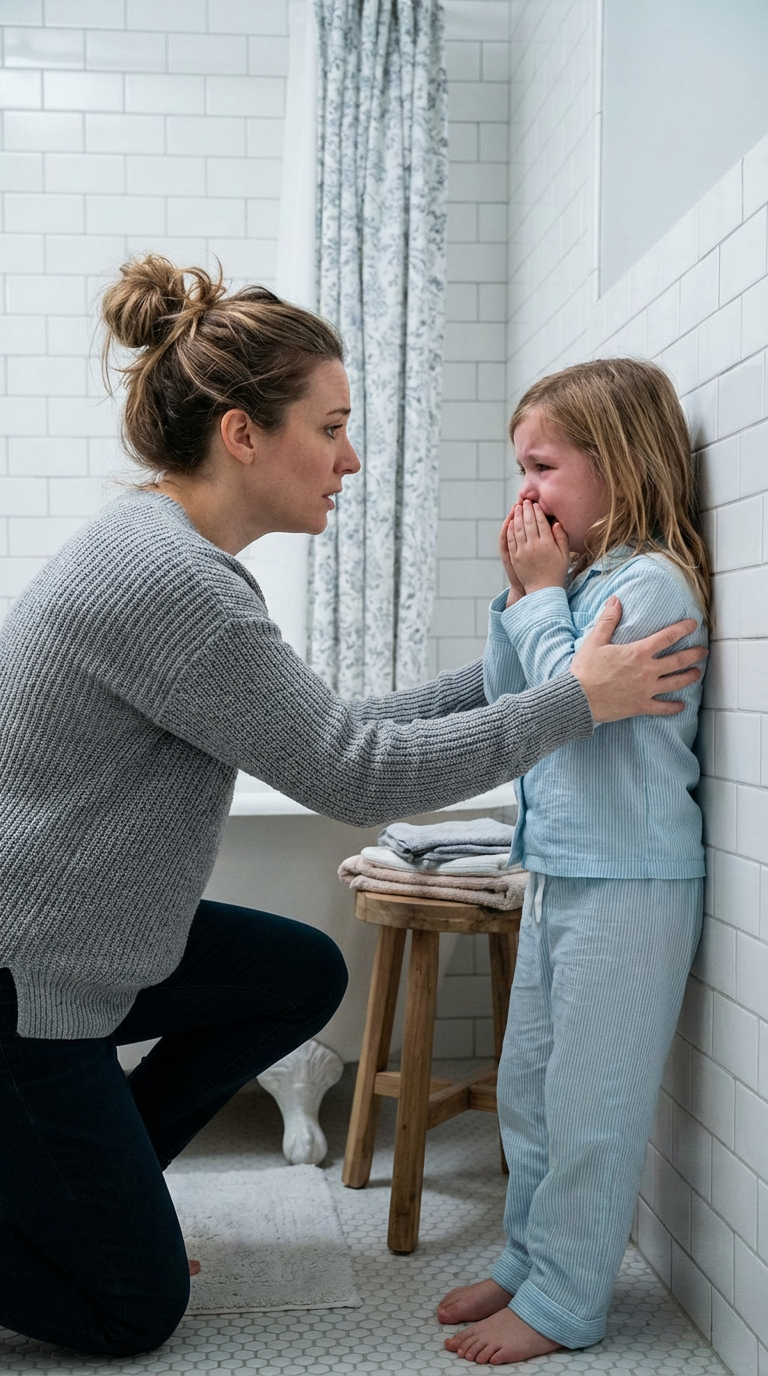
She did not argue. She just started to cry. It was not the typical whining or pouting of a tired child. She was crying in a way that felt far too heavy for someone so small, as if the water itself caused her pain. I turned off the faucet and knelt in front of her. When I asked what was wrong, she shook her head so hard her ponytail snapped against her shoulders. Please, do not make me, she begged.
I should have understood then, but my life had become a delicate balancing act, and exhaustion had dulled my instincts. I had remarried eight months earlier to Ryan. After my first husband died in a construction accident, I had spent three years just surviving. Ryan had seemed like a blessing; he was patient, kind, and remembered the smallest details about our lives. When Lily began to change after the wedding—becoming quieter, clinging to me, and suffering from nightmares—I told myself she was simply adjusting to a new house and a new father figure. I ignored my gut, dismissed her behavior to friends, and even brushed off concerns from her pediatrician.
The refusals to bathe escalated from once a week to every single night. The moment I mentioned it was time for a bath, her entire body would change. She would go pale, her hands would tremble, and she would back into a corner as if I were leading her into danger. One night, I finally lost my patience. Lily, enough. It is just a bath, I said, frustrated.
The moment the words left my mouth, she let out a scream that felt like it originated from a place of deep, lingering terror. Her knees gave out, and she collapsed, shaking so violently I feared she was having a seizure. I dropped to the floor to hold her, but she pushed against me, gasping for air. As she buried her face into the carpet, she whispered the words that would shatter my world: Mom, Ryan comes in when you are not home. He says it is our secret, and that I have to take baths after so no one knows.
My blood ran cold. The reality of her words crashed down on me, turning every excuse I had ever made into a source of soul-crushing guilt. I went into protective mode, locking us in my bedroom and dialing 911 while trying to remain calm for my daughter. I learned then that Ryan had been manipulating every situation, insisting on handling bedtime and taking over the bathroom routine to isolate her.
When the police arrived, the confrontation that followed was a blur of shouting and sirens. Ryan was arrested, his facade of the perfect husband completely stripped away. During the investigation, detectives discovered that Ryan had been keeping hidden photos and private messages bragging about how easy it was to victimize a single mother.
We moved shortly after the trail, relocating to a new town and a smaller house to start over. Lily still struggles with the fear of baths, but now she is in control of her own safety. We keep the bathroom door open or locked exactly as she dictates, and she understands that no one ever has a right to her body.
I carry the weight of my past ignorance every single day. I thought I was witnessing a simple childhood struggle, but I was actually hearing a plea for help. The lesson I learned—the one I wish every parent would understand—is that when a child’s fear does not make sense, you must sit with them and listen longer than is comfortable. Sometimes, what appears to be a small, everyday battle is actually a child trying to survive something they do not yet have the language to describe. By truly hearing them, you do not just change their life; you save it.