The Burden of the Bride
The morning Clara Valdés became a wife, snow fell on the Sierra de Chihuahua with a patient sadness, as if even the sky knew this day was not for celebration, but for resignation. Clara, twenty-three, looked at herself in the cracked mirror of the adobe house and smoothed her mother’s wedding dress with trembling hands. The yellowed lace smelled of camphor and broken promises. She was not shivering from the cold but from the weight of shame.
Her father, Don Julián Valdés, knocked on the door and told her it was time. Clara closed her eyes and lied, saying she was ready. The truth was much harsher. Her father owed fifty pesos to the local bank, and for that exact amount, she was being given to a man she had not chosen. Her family called it a solution, but Clara knew it was a sale.
The man was Elías Barragán, a thirty-eight-year-old farmer living in isolation among the mountains. People in town whispered that he owned good land but spoke to no one, earning him the nickname the deaf man. Clara had only seen him twice, and both encounters were brief and silent. During their wedding ceremony, he barely brushed her cheek for the mandatory kiss, and they drove in silence to his remote ranch. He gave her the bedroom while he slept in the main room, maintaining an impenetrable wall between them.
The days that followed were cold. They communicated only through scribbled notes about chores and weather. However, on the eighth night, the silence was shattered by Elías’s agonizing cries. He collapsed, clutching his head in a fit of unbearable pain. Clara tended to him, and he eventually wrote that he had suffered this way since childhood and believed there was no cure.
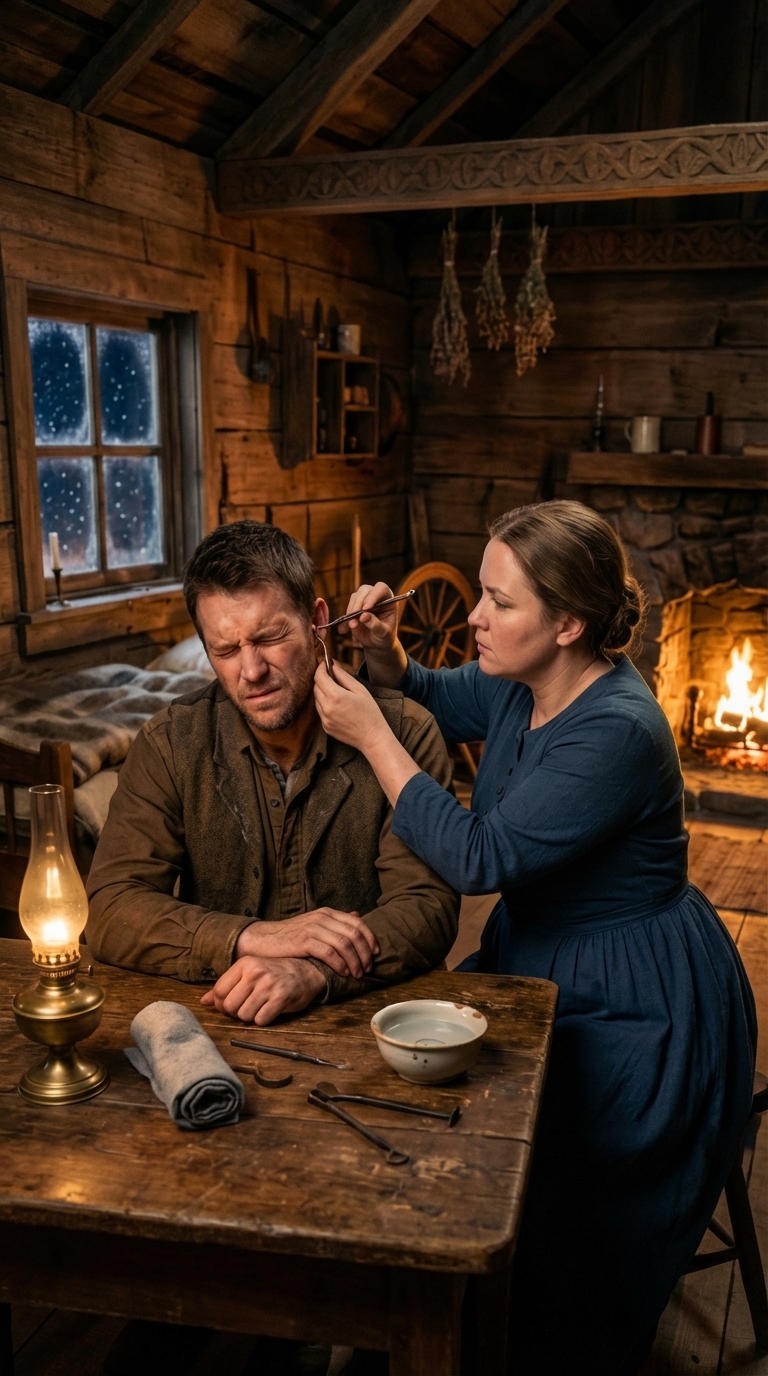
Three nights later, he collapsed again during dinner. This time, Clara brought a lamp close and inspected his ear. She saw something dark and alive moving inside. Armed with boiling water and sterilized tweezers, she forced him to let her help. Though Elías feared the procedure, he eventually trusted her. With a steady hand, Clara pulled a long, blood-covered centipede from his ear.
For the first time since their marriage, Elías wept. As he recovered, he regained his ability to hear, and his voice slowly returned. A deep, authentic bond blossomed between them, built on shared trauma and newfound gratitude. They were no longer two strangers bound by a contract, but a man and woman who had saved each other.
The peace was threatened when Clara discovered her brother Tomás had bet fifty pesos that he could manipulate the situation. When Tomás arrived at the ranch with two men to coerce Clara, his greed and cruelty surfaced. Elías defended his wife, and with the help of a neighboring rancher named Don Benjamín, they drove the intruders away.
A year later, the ranch flourished. Clara gave birth to a daughter they named Luz. Looking over their golden wheat fields, Clara realized that the wedding born from humiliation had not ended her life, but truly begun it. She was no longer a woman sold for a debt, but a wife who had looked into the dark and found her own strength. Elías, once dismissed as broken, had finally found someone with the courage to see the truth. They had built a home that was not perfect, but it was entirely their own.