
Content note: this story describes a dog who was severely underweight and had pressure sores. There are no graphic images in this article.
Emily is a lurcher with a black and tan coat. Today she is settling into her new home, and she loves a cuddle. But when the RSPCA first met her, she was described in two words that nobody wants to hear about a dog: skin and bones.
This is the story of how Emily became almost unrecognisable, in the best possible way.
Found wandering a bridle path
In March, Emily was found as a stray, wandering along a bridle path. Nobody was with her, and nobody came looking for her.
She was taken to the RSPCA Danaher Animal Home, near Braintree.
Skin and bones
The photo of Emily when she arrived at RSPCA Danaher was taken outdoors, on grass. She is standing on a lead, and she is painfully thin.
Her spine, her ribs and her hip bones all stand out under her coat. Lurchers are naturally slim dogs, built for speed, but this was something very different.
Louisa Duranti, deputy animal centre manager at RSPCA Danaher, said Emily weighed just 10.8kg when she came in.
She also had pressure sores on her shoulder blades, her hips and her legs. Sores like these can form when a dog has so little fat and muscle that the bones press against the ground every time she lies down.
Into RSPCA care
For a dog as thin as Emily, the road back is slow and careful. Rescue teams cannot simply give a starving dog as much food as she wants. Her body has to adjust bit by bit, with small, regular meals and close checks to make sure she is coping.
Her sores needed care too, and she needed warmth, rest, kindness and time. For a dog who has been neglected, learning that people can be gentle is part of the healing.
Coming back to life
And Emily responded. In just a few weeks, she put on almost 5kg.
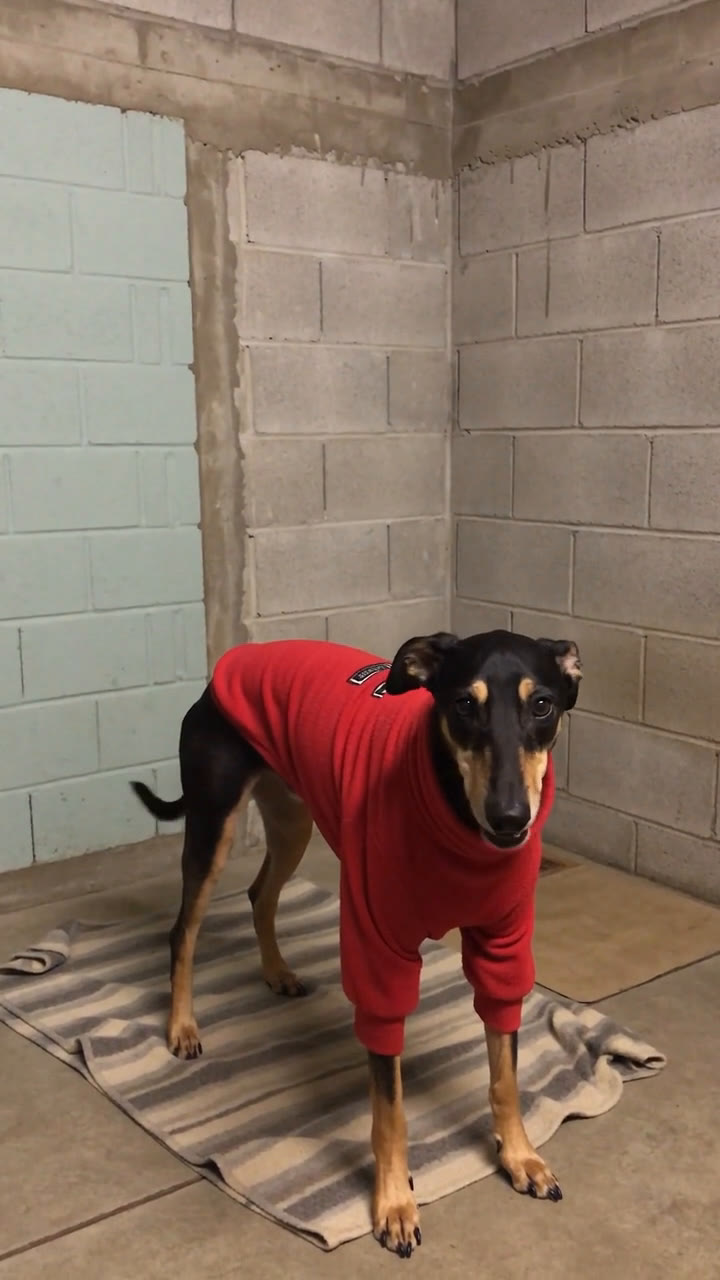
For a dog who had arrived at only just over 10kg, that was a huge change. The sharp lines of her bones softened. Her coat started to look healthier. Her energy came back.
Slowly, the real Emily began to appear. Not a set of ribs and hips on a lead, but a dog with a personality, a dog who could enjoy life.
Unrecognisable
The Mirror described Emily as unrecognisable after being rescued by the RSPCA, and her after photo shows why.
In that photo, Emily is indoors, lying on a big purple cushion. Her tongue is out. She looks relaxed, comfortable and content. The caption says simply: she is now settling into her new home.
It is the same dog, with the same black and tan coat. But it is hard to believe it is the same dog who stood on the grass that first day.
A new home with Mark and Abby
Emily was adopted by Mark and Abby Colbear. Mark is from Braintree.
This was not a reunion. Emily was not going back to anyone from her past. She was going somewhere new, to people who chose her and wanted to give her the life she had been missing.
At home, Emily enjoys cuddles, whether that is in the armchair, on her beanbag or out in the garden. For a dog who once had sores from lying on her own bones, a soft place to curl up next to the people who love her means everything.
Why Emily’s story matters
Emily’s story shows two things very clearly.
First, neglect is real. Dogs are still being left to waste away, and it often takes a member of the public or a rescue team to notice and step in.
Second, recovery is possible. With food, care and patience, a dog who was skin and bones can become a healthy, happy companion again.
Lurchers are gentle, affectionate dogs, and many end up in rescue. If you are thinking about adopting, ask your local centre about the lurchers waiting there.
From a bridle path to a beanbag. From skin and bones to settling in. That is Emily’s journey.
Source and photos: Mirror, “‘Skin and bones’ dog unrecognisable after being rescued by RSPCA”; images credited to RSPCA.
Images in this article are illustrative recreations made for this story, not photographs of the dog.
