
Content note: this story describes severe neglect and a painful skin disease. Some images show a dog in very poor condition.
When RSPCA Animal Rescue Officer Krissy Raine first saw Lola, she couldn’t tell what breed of dog she was looking at. Today Lola is a calm, much-loved Japanese Akita who has claimed a spare bedroom as her own. This is how she got there.
A call to the cruelty line
In January 2024, the RSPCA received a report about a neglected Japanese Akita seen at a house in Durham. Krissy was sent to the property.
When the owner finally let her see the dog, Krissy was shocked. Lola was lying in her own urine, surrounded by flies, in a filthy house. She was whimpering.
“She was emaciated, with her ribs, hips and spine visible and most of her fur was missing,” Krissy said. “She also had thickened scabs completely covering her face and ears.”
“It was an horrendous sight and it sounds awful to say but she just didn’t look like a dog at all – it was like nothing I have ever seen.”
“She was existing, she wasn’t living”
What stayed with Krissy most was Lola’s spirit, or how little of it seemed left.
“She hung her head low, her eyes were sunken in and she looked depressed – it was like she had almost given up on life due to the suffering she was having to endure. She was existing, she wasn’t living.”
With the owner’s permission, Krissy got Lola into her van and drove her straight to the vets. Lola cried when she was touched, and her inflamed skin was hot to the touch.
One of the worst cases the vet had seen
Lola was in so much pain that she had to be sedated before she could even be examined. The vet said she had one of the most severe cases of sarcoptic mange they had ever seen.
She had scratched away most of her fur, and the constant itching meant she couldn’t rest or eat properly.
The vet gave her a body condition score of just 2 out of 9 and said she had probably been suffering for months.
Eight days of baths
Healing Lola took patience. For eight days she was sedated again and again so she could have medicated baths to soften and remove the scabs and ease the itching. She was also given anti-itch medication.
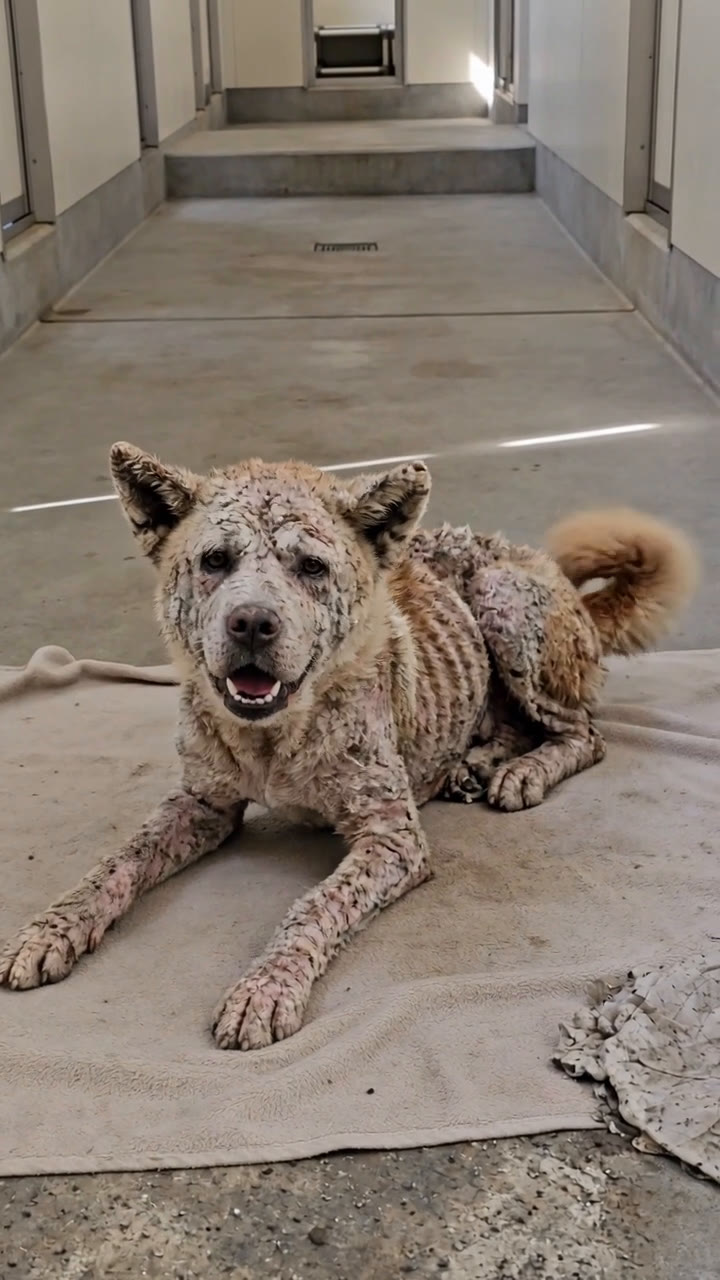
When she was well enough, she moved to RSPCA Felledge Animal Centre for ongoing treatment. Slowly her fur grew back, and with it came the dog nobody had been able to see.
A couple of weeks later, Krissy went to check on her. Staff brought out a Japanese Akita.
“I said ‘that’s lovely – can I see my dog now’. I had no idea it was her, she was completely different! I was in tears seeing her so normal and happy.”
Six months with no interest
Lola had recovered, but her wait wasn’t over. She was an older dog, about nine years old, and for six months nobody showed any interest in adopting her.
Then Alison Ranger, a 65-year-old retired carer from near Durham, saw her on the centre’s website. Alison had adopted from Felledge before, a dog called Zuri, who was terminally ill.
“When Zuri passed away I looked again and Lola was still available – so I did think well maybe this is meant to be,” Alison said.
“The staff said no-one had shown any interest in her during the six months she had been there which made me sad. She just had this look about her which said ‘look at me and please love me’.”
Home at last
That July, Alison adopted Lola. She took her home to the house she shares with her husband Alan, who is disabled.
The first two weeks were quiet. “She stayed on the edges of our life just watching,” Alison said, “but one day I just saw the penny drop for her. She softened and really came out of her shell.”
Now Lola loves affection, treats and walks. She goes into Alan’s room to give him fuss, and she has decided the spare bedroom is hers.
“She has brought so much joy to our lives,” Alison said. “Having a dog like Lola gives you a reason to get up in the morning – especially as she loves her breakfast. She is perfect.”
Krissy is just as moved. “It really is a miracle she survived and is thriving. It really makes my job so worthwhile.”
Two people were later convicted of causing unnecessary suffering to Lola and banned from keeping animals for five years.
Older dogs are often the ones left waiting. If you are thinking about adopting, ask your local rescue about the dogs who have been there longest.
Source: RSPCA, via The Northern Echo and Sunderland Echo (2025). Photos credited to RSPCA.
Images in this article are illustrative recreations made for this story, not photographs of the dog.