
Oliver did not look golden when he arrived.
He was dumped outside Birmingham Dogs Home in Wolverhampton on a freezing cold evening, and the coat he was wearing looked dark brown, almost black. It was long, matted and filthy. To anyone passing the gate, he might have seemed like a different dog altogether from the one staff would later come to know.
That is the strange, sad trick of a neglected coat. Dirt and grease and tight mats can change the colour you think you are looking at. The dog underneath is still there. You just cannot see him yet.
Hours of washing and grooming
The team at Birmingham Dogs Home, including Fi Harrison, did not try to rush a miracle. They washed and groomed him for hours, working through a muddy, felted shell that had been sitting on his skin.
Slowly, the colour changed. As the dirty dark coat came away, a golden, tan Shih Tzu-terrier cross began to appear — the same black nose, the same face, only now you could see the fur he was born with. Staff said it was as if he had changed colour.
He was nervous at first, as many dumped dogs are. Then, as the work went on and the days passed, a more loving dog started to show through, the way the gold had shown through the mud.
A freezing night at the gate
Being left outside a dogs’ home on a cold night is not a gentle way to ask for help. It is abandonment. Someone put Oliver where they hoped he would be found, and then they left him with a coat that must have been heavy, tight and cold.
The home took him in. That part of the story is simple and decent. What came next was patience: water, clippers, towels, and enough time to let a frightened dog learn that hands can be safe.
When the BBC reported his story on 12 April 2024, staff were still looking for a home for him. That “ready to look for a home” moment is now more than two years old. This account does not pretend to know what happened after the cameras left, and it does not invent an adoption that was never confirmed in the reporting. What is certain is what the team did for him in those first days, and how different he looked once the muddy coat was gone.
What the “colour change” really is
Oliver’s golden coat was always his coat. The dark colour was dirt, grease and matting packed into the hair. When people say a rescue dog “changed colour,” they usually mean this: the real dog was hidden, and someone finally took the hiding place off him.
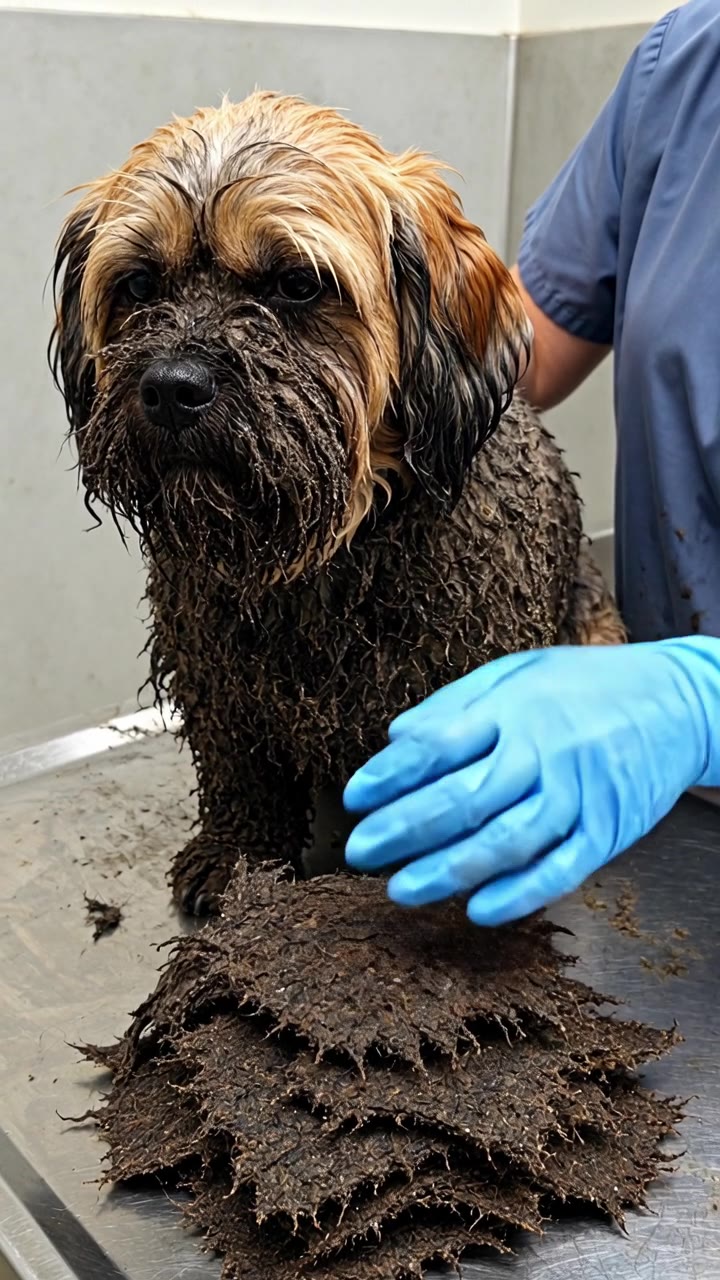
It is satisfying to watch. It is also an indictment. A Shih Tzu or terrier cross should not have to reach a shelter before anyone washes him. A coat that can disguise a dog’s true colour has been neglected for a long time.
The pile of filthy dark fur that comes off a dog like Oliver should look dirty, because it is dirty. There is nothing neat about it. The neat part, if there is one, is the care that follows: a warm room, a careful groom, and a chance to be seen as he really is.
How you can help dogs like Oliver
If you find a dog dumped at a gate or on a roadside, call the local dogs’ home, council or police rather than chasing him. A frightened dog on a freezing night can bolt.
If you can donate to, volunteer at, or adopt from a centre like Birmingham Dogs Home, you are backing the slow work that does not fit in a single photograph: the washing, the waiting, and the weeks a nervous dog needs after a coat like that comes off.
Oliver arrived looking like a dark, muddy stray. The dog under the dirt was golden. The people who took him in made sure the rest of us could finally see it.
Story retold from public reporting. Credit: BBC (12 April 2024) / Birmingham Dogs Home, Wolverhampton / Fi Harrison. Photos are the property of their owners; license before use. Any footage or stills produced for this page are newly created illustrations inspired by the public account, not the original press photos.
