
The Complex Life and Timeless Legacy of Brigitte Bardot: From Screen Icon to Dedicated Animal Advocate
Brigitte Bardot emerged as one of the most mesmerizing and globally recognized cultural phenomena in twentieth-century cinema, yet her multifaceted life story extended far beyond the boundaries of silver screen glamorous imagery and high-fashion runways. Given the full name Brigitte Anne-Marie Bardot upon her Parisian birth on September 28 of 1934, she grew up in an affluent French household characterized by strict social discipline and traditional bourgeois expectations. During her formative early childhood years, she immersed herself in rigorous classical ballet lessons, genuinely imagining that a professional dance career would become her primary artistic path. However, her striking natural appearance and captivating charisma soon opened an entirely different professional avenue when she was scouted for modeling assignments while still in her teenage years. At only 15 years old, she graced the front cover of the prestigious French edition of Elle, immediately catching the keen attention of prominent European film directors, producers, and creative screenwriters. Her formal cinematic debut arrived in 1952, marking the humble beginning of a prolific screen journey that would soon revolutionize postwar European popular entertainment.
Unlike the heavily stylized, rigidly controlled starlets manufactured by the traditional studio system of the era, Bardot presented an authentic, uninhibited persona defined by natural sensuality, youthful defiance, and modern independence. This magnetic screen identity quickly became central to both her explosive celebrity rise and the international fascination that accompanied her public life. Her definitive artistic breakthrough arrived in 1956 with the release of Roger Vadim's groundbreaking drama And God Created Woman. Portraying Juliette Hardy, an uninhibited coastal beauty whose emotional autonomy and disregard for traditional social conventions sparked fierce controversy and tremendous worldwide acclaim, the 21-year-old actress achieved instant global stardom. The film permanently altered international cinematic standards regarding female agency and self-expression on screen.
Bardot's immense cultural footprint rapidly transcended the entertainment industry, reshaping global fashion, beauty aesthetics, and lifestyle trends across Western Europe and North America throughout the late 1950s and 1960s. Her signature tousled blonde tresses, bold dark eyeliner, effortless gingham patterns, and sun-drenched Riviera elegance forged an iconic visual language that defined modern youth culture. Beyond her status as a global style muse, she demonstrated profound dramatic depth in challenging auteur projects. Her gripping, emotionally intense performance in Henri-Georges Clouzot's 1960 courtroom masterpiece The Truth earned widespread critical acclaim. In 1963, she delivered another monumental screen performance starring in Jean-Luc Godard's cinematic landmark Contempt, proving herself a formidable actress capable of commanding European auteur cinema.
However, the dizzying magnitude of relentless global stardom imposed severe emotional burdens that Bardot later addressed with uncompromising honesty. The suffocating intrusion of paparazzi photographers, constant public adoration, and persistent psychological pressure pushed her toward profound emotional exhaustion during the pinnacle of her fame. In 1973, at only 39 years of age, she made the shocking decision to retire permanently from the acting profession. Rather than attempting to maintain her movie star status indefinitely, she chose to step away from cinema to preserve her inner peace and dedicate her remaining life to an urgent moral calling: the welfare and preservation of animals. Her passionate activism had first manifested publicly during her acting years, notably in 1962 when she challenged inhumane slaughter practices in French abattoirs. In 1977, she orchestrated a widely publicized international expedition onto the frozen ice floes of Canada to protest the commercial slaughter of baby harp seals, transforming her fame into a powerful weapon for global animal advocacy.
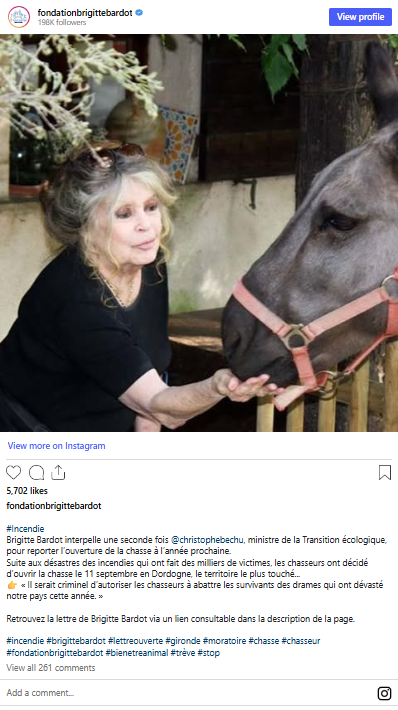
Animal advocacy evolved from a passionate personal pursuit into the singular, overarching life mission of Bardot's mature years. In 1986, she formally established the Brigitte Bardot Foundation, committing substantial personal wealth and auctioning valuable jewelry, artwork, and personal memorabilia to fund its initial operations. The organization achieved major institutional standing in France when the government officially granted it public utility status in 1992. Over subsequent decades, the foundation expanded into a formidable global institution, operating extensive rescue sanctuaries, funding international spay-and-neuter initiatives, deploying cruelty investigators, and lobbying for protective legislation across roughly 70 sovereign nations worldwide, creating an enduring operational network that protects vulnerable animals across continents.
In poignant contrast to her public devotion to animal welfare, Bardot's personal family life remained profoundly complex and fraught with lasting emotional pain. She married French performer Jacques Charrier during 1959, welcoming her sole child, named Nicolas-Jacques Charrier, on January 11 of 1960. In subsequent memoirs and candid interviews, Bardot openly admitted her profound struggle with motherhood, acknowledging that she lacked maternal instincts and felt completely unequipped for the demanding responsibilities of child-rearing during a period of intense personal turmoil. Following the dissolution of her marriage, custody of Nicolas was awarded to his father's family, initiating decades of emotional distance and strained relations between mother and son.
The private anguish surrounding their fractured family dynamic erupted into intense public scrutiny following the release of Bardot's bestselling memoir Initiales B.B. in the nineties, which contained unfiltered, painfully raw reflections regarding her pregnancy and domestic life. Jacques Charrier and Nicolas took formal legal action to protect their personal privacy, leading to a landmark court ruling in 1997 where a Paris tribunal ordered Bardot and her publisher to pay 150,000 francs in legal damages to Charrier and 100,000 francs to Nicolas. Choosing a completely different existence from his mother's media-saturated world, Nicolas married Norwegian model Anne-Line Bjerkan in 1984 and built a quiet, private family life in Norway with their two daughters, Anna-Camilla and Théa-Joséphine. Unlike his mother, who had become a global icon before turning 25, Nicolas and his children consistently prioritized personal privacy over public celebrity.
Bardot's two Norwegian granddaughters established successful professional careers entirely independent of their famous ancestry, with Anna-Camilla pursuing corporate law and Théa working in television production behind the scenes. In 2024, Bardot publicly reaffirmed that she had promised Nicolas she would no longer discuss him or his children in media interviews, honoring their enduring wish for a peaceful family life outside the public eye. Throughout her final decades, Bardot lived quietly at her famed Saint-Tropez coastal estate La Madrague alongside her fourth husband, Bernard d'Ormale, whom she married in 1992. The couple remained together until her death in 2025, dedicating their daily energies to sheltering rescued companion animals and directing the foundation's international humanitarian efforts.
The world mourned the loss of a cinematic legend when Brigitte Bardot passed away peacefully on December 28, 2025. Her foundation officially confirmed that the founder and president had died at 91 years of age, setting the record straight against erroneous digital encyclopedias that had mistakenly listed her age as 88. Tributes from world leaders, cinema luminaries, and international animal protection advocates celebrated her revolutionary artistic contributions and lifelong humanitarian crusade. In January 2026, her son Nicolas and her granddaughters made a rare public journey from Oslo to the French Riviera to attend her private funeral ceremony, uniting the family in early 2026 for a deeply poignant final farewell.
The departure of Brigitte Bardot in 2025 at the age of 91 represents the culmination of one of the most captivating, complex, and fiercely independent lives in modern biography. Her legacy endures not only through the classic masterworks of postwar cinema that immortalized her youthful elegance, but through the vital international foundation that continues saving thousands of animals every year. Rather than reducing her multifaceted story to a single romanticized caricature, a truthful examination of her life honors her visionary artistry, her profound courage in championing the voiceless, and the raw human authenticity with which she navigated both triumphs and heartbreaks across nine unforgettable decades.
Examining the historical context of Brigitte Bardot's rise reveals how deeply intertwined her public persona was with the broader social and cultural revolutions of postwar Europe. Emerging from the austerity and conservative social strictures of the early fifties, young audiences across France and beyond found in Bardot a vibrant embodiment of modern liberty. Her uninhibited demeanor, carefree laughter, and effortless physical poise represented an exhilarating departure from the rigid expectations historically imposed upon women in public life.
Her presence on screen acted as an unprecedented catalyst for cultural modernization across the continent. Audiences who had grown accustomed to the polished, carefully staged elegance of classic studio heroines were suddenly confronted with an actress who radiated unvarnished authenticity, natural movement, and spontaneous emotion. This revolutionary screen energy transformed cinematic storytelling, encouraging European filmmakers to explore more realistic, contemporary, and daring portrayals of personal freedom.
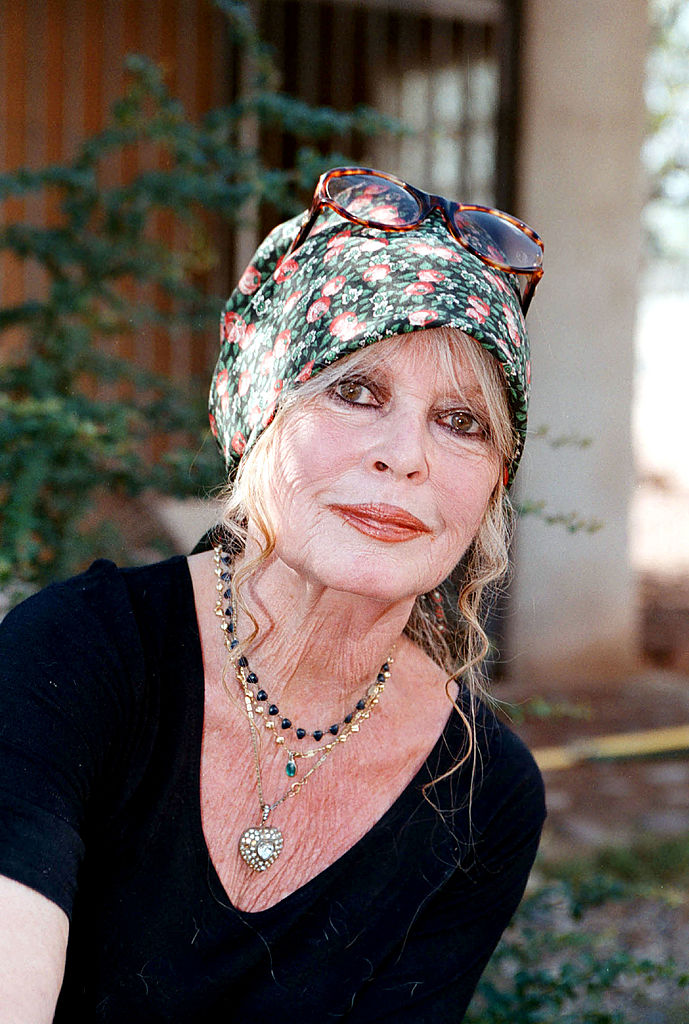
The celebrated archival beachfront photograph offers a striking visual testament to the magnetic public attention that accompanied Bardot's every movement during her golden era. Captured without the artificial filters, heavy digital alterations, or manipulated staging common in modern social media photography, the image showcases the pure, authentic interplay of natural Mediterranean sunlight, spontaneous human emotion, and genuine architectural atmosphere. The candid contrast between an unbothered beachgoer and an attentive gathering of uniformed spectators captures a timeless moment of mid-century European cultural history.
In vintage photojournalism, the power of an image lies in its ability to capture unrepeatable human authenticity. When viewers look closely at this historic photograph, they observe not merely a glamorous celebrity relaxing on the sand, but a fascinating tableau of social observation. The expressions of the onlookers, the natural composition of the coastal setting, and the relaxed confidence of the subject combine to create an enduring snapshot of postwar Riviera life.
Furthermore, Bardot's decisive departure from the entertainment industry at the peak of her commercial viability remains one of the most radical career choices in the history of cinema. While many contemporary celebrities spend lifetimes striving to prolong public relevance, Bardot recognized that genuine fulfillment required purposeful action rather than vanity. By channeling the entirety of her international prominence into the defense of mistreated animals, she established a pioneering precedent for celebrity humanitarianism that inspired generations of environmental and welfare advocates.
The psychological demands of relentless public visibility often force artists to confront difficult existential questions regarding identity, purpose, and privacy. For Bardot, the decision to abandon the glamorous world of film premieres and red carpets was not an act of surrender, but an assertive declaration of personal autonomy. Choosing the tranquil sanctuary of Saint-Tropez over the commercial demands of international cinema allowed her to cultivate an authentic life grounded in moral conviction.
The delicate interplay between extraordinary fame and generational privacy within Bardot's family offers profound lessons regarding the nature of identity and personal choice. While the global public often expects the descendants of legendary icons to pursue glamorous careers in the entertainment industry, Nicolas Charrier and his daughters consciously forged meaningful, grounded lives rooted in personal integrity and professional substance. Their commitment to Scandinavian privacy reflects a wise, mature understanding of what truly matters in life.
Growing up in the shadow of a worldwide cultural icon can present overwhelming psychological challenges for children and grandchildren. By choosing to build independent careers in legal advocacy and behind-the-scenes television production, Bardot's descendants demonstrated that individual worth is defined by one's own contributions rather than inherited celebrity status. Their ability to maintain dignified, grounded lives in Norway stands as a testament to their resilience and wisdom.
Beyond the realm of cinema, the institutional longevity of the Brigitte Bardot Foundation stands as one of her most enduring achievements. Unlike transient celebrity endorsements, Bardot built a durable, professionally managed organization capable of conducting large-scale animal rescues, operating extensive sanctuaries, and influencing international animal welfare legislation. The foundation's ongoing global operations ensure that her compassion for vulnerable creatures continues to yield tangible, life-saving results long after her passing.
The operational scope of the foundation encompasses a wide variety of essential welfare missions, ranging from domestic companion animal rescues to international campaigns against commercial exploitation. By employing dedicated veterinary professionals, trained investigators, and passionate volunteers, the organization translates Bardot's initial vision into daily, practical protection for thousands of innocent animals facing distress.
Ultimately, Brigitte Bardot's biography remains compelling precisely because she never attempted to present a curated, sanitized version of herself to the world. She lived openly with her contradictions, acknowledging both her remarkable artistic triumphs and her personal heartbreaks with disarming candor. In an era dominated by carefully managed celebrity personas, her raw authenticity and uncompromising spirit continue to fascinate audiences and inspire meaningful reflections on fame, motherhood, art, and the universal pursuit of purpose.

Her willingness to speak candidly about the painful realities of her life, including her emotional struggles and family fractures, set her apart from traditional Hollywood stars who maintained carefully polished public images. While her blunt honesty sometimes sparked controversy and legal disputes, it underscored her fundamental commitment to living authentically without hiding behind public relations facades.
As cultural historians look back across the broad landscape of twentieth-century cinema, Bardot's unique visual signature remains instantly recognizable across generations. Her effortless synthesis of elegance and defiance redefined international beauty standards and inspired countless photographers, fashion designers, and contemporary filmmakers. The enduring fascination with her early archival imagery demonstrates how authentic artistic expression can transcend its original historical era and remain vibrantly relevant in contemporary cultural memory.
Modern cinema theorists frequently examine how Bardot's cinematic style established a bridge between classical Hollywood filmmaking and the revolutionary aesthetics of modern world cinema. Her collaborations with groundbreaking European directors dismantled outdated storytelling conventions, introducing a more fluid, dynamic approach to character development and visual pacing that forever changed how stories are told on screen.
Archival photographs from the golden era of European cinema serve as vital historical documents, capturing not merely aesthetic elegance but the subtle cultural dynamics of their time. The candid reactions of onlookers, the authentic interplay of natural Mediterranean sunlight, and the unchoreographed spontaneity of public moments provide contemporary viewers with a tangible connection to an era that shaped modern popular culture. In celebrating these timeless images, we honor both the visual artistry of vintage photography and the complex human journeys behind the lens.
When studying historic photographs, contemporary audiences are reminded of the craftsmanship and artistic patience required in analog photography. Without the ability to take infinite digital snapshots, photographers had to possess exceptional timing, keen compositional awareness, and deep intuition to capture historic moments that would resonate across decades.
In reflecting on the full spectrum of Brigitte Bardot's life, from youthful cinematic sensation to dedicated global humanitarian, society is reminded of the profound potential for personal reinvention. Her ability to pivot from the heights of global glamour toward decades of selfless advocacy illustrates how influence can be redirected toward lasting moral good. Her enduring artistic catalog and tireless dedication to animal welfare will continue to inspire empathy, courage, and creative freedom worldwide.
Her life story proves that an individual is never confined to the initial identity assigned to them by society or the media. Through courage, conviction, and uncompromising determination, Bardot transformed herself from a cinematic symbol into an enduring force for international humanitarian change, leaving behind an institutional legacy that will protect innocent creatures for generations to come.
The evolution of international celebrity culture has often struggled to accommodate figures whose personal evolution defies conventional categorizations. In the case of Brigitte Bardot, her transition from the absolute zenith of cinematic allure to the quiet dedication of animal welfare advocacy represented an unprecedented subversion of celebrity norms. Rather than exploiting her renown for commercial gain or continued vanity, she recognized the fleeting nature of screen adoration and redirected her fame toward a profound, selfless mission.
This transformation highlighted the deep moral convictions that guided her mature life. While the film industry often celebrates external glamour, Bardot sought substance and meaning in her later years, finding true purpose in providing sanctuary for defenseless animals. Her work challenged societal indifference toward animal suffering, igniting vital international dialogues regarding humane treatment and environmental stewardship.
Moreover, the international reach of her foundation's initiatives demonstrates the transformative potential of sustained grassroots philanthropy. By mobilizing thousands of dedicated supporters, volunteers, and legal advocates across dozens of nations, the foundation established a permanent institutional bulwark against cruelty. The rescue shelters, emergency medical interventions, and educational programs funded by her organization continue to save countless lives on a daily basis.
In evaluating her artistic contributions, film historians emphasize how Bardot's uninhibited style helped dismantle the artificial conventions of postwar European entertainment. By portraying complex, emotionally independent women who refused to be constrained by societal expectations, she paved the way for a more authentic and diverse representation of female characters in international cinema.
Her legacy also underscores the enduring value of vintage photojournalism as an irreplaceable window into cultural history. Medium-format archival prints capture an irreplaceable texture, warmth, and spontaneous authenticity that modern digital rendering often fails to replicate. Each photograph encapsulates a singular historical moment, preserving the vibrant energy of a bygone era for future generations of admirers and scholars.
As we reflect upon the multifaceted journey of Brigitte Bardot, her story stands as a timeless exploration of art, fame, conviction, and compassion. From her early triumphs on the Mediterranean coast to her tireless advocacy across the globe, she lived with fearless authenticity and unwavering devotion to her principles, leaving behind an indelible mark on cinematic heritage and the global fight for animal welfare.
The lessons drawn from her extraordinary life continue to resonate with contemporary audiences who value courage, individuality, and moral conviction. In an increasingly complex world, Brigitte Bardot's unyielding passion for justice and her profound love for innocent creatures remain an enduring source of inspiration, reminding us of the timeless importance of empathy, integrity, and lifelong purpose.
The worldwide fascination with the French Riviera during the mid-twentieth century was largely defined by the vibrant energy and artistic liberation that Bardot embodied. Her spontaneous, sun-drenched style transformed coastal towns like Saint-Tropez from sleepy fishing villages into iconic epicenters of international art, literature, and cinema, leaving an indelible imprint on European cultural geography.
Furthermore, her uncompromising dedication to animal welfare helped pioneer modern environmental consciousness. By using her global platform to speak out against ecological destruction, commercial exploitation, and cruelty, she demonstrated how influential cultural figures can effect lasting legislative and societal change on behalf of vulnerable living beings.
In the realm of personal philosophy, Bardot's life illustrates the profound value of prioritizing authenticity over external expectations. Whether navigating the intense pressures of international cinema or defending her cherished principles in the face of public criticism, she remained steadfast in her commitment to living genuinely and courageously.
As new generations encounter her classic films, admire timeless archival photography, and learn of her tireless humanitarian work, Brigitte Bardot's extraordinary journey will continue to inspire audiences around the world to celebrate beauty, pursue truth, and stand courageously on behalf of the defenseless.
The enduring fascination with archival French photography highlights how classical imagery continues to speak to contemporary viewers across diverse cultures. In a world saturated with ephemeral digital snapshots, handcrafted medium-format film photographs possess an emotional permanence that invites contemplative appreciation and deep aesthetic connection.
Ultimately, the story of Brigitte Bardot reminds us that life is defined not by a single chapter or public persona, but by the courage to evolve, the resilience to endure adversity, and the compassion to dedicate one's energies to the protection of the innocent. Her multifaceted legacy will remain an enduring beacon of artistic boldness, moral dedication, and heartfelt humanitarian purpose for generations to come.