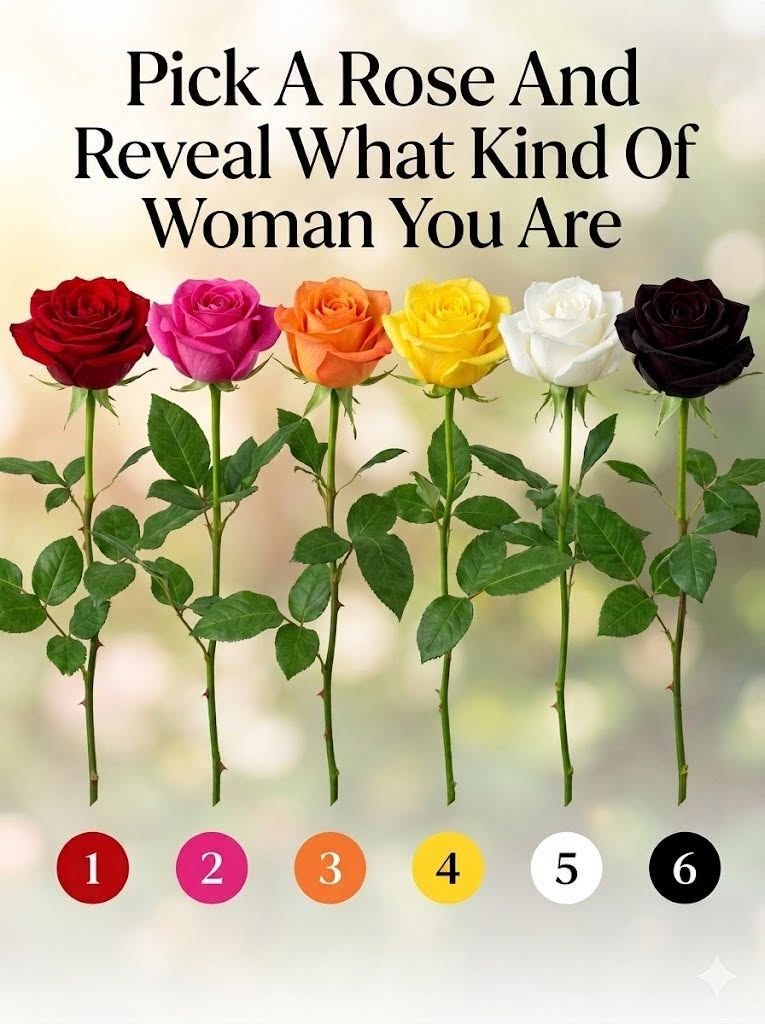
Choose a Rose and Discover What Your Choice Says About You
This personality picture invites readers to choose one of six roses—red, pink, orange, yellow, white, or black—and then claims the selection can show what sort of woman they are. The symbolism can be entertaining, although a color choice is not a scientifically validated personality assessment. Preferences shift with mood, culture, memories, and the way the picture is designed.
Red is commonly connected to passion, bravery, and loyalty. People who select it are often portrayed as emotionally open and determined. That reading reflects centuries in which red carried ideas of love, danger, and intensity. Someone may simply pick it because the color creates the strongest contrast on the screen.
Pink is associated with softness, romance, and care. Its description usually celebrates empathy and quiet resilience. Those traits are broad enough to sound familiar to many people, and choosing pink does not demonstrate that one person is more nurturing than someone who chooses another flower.
Orange is given meanings of energy, creativity, and adventure. Since it blends the intensity associated with red and the brightness linked to yellow, it becomes a convenient symbol for enthusiasm. A viewer could instead choose orange because it is unusual for a rose or because it brings a particular garden to mind.
Yellow is tied to friendship, optimism, and sociability. Yet in some settings yellow roses have also represented jealousy or change. Symbols do not mean the same thing everywhere; the upbeat reading reflects one modern tradition, not a permanent psychological rule.
White roses are presented as calm, wise, and truthful. One culture may connect white with peace and simplicity, while another may associate it with mourning. A preference can be visual, ceremonial, or deeply personal. The same color can carry opposite meanings without either interpretation being wrong.
In these puzzles, black roses generally stand for independence, mystery, and transformation. Genuine black roses are usually very dark red or purple, and their unusual look can appeal to people who enjoy unconventional design. Choosing one does not reveal a hidden danger or forecast a major change in life.
The descriptions rely on the Barnum effect: broad, flattering statements feel personally precise when they are attached to an individual choice. A line such as “you care deeply but protect your heart” can sound true to almost anyone. The image creates a small ritual that makes a prepared statement feel as though it has been uncovered.
The exercise is more useful as a conversation starter. Ask what made one rose stand out. Does it recall a person, an event, or a value? Would the answer change if the flowers had different shapes or appeared in different positions? Reflection can uncover a current association, even though the image did not measure personality.
Everyone contains some mixture of passion, gentleness, energy, joy, calm, and independence. Enjoy selecting a flower and sharing the result, but do not turn symbolism into a label. A garden is lovely because its roses differ, and human personality is more complicated still than six colors arranged on a screen.
Florists and historians can add another dimension to the game. Rose symbolism has shifted across eras, and breeders have produced colors that earlier generations could hardly obtain. Someone who chooses white for a wedding may think of new beginnings, while another person may connect it with remembrance.
The black option is often digitally darkened or represented by an especially deep cultivar. Its rarity can attract people who want their choice to feel individual. These changing associations show that symbols are shared agreements, not measurements.
If the test brings back a grandmother’s garden or a bouquet received during a difficult year, that personal memory may say more than the prepared result. Meaning belongs to the person making the choice; the image only offers an invitation. Share the memory when it creates connection, but never use another person’s flower to judge their relationships, emotional health, or worth. A preference may change tomorrow without contradicting anything that was true today.