Perfect: The real truth about the iconic aerobics scenes
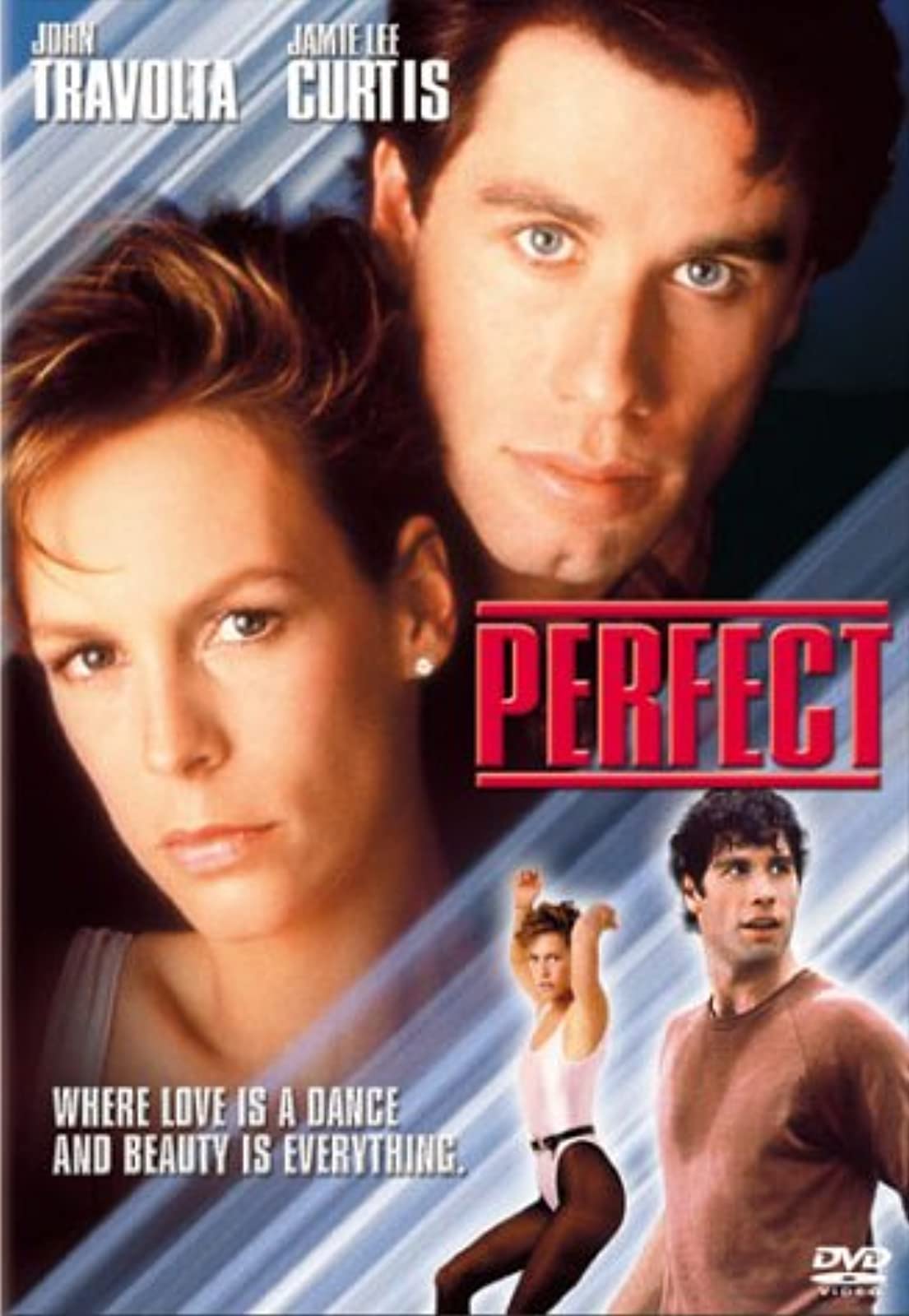
When John Travolta and Jamie Lee Curtis were announced as the stars of Perfect in 1985, the project looked like it had everything needed to become a major Hollywood success. Travolta was still one of the most recognizable screen idols of his generation, Curtis was a rising star with athletic charisma and a growing fan base, and Columbia Pictures backed the film with a reported $20 million budget. With James Bridges directing and a glossy story built around journalism, fitness clubs, fame, bodies, and ambition, the movie seemed designed to capture the spirit of the 1980s.
Instead, Perfect became remembered for a very different reason. The film earned only $12.9 million worldwide and was soon treated as one of the era’s great disappointments. It also attracted Golden Raspberry Award nominations for Worst Actor for Travolta, Worst Supporting Actress for Marilu Henner, and Worst Screenplay. It was even nominated for Worst Picture at the Stinkers Bad Movie Awards. What had been shaped as a slick drama about media and health-club culture ended up becoming famous for leotards, thrusting aerobics routines, revealing gym clothes, and a set of choices that many critics found unintentionally campy.
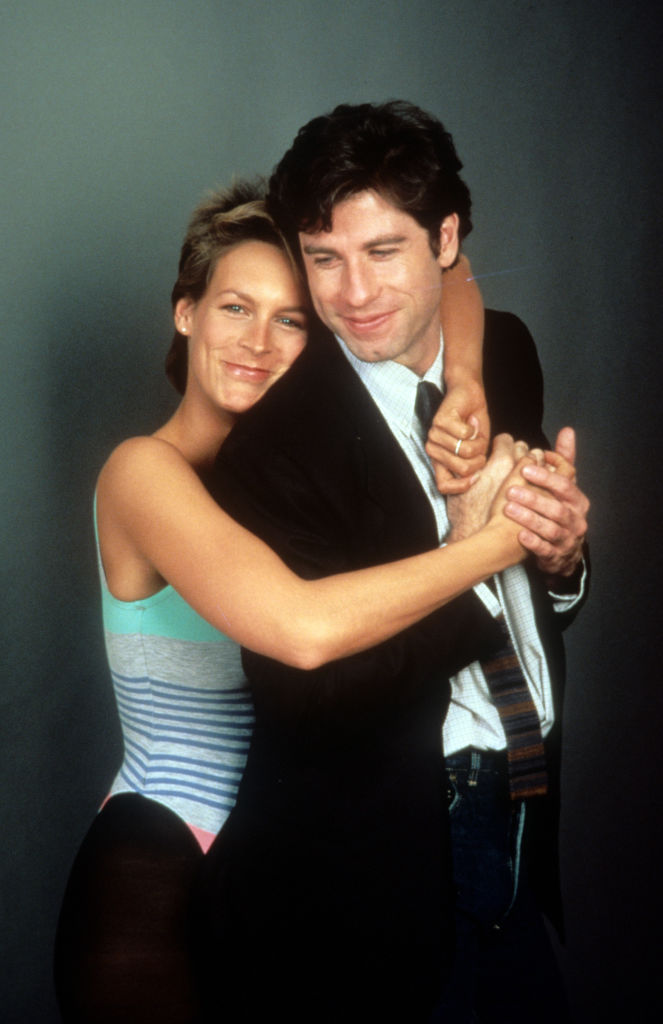
The story follows Adam Lawrence, a journalist assigned to interview a successful entrepreneur suspected of drug dealing. His next assignment takes him into the world of fitness clubs, where he meets Jessie Wilson, played by Jamie Lee Curtis. Jessie is an aerobics instructor with confidence, energy, and a strong distrust of reporters. That setup gave the movie a chance to explore celebrity journalism and the booming workout culture of the decade, but the finished film became overwhelmed by its own most provocative images.
Many people who remember Perfect today remember the gym sequences before anything else. The camera lingers on bodies, sweat, leotards, and movement with a persistence that made the workout scenes more infamous than the plot. Travolta’s extremely revealing gym shorts became part of the movie’s reputation, and the aerobics classes were filmed in a way that some critics compared to softcore fitness fantasy rather than drama. One especially famous routine, filled with repeated pelvic thrusts, helped define the film’s R-rated reputation and became the scene that followed Jamie Lee Curtis for decades.
Those scenes were not received kindly by everyone involved. Curtis later spoke openly about how disappointed she was with the way the aerobics material was handled. She explained that the routines were supposed to function as substitute love scenes, but to her they became almost more explicit than ordinary nudity would have been. Her concern was not only that the movements were suggestive, but that the camera held on them for too long and pushed the point so hard that the effect became harsher than she expected. When she asked whether the sequences could be shortened, she was told they had already been cut down.
That behind-the-scenes frustration gives the famous footage a different meaning. On the surface, the routines helped turn Jessie Wilson into an unforgettable screen image: strong, flexible, confident, and magnetic. But Curtis did not see the scenes only as playful or glamorous. She understood that the movie’s focus on her body risked overshadowing the character and the story. In the end, the aerobics scenes became the movie’s main selling point and its most debated legacy, while Curtis’s own mixed feelings show how complicated that kind of screen fame could be.
Curtis worked hard for the role. She described herself as athletic and said that when she took exercise classes, she often imagined what it would be like to lead one. She was interested in the story, but she was especially excited about the opportunity to work with the people attached to the film. To prepare, she trained for months before production began. The workout scenes were filmed first, before the dramatic scenes. By the time the final aerobics material was shot for the credits, Curtis had reportedly lost ten pounds of muscle while eating only one meal a day.
Her commitment did not stop with the movie itself. Curtis also appeared in a promotional music video with Jermaine Jackson, tying the film even more tightly to the pop culture sound and image of the mid-1980s. Perfect featured music connected with major names of the era, including Whitney Houston, Jermaine Jackson, Berlin, and Wham. The soundtrack, the clothes, the bodies, and the fitness craze all made the movie unmistakably of its time, even if the drama underneath struggled to hold together.
Travolta’s place in the film was also complicated. In the late 1970s, Saturday Night Fever and Grease had made him one of the biggest stars in the world. He was a box-office draw, a pop icon, and a screen heartthrob. By the time Perfect arrived, his career had cooled from those extraordinary heights. The movie’s failure did not help. After Perfect, Travolta stepped away from big-screen acting for several years and did not return until 1989 with The Experts and Look Who’s Talking. That gap became one of the longest pauses in his film career.
Even so, Travolta did not later express regret about making Perfect. For him, working again with James Bridges and forming friendships with the cast remained meaningful. Critics may have joked that the movie felt like little more than repeated scenes of Travolta and Curtis exercising, but Travolta still valued the experience. The film may have become a professional setback, yet it was not something he personally dismissed as a mistake.
The production itself was unusually long and expensive. James Bridges set out to adapt Aaron Latham’s script about a Rolling Stone reporter, and the shoot was originally planned for 81 days. Instead, it stretched to 140 days. Curtis, who had experience in faster low-budget productions, joked in a 1984 interview that the schedule was so long they could probably have filmed all her previous movies in the time Perfect took to complete.
The production’s scale showed in other ways, too. Because filming the Rolling Stone office scenes at the magazine’s real New York headquarters was not practical, a nearly identical two-story replica was built on two soundstages at Laird International Studios in Los Angeles. That level of detail reflected the money and time being poured into the film. Bridges defended the long process by saying the real test would come once the movie was finished and audiences judged it at the box office. If it worked, the time would not have been excessive. If it failed, no amount of time could save it. The box office eventually answered that question in a way nobody involved had hoped.
One of the most unusual casting choices in Perfect was Jann Wenner, the real co-founder and editor of Rolling Stone. He played Mark Roth, Travolta’s editor in the film, and his presence gave the newsroom material a kind of authenticity that could not easily be faked. Wenner did not simply receive the part without effort; he went through a full screen test with Travolta. When asked about the movie’s realism, he said it was accurate while allowing for some dramatic liberties. He also hoped the film would help people understand what Rolling Stone really was and correct misconceptions about the magazine.
Whether the movie succeeded at that goal remains debatable, but Wenner’s performance became one of its more surprising elements. In a film filled with Hollywood stars and stylized gym scenes, the actual magazine figure brought a grounded quality to the journalism side of the story. Perfect wanted to be about more than bodies in motion. It wanted to look at reporting, privacy, ambition, and the way a journalist’s assignment can collide with someone else’s life. Yet the cultural memory of the movie drifted toward the aerobics floor.
The title Perfect also carried more meaning than simple beauty or physical flawlessness. Curtis explained that, for her, perfection was not about being without faults. It was about the right people have to be what they want to be. In her view, Jessie Wilson stood for defending that freedom. The character was not merely an instructor in a leotard; she represented a belief that people should be entitled to define themselves. That idea was present inside the movie, even if the marketing and word-of-mouth often narrowed the focus to Curtis’s body.
That narrowing was part of Curtis’s larger struggle at the time. She had become famous very young after Halloween turned into a major success, and she admitted that she had never received formal acting training before that sudden attention. Horror roles followed, along with nude scenes in earlier films. By the time Perfect came along, she was becoming more careful about what she would agree to do on screen. In a 1985 interview, she said she was relieved that Perfect did not require nudity and hoped her days of undressing for the camera were behind her.
That hope largely came true. Aside from a brief flash in The Tailor of Panama in 2001, Curtis had not appeared nude on screen again as of November 2021. In that context, Perfect became a turning point. The film did not require traditional nudity, but its aerobics sequences still left Curtis feeling exposed in another way. Her comments make the movie’s legacy more layered: the scenes helped make her image iconic, but they also pushed her toward clearer boundaries about how her body would be used in film.
Critical reaction to Perfect was severe. Variety delivered an especially harsh judgment, calling the movie an embarrassment unlikely to satisfy any audience. Other critics found it strange, overextended, and too fascinated with its own workout imagery. The repeated close-ups of bodies, the intense gym atmosphere, and the glossy soundtrack all contributed to a tone that some found bizarre. The film became known as one of those 1980s productions that tried to be serious and sexy at the same time but landed somewhere closer to accidental camp.
Yet failure did not erase it. Over time, Perfect developed a cult reputation. It was included in John Wilson’s The Official Razzie Movie Guide as one of the 100 most enjoyably bad movies ever made. That kind of recognition is not the same as critical praise, but it means the film remained memorable. Some movies disappear after bad reviews; Perfect stayed alive because its flaws were so distinctive.
Quentin Tarantino later offered one of the more unexpected defenses of the film. In a 1994 Rolling Stone interview, he called Perfect greatly underappreciated because of Curtis’s very tight performance. That praise did not rewrite the movie’s original reception, but it did suggest that there was more to Curtis’s work than the jokes about leotards and pelvic thrusts. Beneath the excess, her performance had discipline, confidence, and star power.
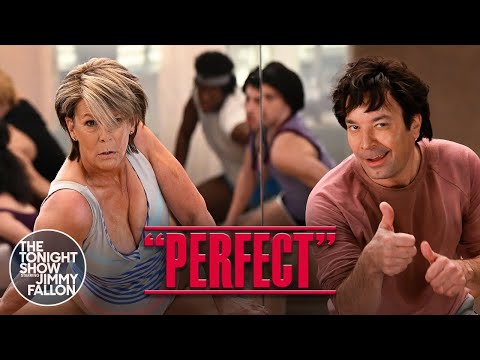
Decades later, Curtis showed that she could laugh at the scene that had followed her for so long. On The Tonight Show, she teamed with Jimmy Fallon to recreate the famous aerobics routine. Wearing a version of her striped one-piece look, she led a comic workout set to Jermaine Jackson and Whitney Houston’s 1985 hit “Shock Me.” Fallon stepped into Travolta’s place, sweating through the exaggerated moves beside her.
The sketch leaned fully into absurdity. Fallon sent Curtis a video of his own dance moves, Curtis pulled a phone from her tight outfit, blew him a kiss, ate pizza in a deliberately sensual way, and poured champagne over herself while continuing the hip rolls. The bit became even wilder when Fallon released a dove from his shorts and Curtis used a defibrillator to bring a “dead body” into the routine. Fallon joked that the original scene seemed to go on for about five minutes. Curtis corrected him with a laugh, saying it went on for about seven.
That recreation showed how much distance time can create. Curtis had once been frustrated by how the movie lingered on her body, but years later she could parody the routine on her own terms. The scene had become part of film history, not because Perfect was a masterpiece, but because it captured a strange collision of 1980s fitness culture, Hollywood sexuality, star image, and directorial excess.
Perfect is not remembered as the flawless hit its title promised. Its expensive production, long shoot, poor box office, negative reviews, and awards-season mockery made it a cautionary tale about how a movie with major names and a commercial premise can still miss the mark. But it is also more interesting than a simple failure. It froze a particular moment in pop culture: the rise of health clubs, the fascination with sculpted bodies, the power of celebrity journalism, and the uneasy line between empowerment and exploitation.
The most revealing truth behind the iconic aerobics scenes is not that they were edited in some shocking way or that they were merely meant to be sexy. It is that they became the part of Perfect everyone talked about while Jamie Lee Curtis herself had complicated feelings about them. They made her look strong, athletic, and unforgettable, but they also made her feel that the movie had pushed the idea too far. That tension is why the scenes still invite discussion.
Perfect may never be considered a cinematic masterpiece, but its reputation is not as simple as failure. Travolta valued the experience, Curtis delivered the performance that even some later defenders admired, Wenner brought an unexpected authenticity to the journalism scenes, and the movie’s strange choices made it impossible to forget. The film fell short of its grand promise, yet its most notorious moments continue to raise questions about how retro movies used bodies, how stars were marketed, and how audiences should look back at scenes that were once sold as playful but were not always experienced that way by the people performing them.