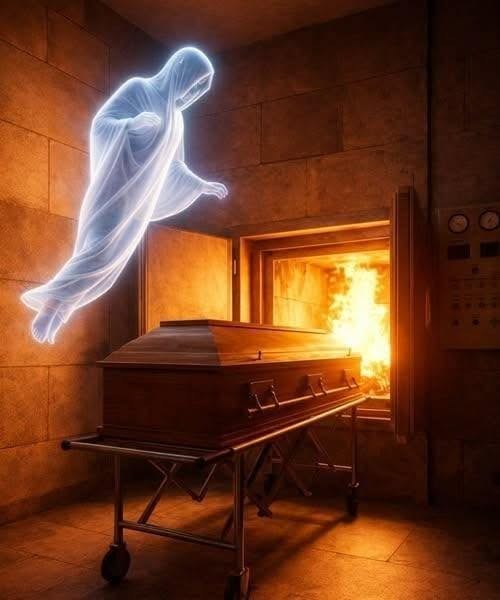
THE SIN OF CREMATION according to the Bible says!
Cremation has become far more common in many Western societies in recent decades. Families often choose it because burial can be expensive, cemetery space may be limited, and environmental concerns have become part of end-of-life planning. For many people, cremation feels like a practical and respectful option. Still, within Christianity, the choice often raises serious questions about the body, tradition, and the hope of life after death.
The question most often asked is whether cremation should be considered a sin. Traditional burial has deep roots in the Bible, while cremation is not directly forbidden by a single clear command. In Scripture, burial was the usual pattern. Figures such as Abraham and Moses were laid to rest in the earth, a practice connected with the belief that the human body is sacred and destined for future restoration.
The burial of Jesus Christ became the most important model for Christian practice. His body was placed in a tomb, and that act has long shaped Christian thinking about death. Burial came to symbolize hope, like a seed placed in the ground that will rise again. St. Paul also connected burial with resurrection, helping explain why Christians preferred burial for many centuries.
At the same time, the Bible does not give a direct law saying cremation is forbidden. Instances of bodies being burned in biblical accounts generally appear in unusual or extreme circumstances rather than as a universal moral lesson. For that reason, many modern theologians argue that burial remains the traditional Christian pattern, but cremation belongs to the area of Christian freedom rather than absolute doctrine.
One concern often raised is that the body is called the “temple of the Holy Spirit.” Some believers fear that burning a body may show disrespect or suggest doubt in the resurrection. Others respond that God’s ability to raise the dead cannot depend on whether earthly remains are buried, burned, damaged, or scattered. Resurrection hope rests on divine power, not on the physical condition of the body after death.
History also shaped Christian discomfort with cremation. In earlier times, cremation was sometimes associated with pagan customs that rejected belief in bodily resurrection. Christian burial therefore became a public sign of faith and a way of standing apart from surrounding practices. Today, however, cremation is usually chosen for practical family reasons, not as a denial of Christian belief.
Most Christian denominations now hold that cremation does not prevent salvation and does not block resurrection. Christian faith looks toward transformed, glorified bodies, not the permanent preservation of earthly remains. Whether a person is laid in a grave or placed in an urn, the central hope remains the resurrection of Christ and the promise that death is not the final word.
The decision between burial and cremation is therefore best approached with reverence, conscience, and faith. Burial carries strong biblical and historical meaning, while cremation is not explicitly condemned. What matters most is that the choice honors the person who has died, respects the family’s convictions, and keeps attention fixed on the Christian promise of resurrection.