The Hidden Home: The Story of the Family Living Beneath the Streets
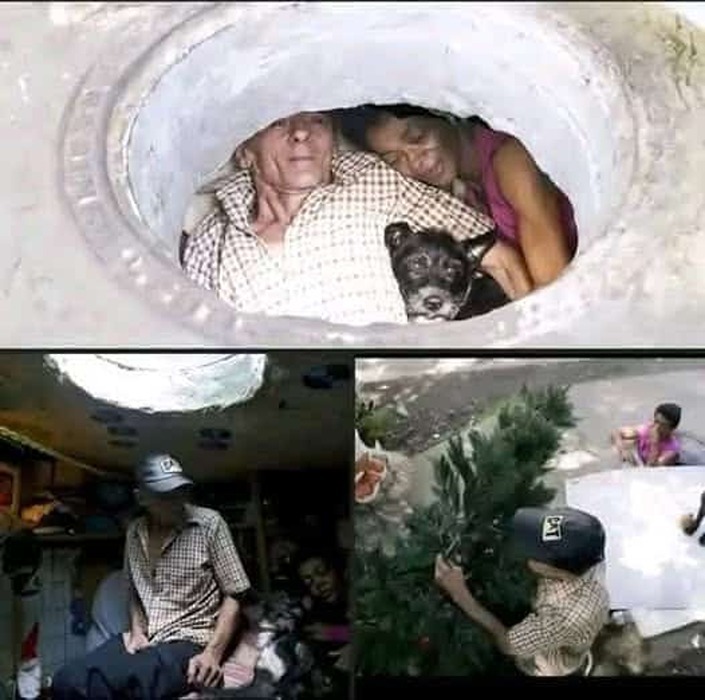
In a story that has captured global attention and sparked intense debate, images recently surfaced showing a family living inside a subterranean storm drain. While the initial viral posts left many with more questions than answers, the reality behind these photographs is a poignant look at the lengths to which some will go to find shelter in a world that has left them behind.
The family in question, residing in the city of Medellin, Colombia, had been living in this unconventional space for years. The structure is not merely a hole in the ground, but a surprisingly sophisticated, albeit cramped, living quarters located inside a decommissioned underground drainage system. For Miguel Restrepo and his wife, Maria Garcia, this storm drain became their sanctuary after struggling with years of homelessness and addiction on the city’s dangerous streets.
When reporters and social workers finally gained access to their hidden home, they were shocked to find that the couple had managed to make it functional. The space, which is roughly two meters wide and deep, was equipped with a makeshift kitchen, a television, a fan, and a bed. They even decorated the entrance with a small Christmas tree during the holidays, attempting to maintain a sense of normalcy and dignity in an environment that most would consider uninhabitable.
The couple’s journey into the drain was driven by a desperate need for safety. Living on the streets of Medellin exposed them to violence, theft, and the constant threat of being harassed. By retreating into the underground tunnel, they found a quiet, albeit damp, space where they could be together with their loyal dog, Blackie. For them, the darkness of the drain was preferable to the dangers of the surface world.
This story serves as a stark reminder of the hidden crises of urban poverty. While the images of a family living in a sewer might seem shocking or even bizarre at first glance, they represent a survival strategy born of necessity. Miguel and Maria’s story highlights the failure of social safety nets and the extreme measures individuals take when they have no other options left.
Over the years, the couple became a local fixture. Despite their living conditions, they maintained a positive outlook and a strong bond with each other. Their story eventually reached the ears of local authorities and humanitarian organizations, leading to various attempts to offer them housing assistance. However, the transition from a life of total autonomy in the underground to the structured environment of social housing proved to be a complex challenge.
Ultimately, the tale of the family in the storm drain is not just about the oddity of their home, but about the resilience of the human spirit. It challenges us to look beyond the surface of viral headlines and consider the human beings behind the images. Whether they are living in a mansion or a concrete pipe, the fundamental human need for a place to call home remains the same. Their story continues to be a powerful testament to the fact that even in the most unlikely of places, people will strive to build a life, find companionship, and hold onto their humanity.