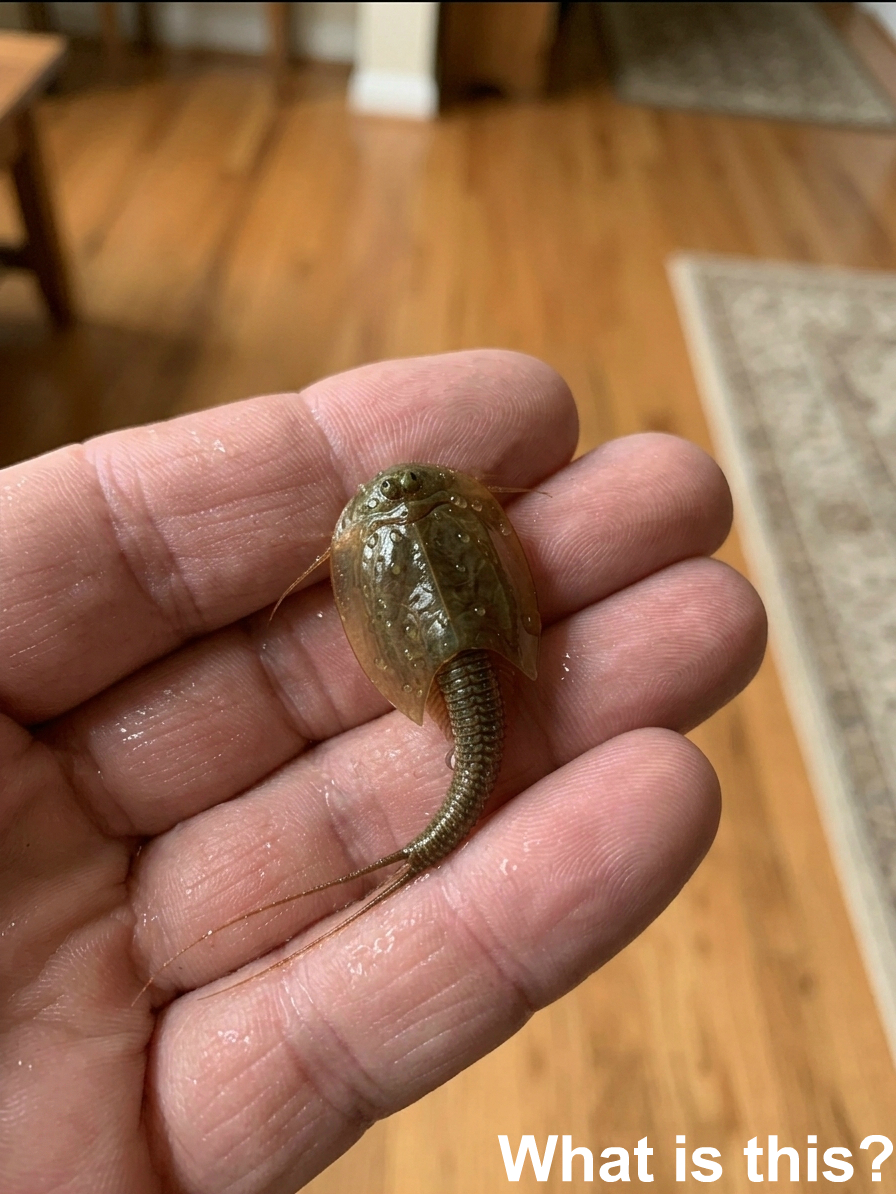
I found this in a flooded ditch. I caught it and brought it home in a jar. I have no idea
When you stumble upon a creature while exploring the outdoors, it is natural to feel a mix of curiosity and hesitation. A recent social media post shared by an observer who found a strange, alien-like organism in a flooded ditch perfectly captures this mystery. The creature, which sports a helmet-like shell, a segmented tail, and a prehistoric appearance, left many wondering if they were looking at a relic from another era. If you are curious about what this fascinating little traveler is, here is the full story.
What Is This Creature?
The organism found is known as a Triops—also affectionately referred to as a “tadpole shrimp.” These creatures are not modern inventions; they are, in fact, one of the oldest living species on Earth. Often called “living fossils,” Triops have remained physically unchanged for over 200 million years. They survived the extinction events that wiped out the dinosaurs, and they have mastered a unique survival strategy that allows them to thrive in temporary, unstable aquatic environments.
Why Are They Found in Flooded Ditches?
You might wonder how such a creature appeared in a simple puddle or a flooded roadside ditch. The secret lies in their eggs. Triops lay eggs that are highly resistant to extreme conditions, including drought. These eggs can remain dormant in the soil for years, simply waiting for the right environmental cues. When a heavy rain event creates a temporary pool or floods a ditch, the water triggers the hatching process. Because these pools are often temporary and lack the predators found in permanent lakes, the Triops can grow and reproduce rapidly before the water dries up.
The Life Cycle of a Living Fossil
The life cycle of a Triops is incredibly fast-paced compared to other crustaceans. Once they hatch, they start eating almost immediately, consuming detritus, algae, and small microorganisms. Because their home environments are often transitory, they reach reproductive age in a matter of weeks. They spend their short lives ensuring that their drought-resistant eggs are deposited back into the sediment, where they will remain hidden until the next heavy rainfall cycle begins. This is why you might see hundreds of them in a ditch one day and find absolutely no sign of life a week later.
Are They Dangerous?
If you encounter one, there is no need to worry. Triops are completely harmless to humans. In fact, they are often kept as pets in small, specialized aquariums. Because of their rapid growth and interesting behavior, they are popular in science education kits. They do not sting, bite, or carry diseases that affect humans. However, if you do decide to observe one, it is best to return it to its watery home or a similar environment as soon as possible, as these creatures require very specific water conditions to survive in captivity.
The Value of Local Biodiversity
Coming across a Triops is a rare treat. It serves as a reminder that biodiversity exists all around us, even in the most overlooked places like rain-filled ruts or roadside ditches. These tiny, prehistoric survivors are a testament to the resilience of life on Earth. Next time you notice something unusual in a pool of water after a storm, consider that you might be looking at a creature that has been refining its survival strategy for hundreds of millions of years. Nature is full of surprises, and sometimes you just need a closer look to appreciate the living history swimming right at your feet.