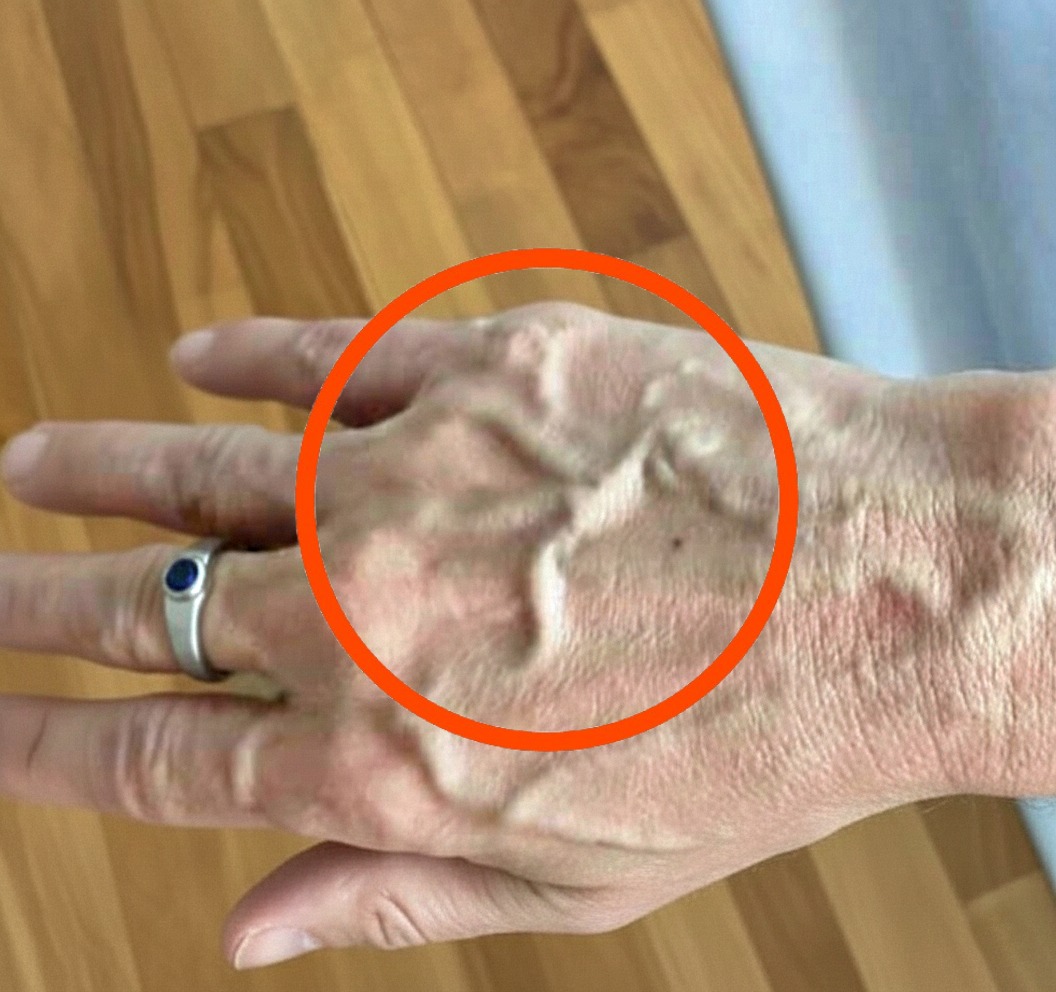
Why Visible Veins Are Perfectly Normal
If you have visible veins, it often means you are looking at a perfectly normal, healthy body doing exactly what it was designed to do. That web of blue, green, or purple lines beneath your skin is not a random flaw but a vital part of your circulatory system, and their visibility is influenced by a fascinating mix of genetics, body composition, activity level, and sometimes, underlying health conditions. Understanding why those veins are standing out can offer a unique window into your own body’s inner workings.
One of the most common and benign reasons is simply low body fat. Veins are naturally located just below the skin’s surface, surrounded by a layer of subcutaneous fat that acts like a soft buffer. When that fat layer is minimal—common in very lean individuals, athletes, or those with a naturally slender build—there is less camouflage. The veins become more pronounced, especially in areas like the forearms, hands, and legs. For many fitness enthusiasts, this is a prized sign of a low body fat percentage and a symbol of the hard work visible right on the surface. You see this dramatically with bodybuilders on competition day, where every vein seems to pop, a phenomenon driven by extreme leanness and strategic dehydration.
Your skin’s own characteristics play a huge role. Fair or thin skin naturally offers less of a barrier to the view beneath. As we age, our skin loses collagen and elastin, becoming thinner and more translucent, which can make veins that were always there suddenly seem more apparent. This is also why veins are more readily seen on the eyelids, the backs of hands, and the chest of older adults. It is not that the veins are newly formed or bulging, but that the window has become clearer.
Then there is the powerful influence of physical exertion. During a workout, your muscles demand more oxygen, so your heart pumps harder and your blood vessels dilate to accommodate the increased flow. This temporary engorgement pushes veins outward against the skin, a normal effect known as vascularity. The same mechanism explains why veins in your hands might pop out on a hot day: heat triggers vasodilation to release body heat, causing veins to expand. The opposite occurs in the cold, making veins constrict and retreat.
Genetics, the silent architect, also dictates much of this pattern. The size, placement, and natural prominence of your veins are inherited traits. Some people are simply born with veins that sit closer to the surface or have a wider diameter, regardless of their body fat or age. If your parents have prominent hand veins, there is a good chance you will too, and it is rarely a cause for concern.
However, visible veins can occasionally signal something that deserves attention. Varicose veins are twisted, enlarged veins that often appear ropey and bulging under the skin of the legs. They occur when tiny valves inside the veins weaken or become damaged, allowing blood to pool instead of flowing efficiently back to the heart. This can cause aching, heaviness, itching, and a visible dark blue or purple discoloration. Spider veins, a milder version, are smaller, web-like clusters of red or blue vessels that are typically a cosmetic concern but can sometimes be linked to underlying venous insufficiency.
A more pressing condition is chronic venous insufficiency, where the veins struggle to send blood from the limbs back to the heart, leading to swelling, skin changes, and ulcers over time. Sudden, unexplained vein visibility in one area, particularly if accompanied by pain, redness, or warmth, can be a sign of a blood clot or thrombophlebitis and warrants immediate medical evaluation. In the abdomen, visible distended veins around the navel, known as caput medusae, can be a rare but serious indication of liver disease and portal hypertension.
For most people, the gentle map of veins that traces the inner wrist or the back of a hand after a long walk is simply life pulsing close to the surface. It shows that a healthy heart is doing its work, that you stayed active, or that you inherited your mother’s fine skin. Instead of worrying, you can read these lines as a personal biological blue-print. If you ever notice a dramatic change—veins that suddenly become hard, hot, or severely swollen—that is your body speaking a different language, and it is worth listening to with a doctor’s help. But in the quiet, ordinary moments when you glance down and see those faint blue channels, know that you are looking at quiet proof of a remarkable, functioning circulatory network that sustains you every second of the day.