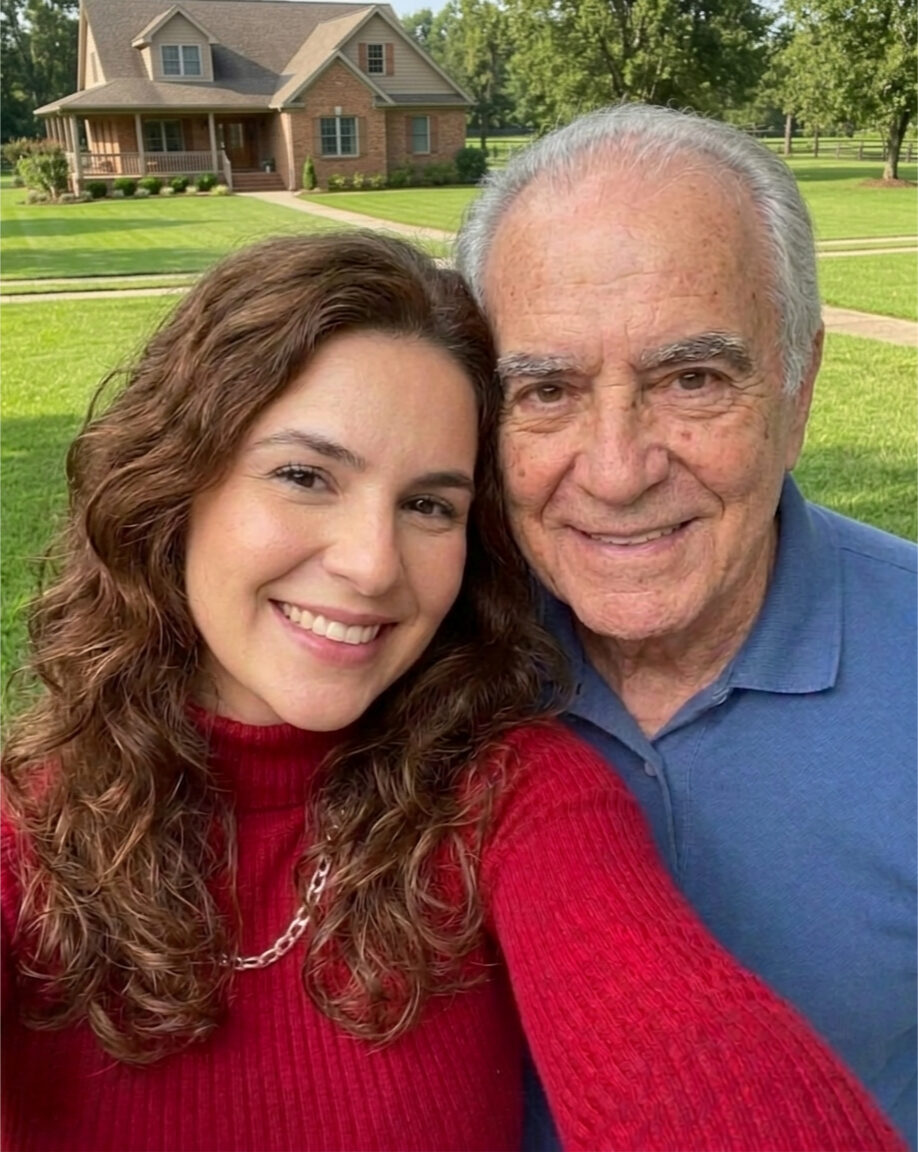
The Groom’s Quiet Mercy
A quiet civil ceremony at the county courthouse drew more whispers than witnesses. The bride, a pale 23-year-old named Elara, clutched a small bouquet of supermarket daisies, her only nice dress a thrift-store find that she had altered three times to fit. The groom was Harold Benton, a stooped but sharp-eyed man of 70 whose weathered hands showed the tremor of age but whose signature on a marriage license came with a net worth north of eight million dollars. Elara had not eaten a full meal in two days before the wedding; her mother’s dialysis bills were six months overdue, and the eviction notice on their one-bedroom apartment was final. Harold’s attorney had made the arrangement sound simple: one year of marriage, public companionship at corporate dinners, a clean divorce with a settlement of 200,000 dollars, and all medical debt erased. No physical intimacy required, the contract specified. Elara signed because hope had left her no other paperwork.
The first ten days passed in a fog of surreal comfort. Harold installed her in a guest wing of his sprawling colonial house, a wing larger than the entire home she grew up in. There were fresh meals, a wardrobe of simple but expensive clothes laid out for her, and a nurse who visited every afternoon to check on Harold’s blood pressure. He spoke to her gently at dinner, asking about the books she loved but never had time to read. He told her she reminded him of someone he lost long ago, a daughter who would have been her age had leukemia not taken her at twelve. Elara began to notice his odd kindnesses: he left the porch light on when she stayed up late reading, he had the cook learn her favorite lentil soup from a region of her homeland she’d only mentioned once, and he never, ever made her feel like a transaction.
On the eleventh morning, Elara was exploring the sunroom when she found an old leather medical bag tucked behind a row of encyclopedias. Its clasp was broken, and inside lay a stack of letters bound with twine, yellowed and fragile. The handwriting was Harold’s, but bolder, younger. The letters were addressed to a woman named Celia, full of desperate love and sorrow. The last letter, dated thirty-five years ago, held a lab report and a frantic scribble: “They confirmed it—I carry the gene. I cannot father a child that lives past childhood. I will not put you through what I saw my mother endure. I release you. Forgive me.” Elara’s hands shook as she pieced it together: Harold had a rare genetic condition, a mitochondrial inheritance flaw that caused severe multisystem failure in children before adolescence. The daughter he spoke of was a memory he built, a future he denied himself. He had never married, never fathered children, and built walls of money around a hole in his heart.
That evening, she confronted him, angrier than she expected. “You brought me here to fill a ghost’s place,” she said, holding the letters. Harold sank into his chair, the tremor in his hands worsening. “No. I brought you here because I’m dying,” he said quietly. “The same genes are turning on me now—a late-onset degenerative condition. Doctors give me less than a year. I wanted to spend it providing for someone who deserved a chance I never gave myself. I saw your mother’s fundraiser page online, the desperation in your eyes. I didn’t want gratitude. I just wanted to be useful one last time.” He paused. “The contract was real, but the money is yours tomorrow if you walk out.”
Elara did not walk out. She sat down beside him, took his shaking hand, and said, “Then we’ll talk about books every night until you can’t anymore.” The press and the gossip columns later framed the marriage as a gold-digging scandal, but they never saw the amended contract she had her own lawyer draft: one year of companionship, no payment required, medical bills still covered by the irrevocable trust, and one new clause—that Harold would not die alone. Ten days after saying “I do” to a stranger, Elara discovered she hadn’t married a fortune or a predator. She had married a man who spent his last chapter giving away the love he never got to give, and in return, she gave him the family he had always denied himself. The real story was not in the age gap, but in the dignity two people salvaged from the wreckage of fate.