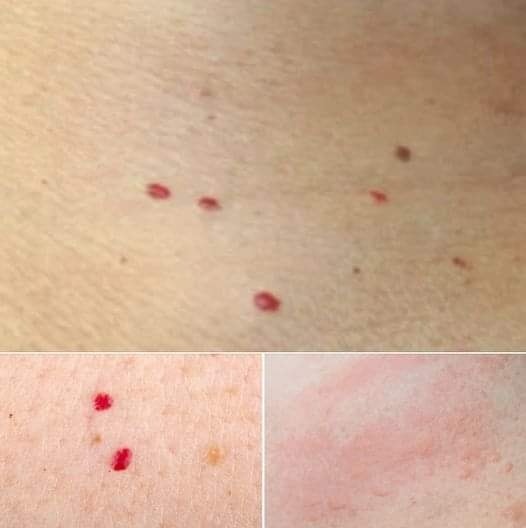
Understanding Common Causes of Red Skin Spots
If you are the type of person who regularly inspects your body for unexpected lumps, bumps, or bruises, you are not alone. While some might call this paranoia, staying observant about your physical health is a responsible way to ensure you can seek medical advice whenever you notice an inexplicable change. I recently experienced this firsthand when I woke up to find a cluster of red dots on my shoulder, prompting me to research what they might signify. As it turns out, red dots on the skin are quite common and can be caused by a variety of conditions, ranging from the completely harmless to those requiring medical attention.
Petechiae and Purpura appear as tiny red dots resulting from damaged blood vessels or capillaries. While they can be caused by simple triggers like intense coughing, stress, or specific medications and are often harmless, they can sometimes signal underlying medical issues, such as platelet disorders.
Cherry Angiomas, by contrast, present as small, raised, bright red bumps caused by an overgrowth of blood vessels. These are generally harmless and tend to become more frequent as people age.
Heat rash is another common culprit, occurring when sweat becomes trapped in the ducts, resulting in an itchy pattern of red dots. This is typically environment-dependent and passes when the skin is kept cool.
Allergic reactions are perhaps the most self-explanatory cause, resulting from a sensitivity to foods, environmental substances, medications, or insect bites, which create itchy, red skin irritation.
Folliculitis is an inflammation of the hair follicles, typically caused by a fungal or bacterial infection. It manifests as red, pus-filled bumps that can be quite uncomfortable.
Cellulitis is a more serious bacterial skin infection that causes redness and swelling, with the affected area often feeling warm to the touch. This condition typically requires professional medical intervention and a course of antibiotics.
Impetigo is a highly contagious bacterial infection, frequently seen in children. It is characterized by red sores that eventually break open, ooze fluid, and crust over.
Vasculitis involves the inflammation of blood vessels, which can cause red dots to appear across the skin. This condition may be linked to infections or autoimmune disorders and warrants investigation.
Hemangiomas are essentially birthmarks caused by the abnormal growth of blood vessels. While they are usually harmless, they occasionally require medical evaluation depending on their location and development.
In summary, while the appearance of red dots on the skin is frequently benign, it is important to exercise caution. You should seek professional medical advice if your red dots are accompanied by fever, pain, or discomfort, if they are spreading or increasing in intensity rapidly, or if they are accompanied by other systemic symptoms such as weakness, dizziness, or fatigue.