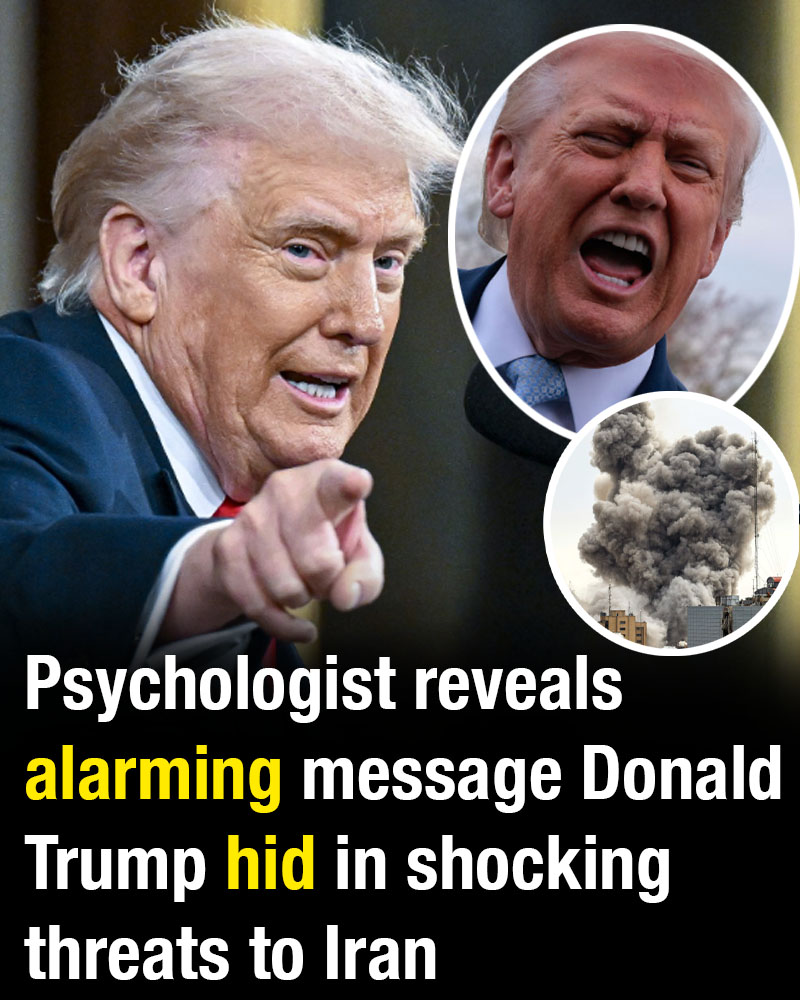
The Psychological Strategy Behind Trump’s Rhetoric on Iran
A clinical psychologist has analyzed the escalating rhetoric from Donald Trump regarding Iran, suggesting his public statements serve a calculated psychological purpose rather than acting as mere warnings. The former president triggered significant concern after posting on social media that an entire civilization could face extinction, while simultaneously expressing hope that a new regime would emerge. This post followed an address at the White House in which he warned that Iran could be incapacitated in a single night, explicitly threatening to destroy infrastructure such as power plants and bridges while setting a strict deadline for an acceptable deal.
Dr. Tracy King, a clinical psychologist, noted that the language used by the former president is highly deliberate, characterized by a narrative of military drama, triumph, and absolute command. According to Dr. King, the repeated use of extreme phrasing is designed to bypass critical thinking. By inducing feelings of awe, fear, and alarm, this communication style leaves little room for nuance or calm analysis, forcing the audience to process information through a lens of high-intensity emotional reaction.
Beyond the immediate goal of intimidation, Dr. King observed that the rhetoric serves a secondary purpose by solidifying Trump’s position at the center of global events. Even when the subject matter involves the actions or bravery of others, the narrative is consistently redirected back to his observations, values, and decision-making capabilities. Dr. King suggests this is a psychological maneuver intended to restore or enhance his status. In the face of potential perceptions of vulnerability or absence, the messaging re-frames him as the ultimate figure of authority, force, and control.
Regarding the intended audience, Dr. King explained that the tone is likely designed to cultivate a sense of strategic uncertainty among his adversaries. By projecting an image of unpredictability and extreme willingness to escalate conflict, the messaging aims to keep opponents in a state of high anxiety. This unpredictability is a tactical asset, as it forces rivals to not only consider the tangible military capabilities of the United States but also to worry about the unpredictable threshold at which those powers might be deployed. Shortly after these threats were issued, international reports confirmed that the United States and Iran had entered into a temporary two-week ceasefire.