The Living Knot on the Path
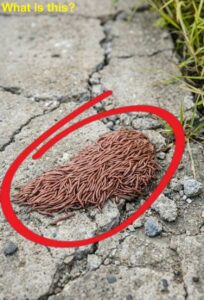
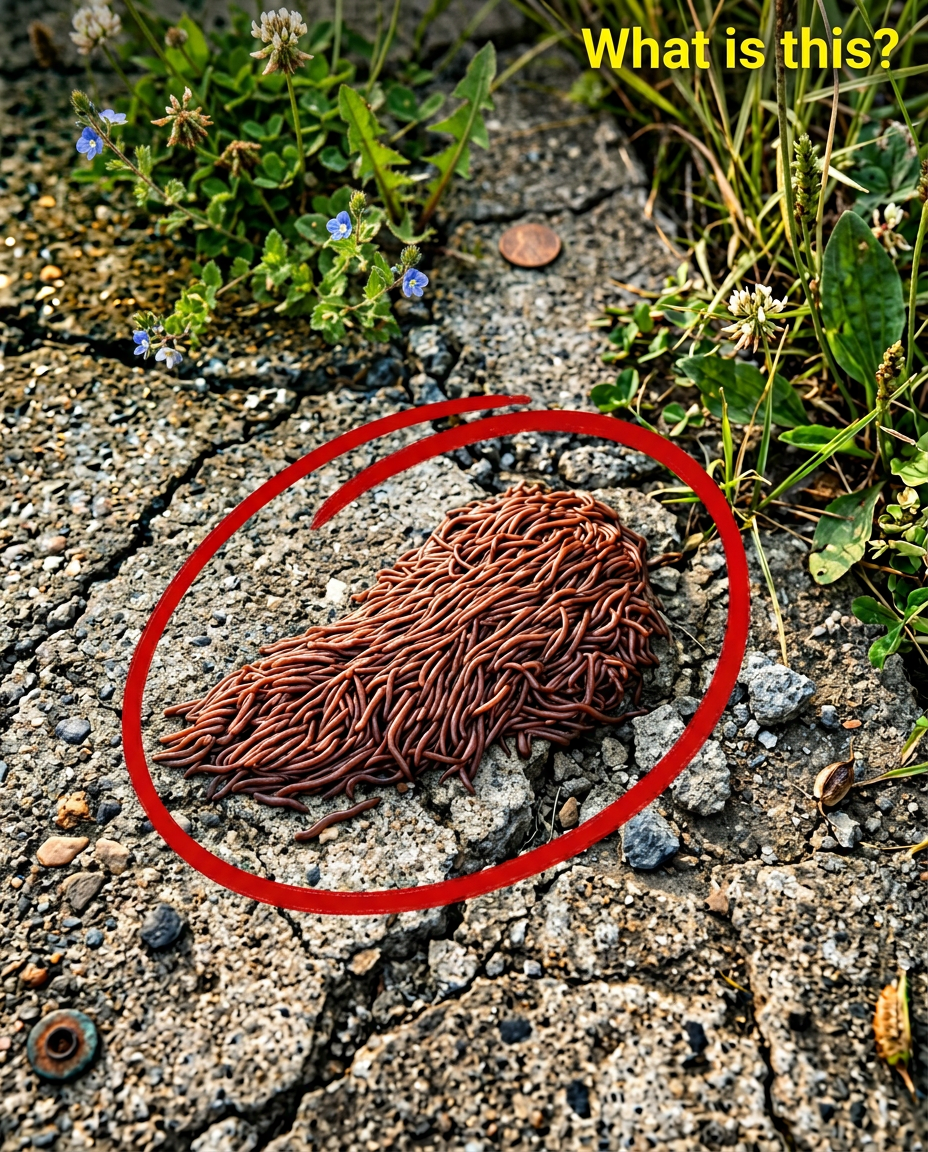
I stepped out into the yard early in the morning, almost automatically, with my phone and a cup of coffee in my hands. The ground was still wet from the night rain, and the air was thick with the scent of damp earth. As I walked toward the trash bins, I noticed a strange, elongated stain, pinkish-brown in color, splayed across the path. At first, I didn’t even stop. I assumed someone had discarded some food, and my immediate thought was that a pile of cooked spaghetti had been dumped onto the asphalt. The mass looked irregular, sticky, and wet, exactly as if it had just come out of a pot.
I moved closer to step around it, and at that moment, a chill ran down my spine. The mass began to move. It wasn’t a sharp or active motion, but rather a slow, rhythmic shifting, as if the entire heap were breathing. The thin lines inside were intertwined, rolling over one another as if the collection were a single, living entity. A wave of disgust and a primal chill washed over me. I stepped back, reflexively reaching for my phone to record the scene. My mind struggled to process the sight; I was standing in the middle of my own yard, witnessing something that felt entirely alien.
Back inside, I turned to the internet, typing in a frantic search query: it looks like spaghetti, but it is moving. The search results provided an explanation that was both simple and unsettling. What I had discovered were hundreds of earthworms, woven together into one massive, undulating knot. They had crawled out of the soil after the heavy rain, desperate for oxygen, and had huddled together in this writhing, living tangle right beneath my window.
I crouched down to look at my screen, then back at the pavement, unable to stop my hands from shaking. Since that morning, I no longer walk through my yard without looking down. It serves as a stark reminder that we can go about our ordinary, mundane routines, only to be confronted by the hidden, unsettling realities of nature that make our skin crawl and linger in our minds long after the moment has passed.