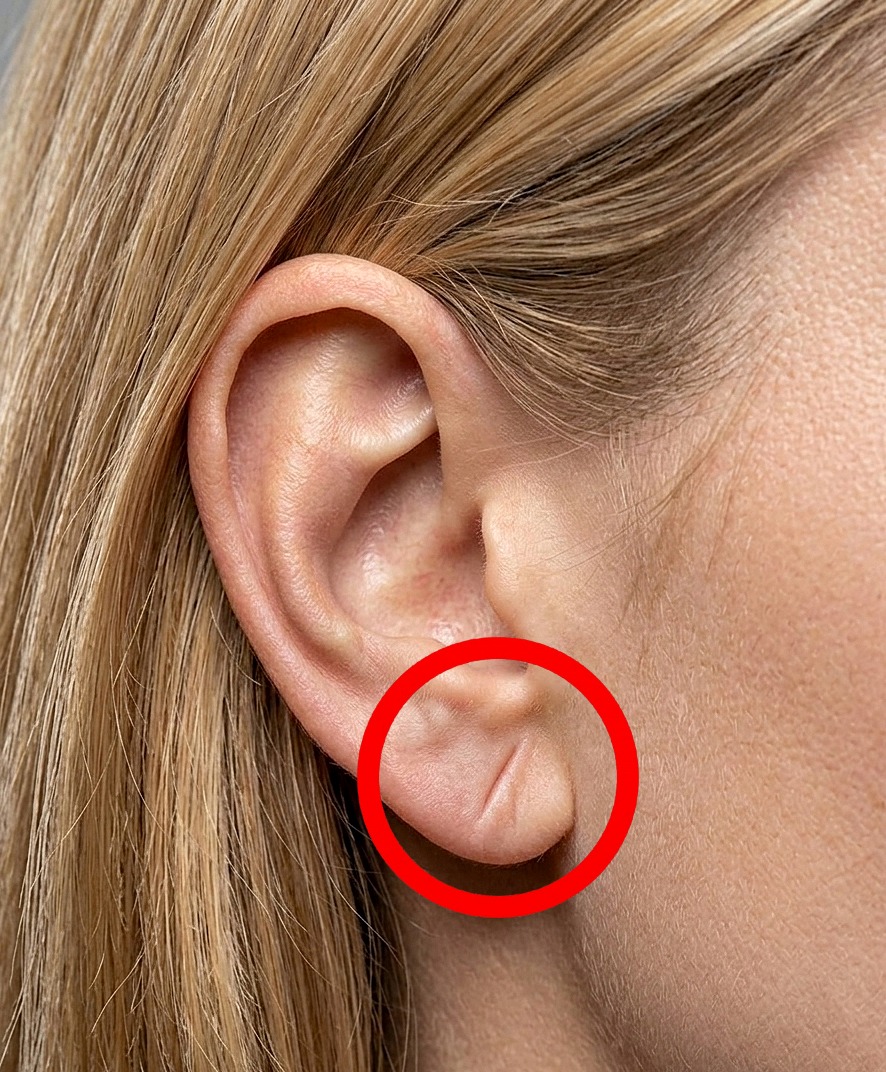
Clinical Significance of the Diagonal Earlobe Crease
Frank’s Sign refers to a diagonal crease running at approximately a 45-degree angle across the earlobe, medically known as the diagonal earlobe crease. It was first identified by Dr. Sanders T. Frank, who observed this specific marking in twenty patients suffering from angina. While the discovery was initially linked exclusively to coronary artery disease, subsequent research has demonstrated that this crease is also present in patients suffering from peripheral vascular disease and cerebrovascular disease. Essentially, an earlobe crease may serve as an external physical indicator of compromised blood circulation, including within the coronary arteries, rather than being merely a byproduct of the aging process.
This sign is frequently documented in patients attending cardiology clinics, particularly among those with a prior history of coronary artery bypass surgery. However, the presence of this crease in individuals who are otherwise healthy also points to an elevated risk of vascular conditions. Interestingly, the appearance of the sign does not correlate with body weight, as it is found in both thin and overweight individuals.
The exact biological mechanism behind Frank’s Sign remains a subject of ongoing study. Some researchers suggest that microvascular disease within the middle lobe of the ear, an area supplied by terminal arteries, may be responsible. Other studies have recorded a potential link between shortened telomeres, metabolic syndrome, and general processes associated with vascular aging and atherosclerosis.
The appearance of Frank’s Sign can be categorized according to its depth, length, symmetry, and angle, factors which may help medical professionals estimate cardiovascular risk. An incomplete crease on one earlobe is considered the least severe manifestation. A complete crease on one earlobe indicates a higher level of concern, while creases appearing on both earlobes represent the most severe category.
While Frank’s Sign definitively diagnosed alone does not confirm the presence of heart disease, it acts as a valuable early warning indicator. It is particularly useful for clinical screening and for raising the index of suspicion for coronary artery disease, especially in patients under the age of sixty. If this sign is observed in yourself or a family member, it is advisable to seek a cardiovascular consultation to evaluate your heart health.