The Truth Behind the Viral Image: Analyzing the KH-55 Missile Incident
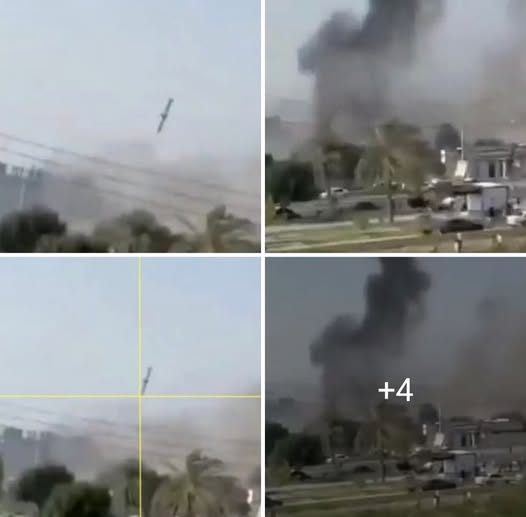
In recent days, social media platforms, particularly Facebook, have been flooded with a striking image showing a projectile descending toward a landscape, accompanied by claims that a Raduga KH-55 cruise missile struck a girls’ school in Iran. Given the sensitivity of the imagery and the gravity of such claims, it is essential to separate verified facts from digital misinformation.
The Raduga KH-55 is a Soviet-designed, long-range, subsonic cruise missile capable of carrying nuclear warheads. Developed in the 1970s, it is a sophisticated piece of military hardware designed for strategic deterrence. Because of its specific aerodynamic profile—characterized by its distinct wings and fuselage—it is often the subject of identification debates in online military forums. However, the claim that such a weapon was deployed against a civilian school in Iran lacks corroboration from credible international news outlets, defense analysts, or official government reports.
When analyzing viral imagery of this nature, experts often point to the phenomenon of ‘miscontextualization.’ Frequently, footage from active conflict zones, such as the ongoing war in Ukraine, is repurposed and re-captioned to fit a different geopolitical narrative. In this specific instance, the visual evidence circulating online does not align with any recorded incident involving a KH-55 strike on an educational facility in Iran. The footage appears to be a composite of various military-related clips that have been edited to create a false sense of a singular, dramatic event.
Furthermore, the logistics of a KH-55 deployment make the viral claim highly improbable. These missiles are strategic assets typically launched from heavy bombers like the Tu-95 or Tu-160. Their operational use is highly monitored by global satellite surveillance and radar networks. An event of this magnitude—a strategic cruise missile hitting a civilian school—would be immediately detected by multiple international intelligence agencies and would trigger a massive global diplomatic response. The absence of such a response is the strongest indicator that the event as described did not occur.
It is also important to consider the source of such viral posts. Often, these narratives are designed to exploit high-tension geopolitical climates to drive engagement through fear and shock. By attaching a recognizable, high-tech weapon name like the ‘KH-55’ to a generic image of an explosion, creators can manufacture a ‘breaking news’ aesthetic that encourages users to share the content without verification.
In conclusion, while the image of the missile is visually arresting, the narrative surrounding it is a fabrication. There is no evidence to support the claim that a Raduga KH-55 struck a school in Iran. As digital consumers, it is vital to approach such ‘click-bait’ content with skepticism, cross-referencing dramatic claims with reputable international news sources before accepting them as truth. Understanding the technical limitations and the strategic nature of such weapons helps in identifying when a story is designed to mislead rather than inform.