“Circus Lion Spends 20 Years in Chains—Then Finally Walks Toward Freedom.”
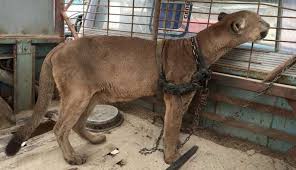
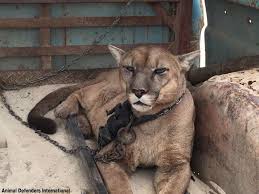
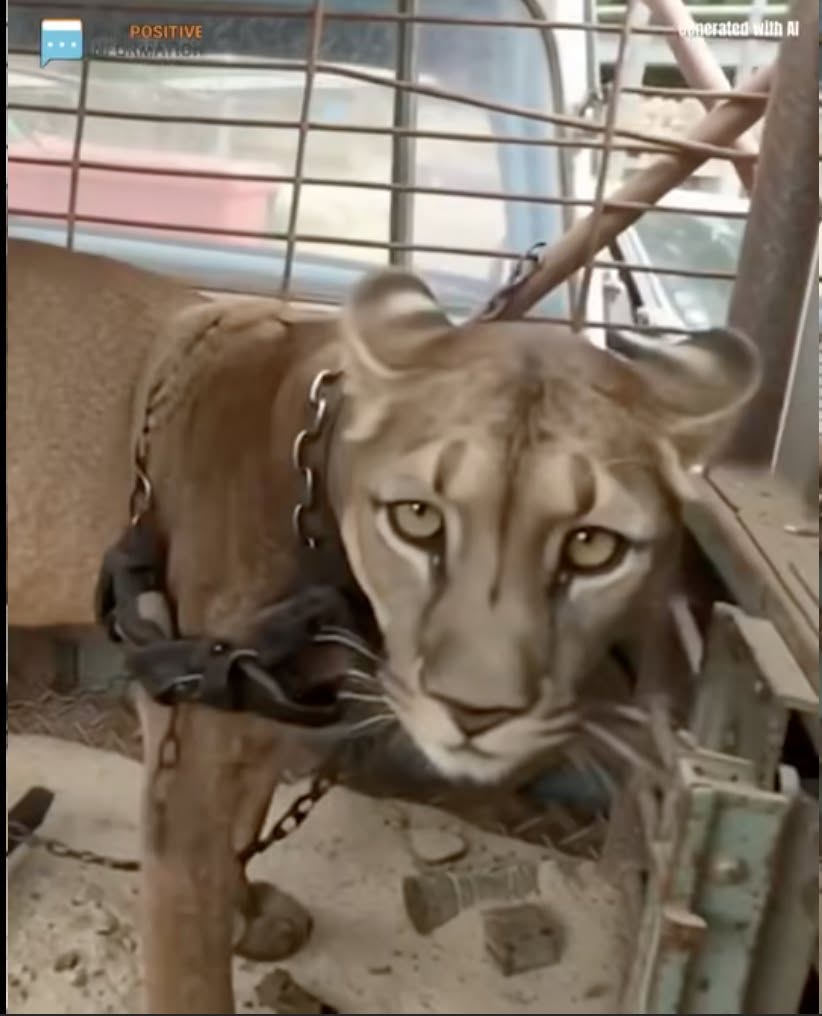
For more than two decades, a mountain lion named Mufasa lived in conditions no wild animal should ever endure. Instead of moving through open land or resting in a quiet natural space, he spent year after year chained to the back of a truck and carried from village to village in Peru with an illegal traveling circus.
His life had little in common with the noble image suggested by his name, which was likely borrowed from The Lion King. Mufasa was not free, powerful, or respected. He was kept among circus equipment with almost no room to move, tied down while the circus traveled between small towns.
Rescuers believe he may have been captured from the wild as a cub and sold through the illegal wildlife trade before ending up in the circus. For years, the only world he knew was transport noise, confinement, and the weight of chains. There were no forests, grasslands, or calm surroundings where he could behave like the animal he was born to be.
His chance at freedom came after Peru banned the use of wild animals in circus performances in 2011. Animal Defenders International, known as ADI, began working to locate and shut down illegal circuses that were still keeping exotic animals in cruel conditions. Their wider mission, called Spirit of Freedom, led to the rescue of many animals, including lions, bears, monkeys, and others that had been used or held unlawfully.
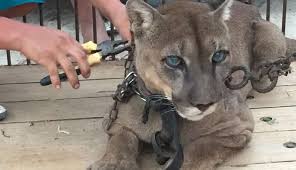
Finding Mufasa was difficult, and freeing him was even harder. When ADI teams and authorities located the circus, the owners resisted. The confrontation lasted about eight hours before the rescuers were finally able to remove the chains that had held him for so long.
The moment he was freed was unforgettable. Mufasa stretched his body in ways he had likely been unable to do for most of his life. Images from the rescue spread around the world, showing not only the cruelty he had survived, but also the emotional weight of finally seeing him released.
Veterinarians later found that he was severely underweight and malnourished. The damage was not only physical. Mufasa was also extremely nervous around people, a sign of the deep psychological trauma caused by decades of captivity and mistreatment.
He was taken to a rescue center near Lima, where specialists began the slow work of recovery. With proper food, veterinary care, and patient attention, his condition gradually improved. Eventually, he was moved to the Taricaya Ecological Reserve, a protected area where rescued wildlife could be rehabilitated in a safer and more natural environment.
Because Mufasa had spent most of his life in captivity, he could not simply be released into the wild. He had been denied the experience and instincts that a free mountain lion would need to survive on his own. Instead, he was given a large natural enclosure where he could explore without chains and live safely among trees and grass.
When he first stepped into that forest setting, the scene was deeply moving. Mufasa walked slowly through the grass and beneath the trees, discovering sensations and spaces that had been kept from him for more than 20 years.
His story became a powerful symbol in the fight against animal cruelty, illegal wildlife trafficking, and the use of wild animals in circuses. Although captivity stole much of his life, his final years were spent in peace. At last, Mufasa could walk freely under the trees instead of living tied to a truck.