Why Does a Green Ring Appear Around Hard-Boiled Eggs?
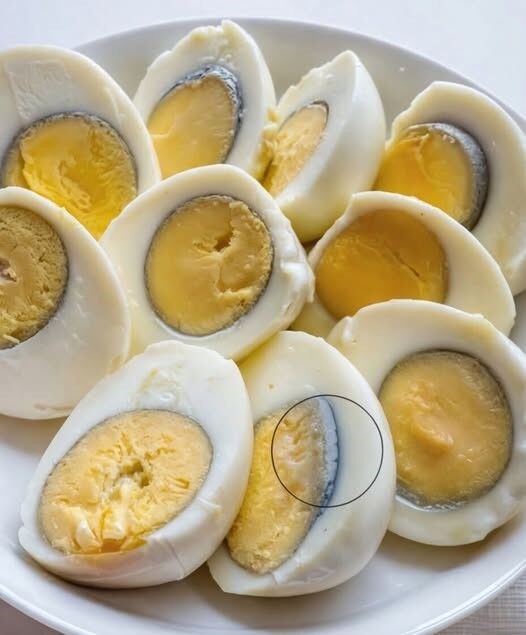
You boil a batch of eggs for a salad, a quick breakfast, or a tray of deviled eggs, peel one open, and notice a greenish-gray circle around the yolk. It can look unappetizing, especially when the eggs were meant to be served neatly, but it is not a warning sign that the eggs are spoiled. It also does not mean you have failed in the kitchen. That ring is a harmless result of ordinary egg chemistry, and with a few simple changes, it is easy to avoid.
The discoloration appears when two natural parts of the egg react with each other during cooking. The yolk contains iron, while the white contains sulfur. When eggs are cooked too long or exposed to high heat for too much time, those elements meet at the surface of the yolk and form a thin layer of iron sulfide. That layer is what creates the green or gray shade around the yolk.
Although the color may not look appealing, the egg is still safe to eat. The main problem is appearance, and sometimes smell. Overcooked eggs often have a stronger sulfur odor, which is why they can seem less fresh or less pleasant even when they are perfectly edible. The best way to prevent both the ring and the stronger smell is to control the cooking time and cool the eggs quickly.
A reliable method starts before the water is even hot. Place the eggs in one layer at the bottom of a pot instead of piling them on top of one another. Add cold water until the eggs are covered by about 1 to 2 inches, or roughly 3 to 5 centimeters. Starting with cold water helps the eggs warm more evenly and lowers the chance that the shells will crack as the temperature rises.
Next, heat the pot gradually. Medium heat is enough. A hard, rolling boil can make the eggs knock against each other, which may crack the shells and allow some of the white to leak out. Bring the water to a gentle boil, then turn off the heat and cover the pot. At this point, the hot water will finish cooking the eggs without the rough movement of active boiling.
Timing matters more than anything else. Let the eggs rest in the hot water for 9 to 12 minutes, depending on how firm you want the yolks to be. Around 9 minutes gives a slightly softer, creamier yolk. Around 12 minutes produces a firmer yolk that works well for salads, snacks, or deviled eggs. Going beyond the needed time increases the chance of that green ring, because the yolk and white continue reacting as the egg stays hot.
As soon as the timer ends, move the eggs into a bowl of ice water or very cold water. This step is not just a convenience; it stops the cooking process quickly. If the eggs remain hot after boiling, they can continue to cook from residual heat, even after being removed from the pot. Rapid cooling helps preserve a bright yellow yolk and also makes peeling easier.
Leave the eggs in the cold water for at least 5 minutes before peeling or storing them. When you are ready to peel, tap each egg gently on a hard surface to crack the shell. Peeling under running cold water can help loosen the thin membrane beneath the shell, reducing torn whites and ragged edges.
A few extra habits can make the results even better. Slightly older eggs are usually easier to peel than very fresh ones because the inner membrane does not cling as tightly to the shell. Eggs that are about 5 to 7 days old often peel more cleanly than eggs bought or collected the same day.
Adding a pinch of salt or a splash of vinegar to the cooking water can also help if a shell cracks during boiling. These additions do not meaningfully change the taste of the egg, but they can help the whites set more quickly and reduce messy leaking.
Storage is another part of keeping hard-boiled eggs at their best. Unpeeled hard-boiled eggs can be kept in the refrigerator for up to a week. Once the shell has been removed, it is better to eat them within 2 to 3 days for the best freshness and texture.
The secret is simple: do not overcook the eggs, and do not let them stay hot after the timer is done. Start with cold water, heat gently, use the right cooking time, and chill the eggs promptly. With that routine, the yolks stay golden, the whites stay tender, and the finished eggs look much better on a plate.
Perfect hard-boiled eggs do not require special equipment or advanced cooking skills. They only need attention to timing and cooling. Whether you are preparing a quick snack, making ingredients ahead for the week, or adding eggs to a recipe, this method helps avoid the green ring and gives you clean, appealing results every time.